
Painting Young woman at a balustrade - Jan de Bray | Art print Source: Tableau Jeune femme à une balustrade - Jan de Bray | Reproduction


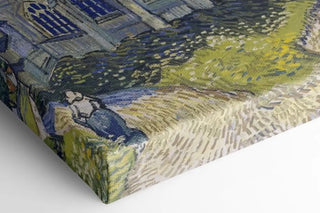
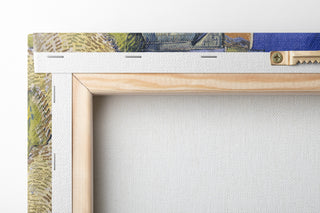
View from behind
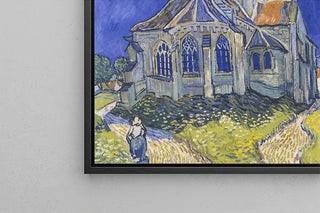
Frame (optional)
In the vibrant landscape of 17th-century art, the artwork "Young Woman at a Balustrade" by Jan de Bray stands out as a striking example of baroque virtuosity and elegance. This painting, alive with vitality and light, captures a suspended moment, an intimate contemplation that invites the viewer to immerse themselves in the delicate universe of its subject. The young woman, with her graceful posture and pensive gaze, appears both present and distant, as if awakening to profound thoughts while remaining grounded in the material world. This piece does more than depict a female figure; it evokes an atmosphere, an emotion, and a story that resonate through the centuries, making this art print a treasure to behold.
Style and uniqueness of the work
Jan de Bray's style is distinguished by meticulous attention to detail and mastery of light play. In "Young Woman at a Balustrade," the texture of the clothing, the fluidity of the drapery, and the delicacy of the facial features are rendered with precision that demonstrates his technical skill. The color palette, subtle and harmonious, helps create a serene and contemplative ambiance. The shades of blue and white, highlighted by touches of gold, emphasize the beauty of the subject while suggesting a certain nobility. The balustrade, a central architectural element, serves not only as a frame for the figure but also as a symbol of separation between the inner and outer worlds, reinforcing the idea of introspection. Thus, the work transcends a simple portrait to become a reflection on the human condition, identity, and the individual's place in society.
The artist and his influence
Jan de Bray, an emblematic figure of the Dutch school, established himself at the heart of the 17th century, a period rich in artistic innovations. A pupil of the artist Rembrandt, he developed a distinctive style that combines realism and idealization. His work aligns with the tradition of court portraits, but he manages to infuse a personal and psychological dimension into his subjects. By focusing particularly on the representation of women, he contributes to
Painting Young woman at a balustrade - Jan de Bray | Art print Source: Tableau Jeune femme à une balustrade - Jan de Bray | Reproduction

-10% FROM €95 IN PURCHASES
-15% FROM €195 IN PURCHASES
Regular price
- Unit price
- per
Tax included.
Free shipping
€4.90 / Free shipping on orders over €39
Satisfied or Money Back
Free returns within 30 days
10-year warranty
Our prints are guaranteed for 10 years
Any questions? We are here!
by email to contact@artemlegrand.com
THE STEPS OF YOUR ORDER

STEP 1 - ORDER PLACED
Your order has been confirmed and we are starting production
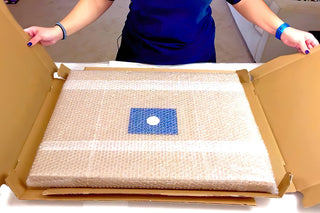
STEP 2 - SHIPPING
We ship your order. We send you an email to track the progress

STEP 3 - DELIVERY
You receive your order. You can also, according to your choice, be delivered to a relay point.
Matte finish
View from behind
Frame (optional)
In the vibrant landscape of 17th-century art, the artwork "Young Woman at a Balustrade" by Jan de Bray stands out as a striking example of baroque virtuosity and elegance. This painting, alive with vitality and light, captures a suspended moment, an intimate contemplation that invites the viewer to immerse themselves in the delicate universe of its subject. The young woman, with her graceful posture and pensive gaze, appears both present and distant, as if awakening to profound thoughts while remaining grounded in the material world. This piece does more than depict a female figure; it evokes an atmosphere, an emotion, and a story that resonate through the centuries, making this art print a treasure to behold.
Style and uniqueness of the work
Jan de Bray's style is distinguished by meticulous attention to detail and mastery of light play. In "Young Woman at a Balustrade," the texture of the clothing, the fluidity of the drapery, and the delicacy of the facial features are rendered with precision that demonstrates his technical skill. The color palette, subtle and harmonious, helps create a serene and contemplative ambiance. The shades of blue and white, highlighted by touches of gold, emphasize the beauty of the subject while suggesting a certain nobility. The balustrade, a central architectural element, serves not only as a frame for the figure but also as a symbol of separation between the inner and outer worlds, reinforcing the idea of introspection. Thus, the work transcends a simple portrait to become a reflection on the human condition, identity, and the individual's place in society.
The artist and his influence
Jan de Bray, an emblematic figure of the Dutch school, established himself at the heart of the 17th century, a period rich in artistic innovations. A pupil of the artist Rembrandt, he developed a distinctive style that combines realism and idealization. His work aligns with the tradition of court portraits, but he manages to infuse a personal and psychological dimension into his subjects. By focusing particularly on the representation of women, he contributes to
12,34 €