
Painting Yellow from the series Utensils for tea in five colors - Kubo Shunman


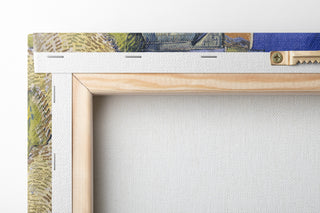
View from behind
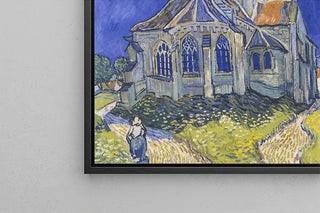
Frame (optional)
The Yellow art print from the series Tea Utensils in Five Colors - Kubo Shunman evokes a universe where the beauty of everyday objects blends with refined aesthetics. This piece, emblematic of Japanese art, illustrates the harmony between functionality and art, a central concept in Japanese culture. Contemplating this work transports the viewer to a world where each utensil tells a story, where the yellow color, bright and luminous, becomes a symbol of simple joy and discreet elegance. The choice of this hue, both soft and vibrant, draws the eye and invites a deeper exploration of shapes and textures.
Style and uniqueness of the work
Kubo Shunman's style is distinguished by its ability to capture the very essence of the depicted objects. In this piece, tea utensils, often associated with convivial rituals, come to life under the artist's brush. Each element is carefully detailed, revealing exceptional craftsmanship and meticulous attention to color nuances. Light plays a fundamental role in the composition, creating delicate shadows that emphasize volume and depth. The simplicity of forms, combined with the richness of colors, reflects a minimalist aesthetic where every detail matters. This work does not merely depict objects; it elevates them to the level of art, inviting the viewer to appreciate the beauty of everyday life.
The artist and his influence
Kubo Shunman, a major figure of Japanese printmaking in the early 19th century, left his mark on his era through an innovative approach to artistic representation. His work is rooted in the ukiyo-e tradition but diverges through his desire to explore new themes and techniques. The artist successfully integrated Western influences while preserving the unique identity of Japanese art. His work is set within a rich historical context, during which Japan was gradually opening to the outside world, and cultural exchanges became increasingly frequent. Shunman thus contributed to the international dissemination of Japanese aesthetics.
Painting Yellow from the series Utensils for tea in five colors - Kubo Shunman

-10% FROM €95 IN PURCHASES
-15% FROM €195 IN PURCHASES
Regular price
- Unit price
- per
Tax included.
Free shipping
€4.90 / Free shipping on orders over €39
Satisfied or Money Back
Free returns within 30 days
10-year warranty
Our prints are guaranteed for 10 years
Any questions? We are here!
by email to contact@artemlegrand.com
THE STEPS OF YOUR ORDER
STEP 1 - ORDER PLACED
Your order has been confirmed and we are starting production
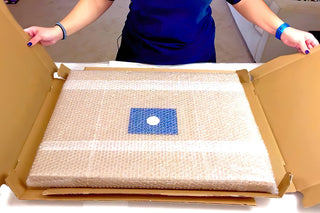
STEP 2 - SHIPPING
We ship your order. We send you an email to track the progress

STEP 3 - DELIVERY
You receive your order. You can also, according to your choice, be delivered to a relay point.
Matte finish
View from behind
Frame (optional)
The Yellow art print from the series Tea Utensils in Five Colors - Kubo Shunman evokes a universe where the beauty of everyday objects blends with refined aesthetics. This piece, emblematic of Japanese art, illustrates the harmony between functionality and art, a central concept in Japanese culture. Contemplating this work transports the viewer to a world where each utensil tells a story, where the yellow color, bright and luminous, becomes a symbol of simple joy and discreet elegance. The choice of this hue, both soft and vibrant, draws the eye and invites a deeper exploration of shapes and textures.
Style and uniqueness of the work
Kubo Shunman's style is distinguished by its ability to capture the very essence of the depicted objects. In this piece, tea utensils, often associated with convivial rituals, come to life under the artist's brush. Each element is carefully detailed, revealing exceptional craftsmanship and meticulous attention to color nuances. Light plays a fundamental role in the composition, creating delicate shadows that emphasize volume and depth. The simplicity of forms, combined with the richness of colors, reflects a minimalist aesthetic where every detail matters. This work does not merely depict objects; it elevates them to the level of art, inviting the viewer to appreciate the beauty of everyday life.
The artist and his influence
Kubo Shunman, a major figure of Japanese printmaking in the early 19th century, left his mark on his era through an innovative approach to artistic representation. His work is rooted in the ukiyo-e tradition but diverges through his desire to explore new themes and techniques. The artist successfully integrated Western influences while preserving the unique identity of Japanese art. His work is set within a rich historical context, during which Japan was gradually opening to the outside world, and cultural exchanges became increasingly frequent. Shunman thus contributed to the international dissemination of Japanese aesthetics.
12,34 €