
Art print Femme assise sur un cheval avec une canette - Johan Daniël Koelman


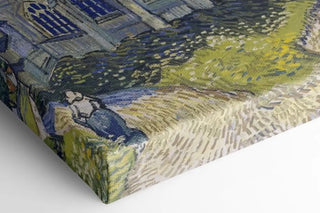
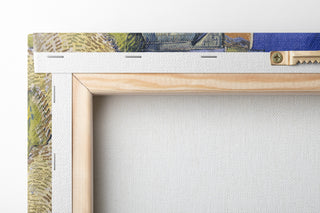
View from behind
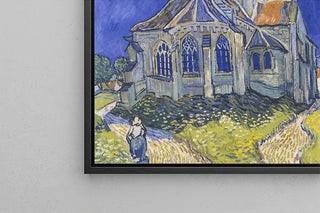
Frame (optional)
In the vibrant world of 17th-century Dutch art, Johan Daniël Koelman's "Seated woman on a horse with a can" stands out for its apparent simplicity and profound symbolism. This piece, both intimate and evocative, immerses us in a suspended moment where the female figure, serene and confident, seems to engage in a dialogue with her surroundings. The can, a commonplace object, becomes a narrative element here, a link between domestic life and wild nature. This painting does not merely depict a scene; it tells a story — that of a woman who, while rooted in her era, transcends conventions to embody a certain form of freedom.
Style and uniqueness of the work
Koelman's style is characterized by fine detail and luminosity that capture the very essence of his subjects. In "Seated woman on a horse with a can," mastery of light and shadow creates an almost tangible atmosphere. The textures of the clothing, the shine of the can, and the softness of the horse's mane are rendered with precision that attests to the artist's undeniable talent. Every brushstroke seems to be a declaration, an invitation to observe not only the image but also the emotion it evokes. The composition, balanced and harmonious, highlights the woman while integrating the horse as a companion — a symbol of strength and elegance. This painting, through its apparent simplicity, invites deeper contemplation — on gender roles and personal aspirations.
The artist and his influence
Johan Daniël Koelman, though less renowned than some of his contemporaries, left an indelible mark on the art world. Born in 1650, he was influenced by the great masters of his time, while developing a style uniquely his own. Koelman was able to capture the spirit of his era, blending precise observations with personal interpretations. His work fits within a tradition where everyday life becomes a subject of art, where ordinary figures are elevated to the status of icons. Through his thematic choices and technique, he has
Art print Femme assise sur un cheval avec une canette - Johan Daniël Koelman

-10% FROM €95 IN PURCHASES
-15% FROM €195 IN PURCHASES
Regular price
- Unit price
- per
Tax included.
Free shipping
€4.90 / Free shipping on orders over €39
Satisfied or Money Back
Free returns within 30 days
10-year warranty
Our prints are guaranteed for 10 years
Any questions? We are here!
by email to contact@artemlegrand.com
THE STEPS OF YOUR ORDER

STEP 1 - ORDER PLACED
Your order has been confirmed and we are starting production
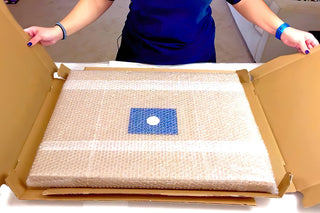
STEP 2 - SHIPPING
We ship your order. We send you an email to track the progress

STEP 3 - DELIVERY
You receive your order. You can also, according to your choice, be delivered to a relay point.
Matte finish
View from behind
Frame (optional)
In the vibrant world of 17th-century Dutch art, Johan Daniël Koelman's "Seated woman on a horse with a can" stands out for its apparent simplicity and profound symbolism. This piece, both intimate and evocative, immerses us in a suspended moment where the female figure, serene and confident, seems to engage in a dialogue with her surroundings. The can, a commonplace object, becomes a narrative element here, a link between domestic life and wild nature. This painting does not merely depict a scene; it tells a story — that of a woman who, while rooted in her era, transcends conventions to embody a certain form of freedom.
Style and uniqueness of the work
Koelman's style is characterized by fine detail and luminosity that capture the very essence of his subjects. In "Seated woman on a horse with a can," mastery of light and shadow creates an almost tangible atmosphere. The textures of the clothing, the shine of the can, and the softness of the horse's mane are rendered with precision that attests to the artist's undeniable talent. Every brushstroke seems to be a declaration, an invitation to observe not only the image but also the emotion it evokes. The composition, balanced and harmonious, highlights the woman while integrating the horse as a companion — a symbol of strength and elegance. This painting, through its apparent simplicity, invites deeper contemplation — on gender roles and personal aspirations.
The artist and his influence
Johan Daniël Koelman, though less renowned than some of his contemporaries, left an indelible mark on the art world. Born in 1650, he was influenced by the great masters of his time, while developing a style uniquely his own. Koelman was able to capture the spirit of his era, blending precise observations with personal interpretations. His work fits within a tradition where everyday life becomes a subject of art, where ordinary figures are elevated to the status of icons. Through his thematic choices and technique, he has
12,34 €