
Painting Woman sitting in blue - Paul Cézanne | Art print


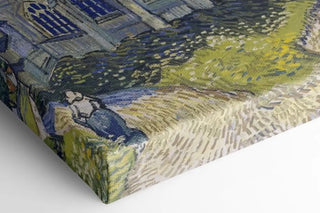
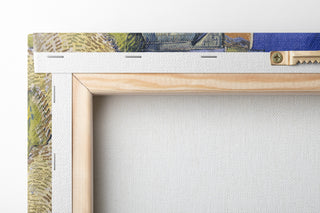
View from behind
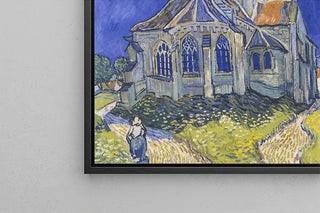
Frame (optional)
In the fascinating universe of art, certain works transcend time and space, captivating our gaze and our mind. "Femme assise en bleu" by Paul Cézanne is one of those iconic pieces that transports us into the intimacy of a frozen moment. This artwork, created at the end of the 19th century, bears witness to the innovation and sensitivity of an artist who redefined the codes of painting. The depiction of a woman, both simple and complex, invites us to explore the nuances of color and form, while immersing us in the psychological depth of its subject.
Style and uniqueness of the work
Cézanne's style is immediately recognizable, characterized by distinct brushstrokes and a subtly nuanced color palette. In "Femme assise en bleu," the color blue, omnipresent, envelops the subject in an atmosphere that is both serene and mysterious. The composition, seemingly simple, reveals unexpected depth through Cézanne's play with shapes and volumes. The contours of the figure are softened, almost blurred, while the background, composed of complementary hues, creates a contrast that highlights the subject. This bold approach to perspective and light demonstrates technical mastery that influenced many later artists, making Cézanne a precursor of the modern movement.
The artist and his influence
Paul Cézanne, often regarded as the father of modern painting, successfully combined tradition and innovation. Born in 1839 in Aix-en-Provence, he spent his life exploring the boundaries of art, seeking to capture reality in a way that was uniquely his own. His influence on Cubism and Impressionism is undeniable, and artists such as Picasso and Matisse acknowledged the importance of his work. By depicting everyday subjects with such emotional intensity, Cézanne paved the way for a new understanding of art, where personal expression and individual perception blend harmoniously. "Femme assise en bleu" embodies this quest for truth and authenticity, echoing the concerns of the era.
Painting Woman sitting in blue - Paul Cézanne | Art print

-10% FROM €95 IN PURCHASES
-15% FROM €195 IN PURCHASES
Regular price
- Unit price
- per
Tax included.
Free shipping
€4.90 / Free shipping on orders over €39
Satisfied or Money Back
Free returns within 30 days
10-year warranty
Our prints are guaranteed for 10 years
Any questions? We are here!
by email to contact@artemlegrand.com
THE STEPS OF YOUR ORDER
STEP 1 - ORDER PLACED
Your order has been confirmed and we are starting production
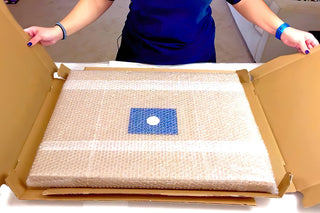
STEP 2 - SHIPPING
We ship your order. We send you an email to track the progress

STEP 3 - DELIVERY
You receive your order. You can also, according to your choice, be delivered to a relay point.
Matte finish
View from behind
Frame (optional)
In the fascinating universe of art, certain works transcend time and space, captivating our gaze and our mind. "Femme assise en bleu" by Paul Cézanne is one of those iconic pieces that transports us into the intimacy of a frozen moment. This artwork, created at the end of the 19th century, bears witness to the innovation and sensitivity of an artist who redefined the codes of painting. The depiction of a woman, both simple and complex, invites us to explore the nuances of color and form, while immersing us in the psychological depth of its subject.
Style and uniqueness of the work
Cézanne's style is immediately recognizable, characterized by distinct brushstrokes and a subtly nuanced color palette. In "Femme assise en bleu," the color blue, omnipresent, envelops the subject in an atmosphere that is both serene and mysterious. The composition, seemingly simple, reveals unexpected depth through Cézanne's play with shapes and volumes. The contours of the figure are softened, almost blurred, while the background, composed of complementary hues, creates a contrast that highlights the subject. This bold approach to perspective and light demonstrates technical mastery that influenced many later artists, making Cézanne a precursor of the modern movement.
The artist and his influence
Paul Cézanne, often regarded as the father of modern painting, successfully combined tradition and innovation. Born in 1839 in Aix-en-Provence, he spent his life exploring the boundaries of art, seeking to capture reality in a way that was uniquely his own. His influence on Cubism and Impressionism is undeniable, and artists such as Picasso and Matisse acknowledged the importance of his work. By depicting everyday subjects with such emotional intensity, Cézanne paved the way for a new understanding of art, where personal expression and individual perception blend harmoniously. "Femme assise en bleu" embodies this quest for truth and authenticity, echoing the concerns of the era.
12,34 €