
Painting La famille Van Moerkerken - Gerard ter Borch | Art print


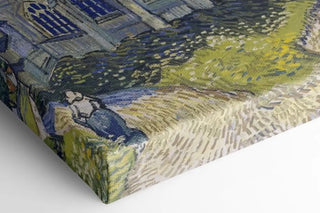
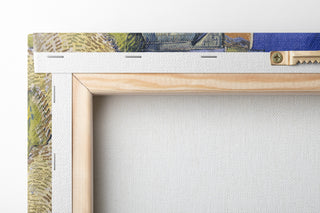
View from behind
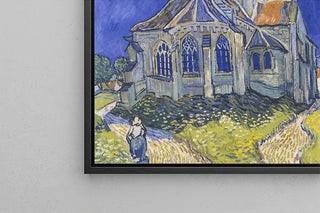
Frame (optional)
La famille Van Moerkerken, painted by Gerard ter Borch, is a work that transcends the simple family portrait to become an intimate exploration of human relationships and social values of the 17th century. This iconic piece, distinguished by its finesse and attention to detail, invites viewers to immerse themselves in the universe of the Van Moerkerken family, a Dutch bourgeoisie family. Through exchanged glances and subtle gestures of the characters, Ter Borch manages to capture the very essence of daily life, while infusing a psychological depth that still resonates today.
Style and uniqueness of the work
Gerard ter Borch's style is characterized by striking realism, mastery of textures, and a delicate color palette. In La famille Van Moerkerken, each element is carefully designed to create an atmosphere of calm and harmony. The characters' clothing, richly detailed, testifies to the artist's virtuosity in depicting fabrics, while the soft light illuminating the scene enhances the serenity of the moment. Ter Borch, using natural poses and authentic expressions, succeeds in conveying a palpable intimacy among family members, making this work not only a historical testimony but also a reflection on human bonds. The thoughtfully orchestrated composition, with a balance between figures and the surrounding space, reinforces the impression of closeness and authenticity.
The artist and his influence
Gerard ter Borch, born in 1617 in Zwolle, is one of the masters of Dutch portraiture and genre scenes. His work is marked by a quest for technical perfection and sensitivity towards his subjects. Influenced by the great masters of his time, such as Rembrandt and Frans Hals, Ter Borch develops a style that is uniquely his own, combining precision and expressiveness. His innovative approach to family portraits, where he does not merely depict isolated figures but creates complex visual narratives, has had a lasting impact on the evolution of genre painting. Through his works, he manages to capture not only the outward appearance of his subjects but also their character and social status, making him a
Painting La famille Van Moerkerken - Gerard ter Borch | Art print

-10% FROM €95 IN PURCHASES
-15% FROM €195 IN PURCHASES
Regular price
- Unit price
- per
Tax included.
Free shipping
€4.90 / Free shipping on orders over €39
Satisfied or Money Back
Free returns within 30 days
10-year warranty
Our prints are guaranteed for 10 years
Any questions? We are here!
by email to contact@artemlegrand.com
THE STEPS OF YOUR ORDER

STEP 1 - ORDER PLACED
Your order has been confirmed and we are starting production
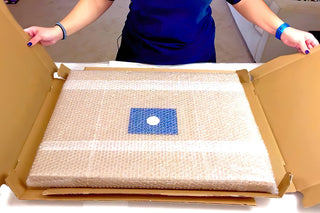
STEP 2 - SHIPPING
We ship your order. We send you an email to track the progress

STEP 3 - DELIVERY
You receive your order. You can also, according to your choice, be delivered to a relay point.
Matte finish
View from behind
Frame (optional)
La famille Van Moerkerken, painted by Gerard ter Borch, is a work that transcends the simple family portrait to become an intimate exploration of human relationships and social values of the 17th century. This iconic piece, distinguished by its finesse and attention to detail, invites viewers to immerse themselves in the universe of the Van Moerkerken family, a Dutch bourgeoisie family. Through exchanged glances and subtle gestures of the characters, Ter Borch manages to capture the very essence of daily life, while infusing a psychological depth that still resonates today.
Style and uniqueness of the work
Gerard ter Borch's style is characterized by striking realism, mastery of textures, and a delicate color palette. In La famille Van Moerkerken, each element is carefully designed to create an atmosphere of calm and harmony. The characters' clothing, richly detailed, testifies to the artist's virtuosity in depicting fabrics, while the soft light illuminating the scene enhances the serenity of the moment. Ter Borch, using natural poses and authentic expressions, succeeds in conveying a palpable intimacy among family members, making this work not only a historical testimony but also a reflection on human bonds. The thoughtfully orchestrated composition, with a balance between figures and the surrounding space, reinforces the impression of closeness and authenticity.
The artist and his influence
Gerard ter Borch, born in 1617 in Zwolle, is one of the masters of Dutch portraiture and genre scenes. His work is marked by a quest for technical perfection and sensitivity towards his subjects. Influenced by the great masters of his time, such as Rembrandt and Frans Hals, Ter Borch develops a style that is uniquely his own, combining precision and expressiveness. His innovative approach to family portraits, where he does not merely depict isolated figures but creates complex visual narratives, has had a lasting impact on the evolution of genre painting. Through his works, he manages to capture not only the outward appearance of his subjects but also their character and social status, making him a
12,34 €