
Painting The Resurrection of Christ appears to the two Marys - Georg Philipp Schmitt | Art print


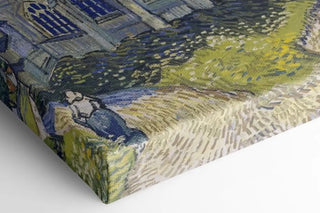
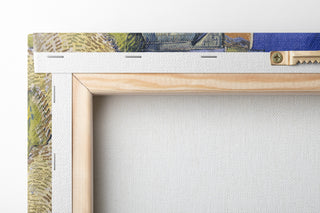
View from behind
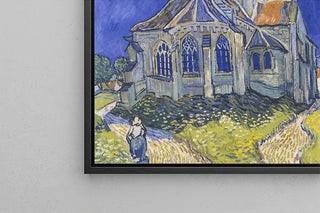
Frame (optional)
In the vast panorama of art history, certain works manage to transcend their era to touch the soul of those who contemplate them. "The Risen Christ Appears to the Two Marys" by Georg Philipp Schmitt is a perfect example. This piece, charged with spirituality and emotion, evokes a key moment in the Christian narrative—the resurrection—where hope and light blend with the depth of faith. Through this painting, Schmitt captures the very essence of the divine encounter, inviting viewers to reflect on life, death, and renewal. The scene unfolds in a setting imbued with serenity, where the luminous atmosphere seems to emanate from another world, echoing the promise of eternal life.
Style and uniqueness of the work
Georg Philipp Schmitt's style is distinguished by its approach that is both realistic and symbolic. In "The Risen Christ Appears to the Two Marys," the artist employs a palette of delicate colors, oscillating between warm tones and cooler shades, to create a visual balance that draws the eye. The figures of the two Marys, depicted with palpable expressiveness, demonstrate an exceptional mastery of movement and human emotions. Their faces, marked by surprise and devotion, reflect an intense spiritual experience. The composition is carefully orchestrated, with each element contributing to the narration of this sacred encounter. The drapery of the garments, the play of light and shadow, as well as the delicately worked background, enhance the mystical dimension of the work, making this scene a true invitation to contemplation.
The artist and his influence
Georg Philipp Schmitt, a prominent figure of his time, successfully established himself in the art world through his ability to combine tradition and innovation. Influenced by the old masters, he developed a distinctive style rich in detail and emotion. His training with great artists of his era allowed him to acquire a solid technique, which he used in service of his personal vision. Schmitt was also a keen observer of society and its evolutions, which is reflected
Painting The Resurrection of Christ appears to the two Marys - Georg Philipp Schmitt | Art print

-10% FROM €95 IN PURCHASES
-15% FROM €195 IN PURCHASES
Regular price
- Unit price
- per
Tax included.
Free shipping
€4.90 / Free shipping on orders over €39
Satisfied or Money Back
Free returns within 30 days
10-year warranty
Our prints are guaranteed for 10 years
Any questions? We are here!
by email to contact@artemlegrand.com
THE STEPS OF YOUR ORDER

STEP 1 - ORDER PLACED
Your order has been confirmed and we are starting production
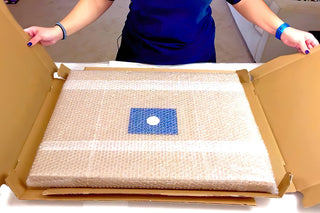
STEP 2 - SHIPPING
We ship your order. We send you an email to track the progress

STEP 3 - DELIVERY
You receive your order. You can also, according to your choice, be delivered to a relay point.
Matte finish
View from behind
Frame (optional)
In the vast panorama of art history, certain works manage to transcend their era to touch the soul of those who contemplate them. "The Risen Christ Appears to the Two Marys" by Georg Philipp Schmitt is a perfect example. This piece, charged with spirituality and emotion, evokes a key moment in the Christian narrative—the resurrection—where hope and light blend with the depth of faith. Through this painting, Schmitt captures the very essence of the divine encounter, inviting viewers to reflect on life, death, and renewal. The scene unfolds in a setting imbued with serenity, where the luminous atmosphere seems to emanate from another world, echoing the promise of eternal life.
Style and uniqueness of the work
Georg Philipp Schmitt's style is distinguished by its approach that is both realistic and symbolic. In "The Risen Christ Appears to the Two Marys," the artist employs a palette of delicate colors, oscillating between warm tones and cooler shades, to create a visual balance that draws the eye. The figures of the two Marys, depicted with palpable expressiveness, demonstrate an exceptional mastery of movement and human emotions. Their faces, marked by surprise and devotion, reflect an intense spiritual experience. The composition is carefully orchestrated, with each element contributing to the narration of this sacred encounter. The drapery of the garments, the play of light and shadow, as well as the delicately worked background, enhance the mystical dimension of the work, making this scene a true invitation to contemplation.
The artist and his influence
Georg Philipp Schmitt, a prominent figure of his time, successfully established himself in the art world through his ability to combine tradition and innovation. Influenced by the old masters, he developed a distinctive style rich in detail and emotion. His training with great artists of his era allowed him to acquire a solid technique, which he used in service of his personal vision. Schmitt was also a keen observer of society and its evolutions, which is reflected
12,34 €