
Painting La Passiflore quadrangulaire - Robert John Thornton | Art print


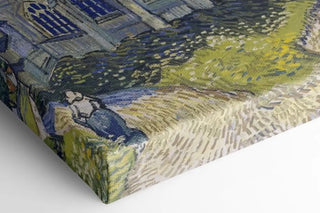
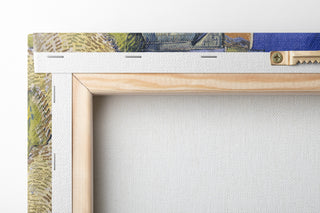
View from behind
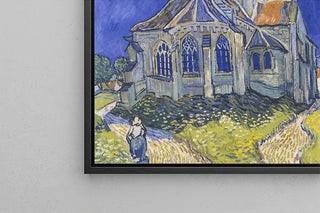
Frame (optional)
In the vast universe of botanical art, "The Square Passionflower" by Robert John Thornton stands out as an iconic work, blending science and aesthetics. This piece, beyond its simple floral representation, embodies a harmonious fusion of meticulous observation of nature and artistic expression. By contemplating this artwork, the viewer is transported to a world where the beauty of shapes and colors is combined with scientific precision. Thornton, as a botanist and artist, invites us to explore the subtleties of flora while awakening our sensitivity to the beauty of the living.
Style and uniqueness of the work
The style of "The Square Passionflower" is distinguished by its striking realism and chromatic richness. Each petal, each leaf appears to have been carefully studied and reproduced, demonstrating an almost scientific approach to art. The shades of green, violet, and white blend delicately, creating a vibrant tableau that captures light in a unique way. This realism is not merely an imitation of nature; it is an interpretation that reveals the very essence of the plant, its geometric forms, and its complex structure. The artwork transcends the simple botanical frame to become a true celebration of nature, where every detail is highlighted with remarkable precision. This approach allows viewers to appreciate not only the beauty of the passionflower but also the complexity of its existence, inviting deeper contemplation.
The artist and his influence
Robert John Thornton, a prominent figure of the 18th century, skillfully combined his passions for botany and art in a work that marked his era. Trained as a physician, he was always fascinated by the wonders of nature, which led him to create botanical illustrations of exceptional quality. His commitment to representing flora with such accuracy not only enriched the field of botanical art but also influenced many artists and scientists. Thornton contributed to evolving the perception of botany by making it accessible and aesthetic, transforming scientific studies into true works of art. His vision paved the way for a new appreciation of nature,
Painting La Passiflore quadrangulaire - Robert John Thornton | Art print

-10% FROM €95 IN PURCHASES
-15% FROM €195 IN PURCHASES
Regular price
- Unit price
- per
Tax included.
Free shipping
€4.90 / Free shipping on orders over €39
Satisfied or Money Back
Free returns within 30 days
10-year warranty
Our prints are guaranteed for 10 years
Any questions? We are here!
by email to contact@artemlegrand.com
THE STEPS OF YOUR ORDER

STEP 1 - ORDER PLACED
Your order has been confirmed and we are starting production
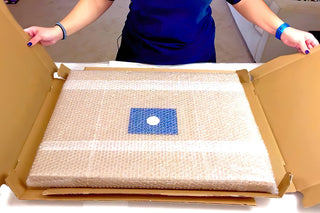
STEP 2 - SHIPPING
We ship your order. We send you an email to track the progress

STEP 3 - DELIVERY
You receive your order. You can also, according to your choice, be delivered to a relay point.
Matte finish
View from behind
Frame (optional)
In the vast universe of botanical art, "The Square Passionflower" by Robert John Thornton stands out as an iconic work, blending science and aesthetics. This piece, beyond its simple floral representation, embodies a harmonious fusion of meticulous observation of nature and artistic expression. By contemplating this artwork, the viewer is transported to a world where the beauty of shapes and colors is combined with scientific precision. Thornton, as a botanist and artist, invites us to explore the subtleties of flora while awakening our sensitivity to the beauty of the living.
Style and uniqueness of the work
The style of "The Square Passionflower" is distinguished by its striking realism and chromatic richness. Each petal, each leaf appears to have been carefully studied and reproduced, demonstrating an almost scientific approach to art. The shades of green, violet, and white blend delicately, creating a vibrant tableau that captures light in a unique way. This realism is not merely an imitation of nature; it is an interpretation that reveals the very essence of the plant, its geometric forms, and its complex structure. The artwork transcends the simple botanical frame to become a true celebration of nature, where every detail is highlighted with remarkable precision. This approach allows viewers to appreciate not only the beauty of the passionflower but also the complexity of its existence, inviting deeper contemplation.
The artist and his influence
Robert John Thornton, a prominent figure of the 18th century, skillfully combined his passions for botany and art in a work that marked his era. Trained as a physician, he was always fascinated by the wonders of nature, which led him to create botanical illustrations of exceptional quality. His commitment to representing flora with such accuracy not only enriched the field of botanical art but also influenced many artists and scientists. Thornton contributed to evolving the perception of botany by making it accessible and aesthetic, transforming scientific studies into true works of art. His vision paved the way for a new appreciation of nature,
12,34 €