
Painting The Old Pine Darien Connecticut - John Frederick Kensett | Art print


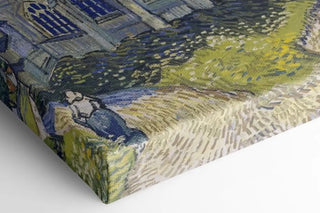
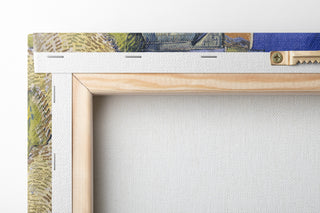
View from behind
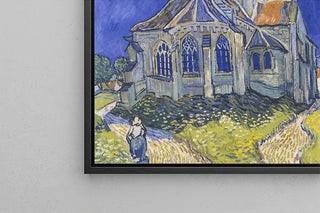
Frame (optional)
In the vast panorama of American art history, certain works stand out for their ability to capture the essence of a place with such precision that they become silent witnesses to the passage of time. "Reproduction Le vieux pin Darien Connecticut" by John Frederick Kensett is one of these works. Painted in the 19th century, this canvas evokes not only the natural beauty of Connecticut but also the deep emotion inspired by contemplating nature. Through this art print, the viewer is invited to immerse themselves in a universe where light and color blend harmoniously, offering an unforgettable visual experience that transcends eras.
Style and uniqueness of the artwork
Kensett's style is deeply rooted in the Hudson River School movement, which advocates a romantic approach to nature. In "Reproduction Le vieux pin Darien Connecticut," the artist manages to marry realism with an almost spiritual dimension. The meticulous details of the old pine, with its sprawling branches and gnarled trunk, are rendered with such precision that one can almost feel the texture of the bark. Light, for its part, plays a crucial role in this composition. It filters through the leaves, creating delicate shadows that add striking depth to the piece. This painting does not merely depict a landscape; it evokes an atmosphere, a sense of peace and serenity that resonates with the human soul.
The artist and his influence
John Frederick Kensett, an emblematic figure of American landscape art, knew how to impose his unique perspective on nature. Born in 1816, he was influenced by his travels in Europe, but it was in America that he truly found his inspiration. Kensett developed a painting technique that allowed him to capture subtle nuances of light, a fundamental aspect of his art. His influence on his contemporaries and future generations of artists is undeniable, as he paved the way for a new appreciation of nature in art. By emphasizing the beauty of American landscapes, he contributed to forging a national artistic identity, while celebrating the grandeur of the natural spaces that surrounded him.
Painting The Old Pine Darien Connecticut - John Frederick Kensett | Art print

-10% FROM €95 IN PURCHASES
-15% FROM €195 IN PURCHASES
Regular price
- Unit price
- per
Tax included.
Free shipping
€4.90 / Free shipping on orders over €39
Satisfied or Money Back
Free returns within 30 days
10-year warranty
Our prints are guaranteed for 10 years
Any questions? We are here!
by email to contact@artemlegrand.com
THE STEPS OF YOUR ORDER

STEP 1 - ORDER PLACED
Your order has been confirmed and we are starting production

STEP 2 - SHIPPING
We ship your order. We send you an email to track the progress

STEP 3 - DELIVERY
You receive your order. You can also, according to your choice, be delivered to a relay point.
Matte finish
View from behind
Frame (optional)
In the vast panorama of American art history, certain works stand out for their ability to capture the essence of a place with such precision that they become silent witnesses to the passage of time. "Reproduction Le vieux pin Darien Connecticut" by John Frederick Kensett is one of these works. Painted in the 19th century, this canvas evokes not only the natural beauty of Connecticut but also the deep emotion inspired by contemplating nature. Through this art print, the viewer is invited to immerse themselves in a universe where light and color blend harmoniously, offering an unforgettable visual experience that transcends eras.
Style and uniqueness of the artwork
Kensett's style is deeply rooted in the Hudson River School movement, which advocates a romantic approach to nature. In "Reproduction Le vieux pin Darien Connecticut," the artist manages to marry realism with an almost spiritual dimension. The meticulous details of the old pine, with its sprawling branches and gnarled trunk, are rendered with such precision that one can almost feel the texture of the bark. Light, for its part, plays a crucial role in this composition. It filters through the leaves, creating delicate shadows that add striking depth to the piece. This painting does not merely depict a landscape; it evokes an atmosphere, a sense of peace and serenity that resonates with the human soul.
The artist and his influence
John Frederick Kensett, an emblematic figure of American landscape art, knew how to impose his unique perspective on nature. Born in 1816, he was influenced by his travels in Europe, but it was in America that he truly found his inspiration. Kensett developed a painting technique that allowed him to capture subtle nuances of light, a fundamental aspect of his art. His influence on his contemporaries and future generations of artists is undeniable, as he paved the way for a new appreciation of nature in art. By emphasizing the beauty of American landscapes, he contributed to forging a national artistic identity, while celebrating the grandeur of the natural spaces that surrounded him.
12,34 €