
Art print The House of Dr. Gachet in Auvers-sur-Oise - Paul Cézanne


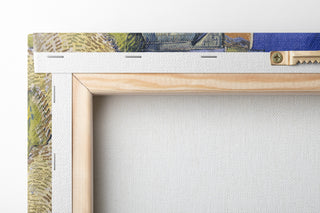
View from behind
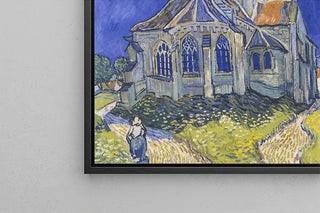
Frame (optional)
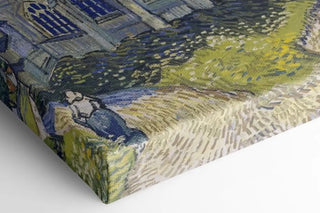
In the fascinating universe of art, some works transcend their era to become timeless witnesses to human creativity. "The House of Dr. Gachet in Auvers-sur-Oise" by Paul Cézanne is one of those masterpieces that capture both the beauty and melancholy of a moment frozen in time. This artwork, painted in 1890, illustrates the final chapter of Vincent van Gogh's life, a dear friend of Cézanne, and evokes an atmosphere of solitude and reflection. The house of Dr. Gachet, a doctor and friend of artists, thus becomes a symbol of life's fragility and art. Through this art print, the viewer is invited to immerse themselves in a world where color and form blend to tell a poignant story.
Style and uniqueness of the work
The work stands out for its unique style, characterized by bold brushstrokes and a palette of vibrant colors. Cézanne, considered the father of modern painting, uses geometric shapes to structure his composition, transforming reality into a harmonious arrangement. The lines of the house, the trees, and the surrounding landscape are rendered with a simplicity that does not diminish their emotional depth. The choice of colors, oscillating between warm and cool tones, creates a striking contrast that draws the eye and invites contemplation. Each element of the canvas contributes to an atmosphere of disturbed calm, where the beauty of the landscape clashes with the underlying melancholy of human existence. The way Cézanne captures light and shadow also plays a crucial role, giving the artwork an almost sculptural dimension.
The artist and his influence
Paul Cézanne, an emblematic figure of post-impressionism, left an indelible mark on the art world. His innovative approach to color and composition paved the way for many 20th-century artists, including cubists like Picasso and Braque. Cézanne always sought to represent nature in a way that transcends simple imitation, aiming to capture the very essence of objects.
Art print The House of Dr. Gachet in Auvers-sur-Oise - Paul Cézanne

-10% FROM €95 IN PURCHASES
-15% FROM €195 IN PURCHASES
Regular price
- Unit price
- per
Tax included.
Free shipping
€4.90 / Free shipping on orders over €39
Satisfied or Money Back
Free returns within 30 days
10-year warranty
Our prints are guaranteed for 10 years
Any questions? We are here!
by email to contact@artemlegrand.com
THE STEPS OF YOUR ORDER

STEP 1 - ORDER PLACED
Your order has been confirmed and we are starting production
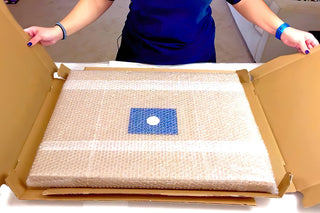
STEP 2 - SHIPPING
We ship your order. We send you an email to track the progress
STEP 3 - DELIVERY
You receive your order. You can also, according to your choice, be delivered to a relay point.
Matte finish
View from behind
Frame (optional)
In the fascinating universe of art, some works transcend their era to become timeless witnesses to human creativity. "The House of Dr. Gachet in Auvers-sur-Oise" by Paul Cézanne is one of those masterpieces that capture both the beauty and melancholy of a moment frozen in time. This artwork, painted in 1890, illustrates the final chapter of Vincent van Gogh's life, a dear friend of Cézanne, and evokes an atmosphere of solitude and reflection. The house of Dr. Gachet, a doctor and friend of artists, thus becomes a symbol of life's fragility and art. Through this art print, the viewer is invited to immerse themselves in a world where color and form blend to tell a poignant story.
Style and uniqueness of the work
The work stands out for its unique style, characterized by bold brushstrokes and a palette of vibrant colors. Cézanne, considered the father of modern painting, uses geometric shapes to structure his composition, transforming reality into a harmonious arrangement. The lines of the house, the trees, and the surrounding landscape are rendered with a simplicity that does not diminish their emotional depth. The choice of colors, oscillating between warm and cool tones, creates a striking contrast that draws the eye and invites contemplation. Each element of the canvas contributes to an atmosphere of disturbed calm, where the beauty of the landscape clashes with the underlying melancholy of human existence. The way Cézanne captures light and shadow also plays a crucial role, giving the artwork an almost sculptural dimension.
The artist and his influence
Paul Cézanne, an emblematic figure of post-impressionism, left an indelible mark on the art world. His innovative approach to color and composition paved the way for many 20th-century artists, including cubists like Picasso and Braque. Cézanne always sought to represent nature in a way that transcends simple imitation, aiming to capture the very essence of objects.
12,34 €