
Painting The Blue Hat - Walter Richard Sickert | Art print


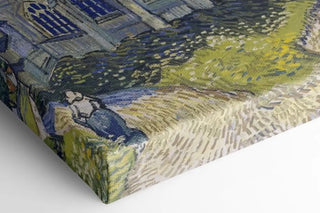
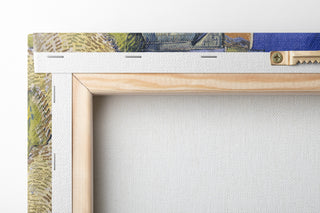
View from behind
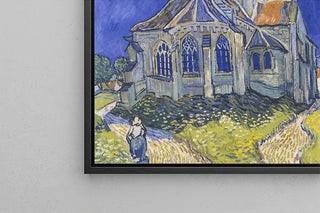
Frame (optional)
In the fascinating world of art, some works stand out for their ability to capture the very essence of everyday life while revealing deep emotions. "The Blue Hat" by Walter Richard Sickert is one of those creations that transcends a simple painting to become a window into a vibrant world. This piece, which evokes an intimate scene, invites the viewer to immerse themselves in a frozen moment in time, where light and shadow dance across human forms. The depiction of the figure with the blue hat, distant from academic art, reflects an innovative approach that has marked art history.
Style and uniqueness of the work
Sickert's style is distinguished by its bold technique, oscillating between realism and impressionism. "The Blue Hat" perfectly illustrates this duality, with brushstrokes that seem both spontaneous and controlled. The artist plays with shades of color, creating an intimate atmosphere that envelops the subject. The composition, though seemingly simple, reveals psychological depth, making the viewer feel an almost tangible connection with the depicted character. Sickert does not merely seek to reproduce reality but to grasp its essence, to convey emotion, an ambiance. This painting, through its choice of colors and play of light, becomes a living work, where each gaze can reveal a new interpretation.
The artist and his influence
Walter Richard Sickert, an emblematic figure of the British impressionist movement, knew how to leave his mark on his era through an innovative approach to painting. Born in 1860, he was influenced by masters such as Degas and Manet but quickly developed a style that was uniquely his own. Sickert always sought to explore modern life, capturing scenes of urban life and moments of daily existence. His work paved the way for many contemporary artists, broadening the horizons of what painting could be. Through works like "The Blue Hat," he established a dialogue between the viewer and art, encouraging reflection on the nature of observation and interpretation. His influence endures, inspiring generations of artists.
Painting The Blue Hat - Walter Richard Sickert | Art print

-10% FROM €95 IN PURCHASES
-15% FROM €195 IN PURCHASES
Regular price
- Unit price
- per
Tax included.
Free shipping
€4.90 / Free shipping on orders over €39
Satisfied or Money Back
Free returns within 30 days
10-year warranty
Our prints are guaranteed for 10 years
Any questions? We are here!
by email to contact@artemlegrand.com
THE STEPS OF YOUR ORDER

STEP 1 - ORDER PLACED
Your order has been confirmed and we are starting production

STEP 2 - SHIPPING
We ship your order. We send you an email to track the progress

STEP 3 - DELIVERY
You receive your order. You can also, according to your choice, be delivered to a relay point.
Matte finish
View from behind
Frame (optional)
In the fascinating world of art, some works stand out for their ability to capture the very essence of everyday life while revealing deep emotions. "The Blue Hat" by Walter Richard Sickert is one of those creations that transcends a simple painting to become a window into a vibrant world. This piece, which evokes an intimate scene, invites the viewer to immerse themselves in a frozen moment in time, where light and shadow dance across human forms. The depiction of the figure with the blue hat, distant from academic art, reflects an innovative approach that has marked art history.
Style and uniqueness of the work
Sickert's style is distinguished by its bold technique, oscillating between realism and impressionism. "The Blue Hat" perfectly illustrates this duality, with brushstrokes that seem both spontaneous and controlled. The artist plays with shades of color, creating an intimate atmosphere that envelops the subject. The composition, though seemingly simple, reveals psychological depth, making the viewer feel an almost tangible connection with the depicted character. Sickert does not merely seek to reproduce reality but to grasp its essence, to convey emotion, an ambiance. This painting, through its choice of colors and play of light, becomes a living work, where each gaze can reveal a new interpretation.
The artist and his influence
Walter Richard Sickert, an emblematic figure of the British impressionist movement, knew how to leave his mark on his era through an innovative approach to painting. Born in 1860, he was influenced by masters such as Degas and Manet but quickly developed a style that was uniquely his own. Sickert always sought to explore modern life, capturing scenes of urban life and moments of daily existence. His work paved the way for many contemporary artists, broadening the horizons of what painting could be. Through works like "The Blue Hat," he established a dialogue between the viewer and art, encouraging reflection on the nature of observation and interpretation. His influence endures, inspiring generations of artists.
12,34 €