
Art print Study for The Three Glorious Days - Merry-Joseph Blondel | Art print


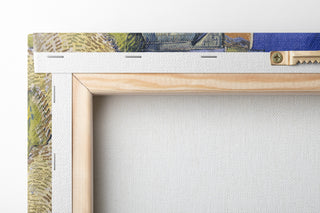
View from behind
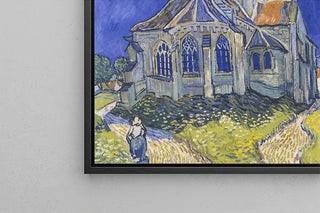
Frame (optional)
The artwork "Study for The Three Glorious Days" by Merry-Joseph Blondel stands as a true testament to the artistic and historical commitment of its era. Created in the early 19th century, this study foreshadows an iconic painting celebrating the revolutionary events of July 1830 in France. By immersing oneself in this piece, the viewer is invited to explore not only the technical virtuosity of the artist but also the political and social resonances behind each brushstroke. Blondel, as an engaged artist, manages to capture the very essence of popular struggles while offering an aesthetic representation of a pivotal period in French history.
Style and uniqueness of the work
The piece is distinguished by a neoclassical style, characterized by precise lines and balanced composition. Blondel, a master of chiaroscuro, uses light to emphasize the expressions of the characters and the drapery of their clothing, creating an atmosphere that is both dramatic and emotional. The figures are rendered with great meticulousness, each detail reflecting attentive observation and a deep understanding of human anatomy. This study, although a preparation for a larger painting, is self-sufficient through the richness of its colors and the depth of its emotions. The choice of colors, ranging from warm tones to cooler shades, evokes a sense of tension and hope, marking the transition between the old regime and the aspirations of a people seeking freedom.
The artist and his influence
Merry-Joseph Blondel, born in 1781, is a prominent figure of French neoclassicism. A student of Jacques-Louis David, he absorbed his master's teachings while developing a style that is uniquely his own. His career is marked by success, and he established himself as a leading painter, notably through his historical works and portraits. Blondel does not merely reproduce reality; he seeks to transcend it, to make it a source of inspiration for his contemporaries. His commitment to themes of liberty and social justice still resonates today.
Art print Study for The Three Glorious Days - Merry-Joseph Blondel | Art print

-10% FROM €95 IN PURCHASES
-15% FROM €195 IN PURCHASES
Regular price
- Unit price
- per
Tax included.
Free shipping
€4.90 / Free shipping on orders over €39
Satisfied or Money Back
Free returns within 30 days
10-year warranty
Our prints are guaranteed for 10 years
Any questions? We are here!
by email to contact@artemlegrand.com
THE STEPS OF YOUR ORDER

STEP 1 - ORDER PLACED
Your order has been confirmed and we are starting production

STEP 2 - SHIPPING
We ship your order. We send you an email to track the progress

STEP 3 - DELIVERY
You receive your order. You can also, according to your choice, be delivered to a relay point.
Matte finish
View from behind
Frame (optional)
The artwork "Study for The Three Glorious Days" by Merry-Joseph Blondel stands as a true testament to the artistic and historical commitment of its era. Created in the early 19th century, this study foreshadows an iconic painting celebrating the revolutionary events of July 1830 in France. By immersing oneself in this piece, the viewer is invited to explore not only the technical virtuosity of the artist but also the political and social resonances behind each brushstroke. Blondel, as an engaged artist, manages to capture the very essence of popular struggles while offering an aesthetic representation of a pivotal period in French history.
Style and uniqueness of the work
The piece is distinguished by a neoclassical style, characterized by precise lines and balanced composition. Blondel, a master of chiaroscuro, uses light to emphasize the expressions of the characters and the drapery of their clothing, creating an atmosphere that is both dramatic and emotional. The figures are rendered with great meticulousness, each detail reflecting attentive observation and a deep understanding of human anatomy. This study, although a preparation for a larger painting, is self-sufficient through the richness of its colors and the depth of its emotions. The choice of colors, ranging from warm tones to cooler shades, evokes a sense of tension and hope, marking the transition between the old regime and the aspirations of a people seeking freedom.
The artist and his influence
Merry-Joseph Blondel, born in 1781, is a prominent figure of French neoclassicism. A student of Jacques-Louis David, he absorbed his master's teachings while developing a style that is uniquely his own. His career is marked by success, and he established himself as a leading painter, notably through his historical works and portraits. Blondel does not merely reproduce reality; he seeks to transcend it, to make it a source of inspiration for his contemporaries. His commitment to themes of liberty and social justice still resonates today.
12,34 €