
Painting Still life with violin Still life with violin - Georges Braque


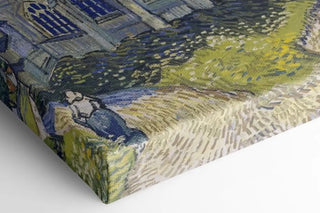
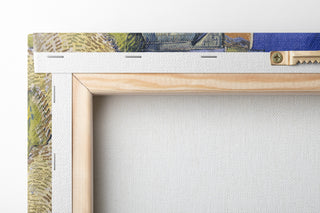
View from behind
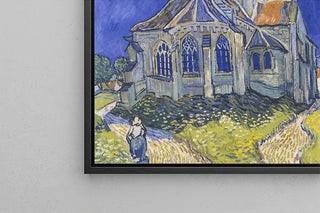
Frame (optional)
Nature morte au violon by Georges Braque stands as an iconic masterpiece of Cubism, an artistic movement that revolutionized the perception of space and forms in the early 20th century. Focusing on this composition, the viewer is immediately transported into a universe where objects are no longer simply depicted but reinvented. Braque, with his mastery of shapes and colors, manages to transcend mere representation to offer a profound reflection on reality and perception. This work is a true testament to the experimentation and quest for meaning that characterize modern art.
Style and uniqueness of the artwork
Nature morte au violon is distinguished by its warm color palette and geometric shapes that fragment space. Braque employs earthy tones, browns, and ochres, evoking both the warmth of an interior and the melancholy of a reflection on the passage of time. The objects, notably the violin, are decomposed into facets, creating a visual dynamic that invites the viewer to explore every corner of the canvas. This Cubist approach allows the violin to be seen from different angles simultaneously, challenging traditional perspective conventions. The composition, although static, exudes a palpable energy, as if each element interacts in a silent dialogue, revealing the complexity of relationships between objects.
The artist and his influence
Georges Braque, as a co-founder of Cubism alongside Pablo Picasso, played a fundamental role in the evolution of modern art. His artistic approach, which combines innovation and tradition, paved the way for many 20th-century artists. By drawing inspiration from past masters while challenging established norms, Braque created a unique visual language that continues to influence future generations. His ability to transform everyday objects into works of art also redefined the very nature of painting. The impact of his work extends far beyond Cubism, touching fields as diverse as sculpture, music, and even literature. Exploring themes such as perception and reality, Braque left an indelible mark on the history of
Painting Still life with violin Still life with violin - Georges Braque

-10% FROM €95 IN PURCHASES
-15% FROM €195 IN PURCHASES
Regular price
- Unit price
- per
Tax included.
Free shipping
€4.90 / Free shipping on orders over €39
Satisfied or Money Back
Free returns within 30 days
10-year warranty
Our prints are guaranteed for 10 years
Any questions? We are here!
by email to contact@artemlegrand.com
THE STEPS OF YOUR ORDER
STEP 1 - ORDER PLACED
Your order has been confirmed and we are starting production
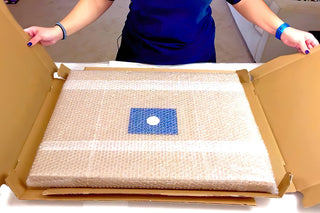
STEP 2 - SHIPPING
We ship your order. We send you an email to track the progress
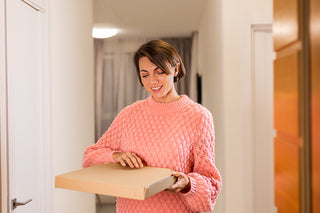
STEP 3 - DELIVERY
You receive your order. You can also, according to your choice, be delivered to a relay point.
Matte finish
View from behind
Frame (optional)
Nature morte au violon by Georges Braque stands as an iconic masterpiece of Cubism, an artistic movement that revolutionized the perception of space and forms in the early 20th century. Focusing on this composition, the viewer is immediately transported into a universe where objects are no longer simply depicted but reinvented. Braque, with his mastery of shapes and colors, manages to transcend mere representation to offer a profound reflection on reality and perception. This work is a true testament to the experimentation and quest for meaning that characterize modern art.
Style and uniqueness of the artwork
Nature morte au violon is distinguished by its warm color palette and geometric shapes that fragment space. Braque employs earthy tones, browns, and ochres, evoking both the warmth of an interior and the melancholy of a reflection on the passage of time. The objects, notably the violin, are decomposed into facets, creating a visual dynamic that invites the viewer to explore every corner of the canvas. This Cubist approach allows the violin to be seen from different angles simultaneously, challenging traditional perspective conventions. The composition, although static, exudes a palpable energy, as if each element interacts in a silent dialogue, revealing the complexity of relationships between objects.
The artist and his influence
Georges Braque, as a co-founder of Cubism alongside Pablo Picasso, played a fundamental role in the evolution of modern art. His artistic approach, which combines innovation and tradition, paved the way for many 20th-century artists. By drawing inspiration from past masters while challenging established norms, Braque created a unique visual language that continues to influence future generations. His ability to transform everyday objects into works of art also redefined the very nature of painting. The impact of his work extends far beyond Cubism, touching fields as diverse as sculpture, music, and even literature. Exploring themes such as perception and reality, Braque left an indelible mark on the history of
12,34 €