
Nature morte with a Roemer, peeled cherries with lemon, and a small bread on a partially draped table - Gillis Gillisz de Bergh | Art print


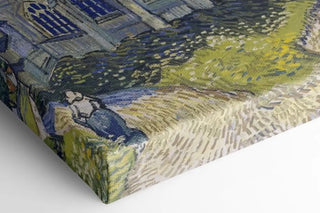
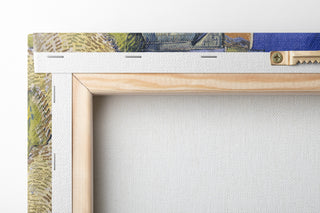
View from behind
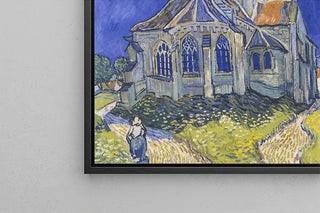
Frame (optional)
In the fascinating world of still life, the work of Gillis Gillisz de Bergh, titled "Art print with a Roemer, peeled lemon cherries, and a small bread on a partially draped table," stands out for its elegance and visual richness. This piece, emblematic of 17th-century Dutch art, invites the viewer to an immersive contemplation, where each element tells a story. The fruits, with their shine and texture, seem almost tangible, while the Roemer, this delicate glass, evokes conviviality and sharing. The composition, both harmonious and skillfully unbalanced, captures the eye and prompts reflection on the fleeting beauty of life.
Style and uniqueness of the work
Gillis Gillisz de Bergh's style is characterized by meticulous attention to detail and mastery of light play. In this art print, light plays a crucial role, illuminating the juicy cherries and the peeled lemon, creating reflections that add depth to the scene. The color palette, subtly chosen, oscillates between warm tones and cooler shades, enhancing realism while imparting an almost poetic atmosphere to the piece. Textures are rendered with such precision that one could almost feel the roughness of the small bread's crust or the softness of the fruits. This attention to detail demonstrates refined technique, where each element is carefully arranged to offer a balanced and captivating composition.
The artist and his influence
Gillis Gillisz de Bergh, active in the 17th century, is often regarded as a master of still life. His work is rooted in the Dutch tradition, which celebrates the beauty of everyday objects. Influenced by his contemporaries, he developed a personal style that combines realism and poetry. Bergh's works are marked by a particular sensitivity, where a reflection on life's transience and the value of simple moments can be perceived. His legacy endures, inspiring many contemporary artists who seek
Nature morte with a Roemer, peeled cherries with lemon, and a small bread on a partially draped table - Gillis Gillisz de Bergh | Art print

-10% FROM €95 IN PURCHASES
-15% FROM €195 IN PURCHASES
Regular price
- Unit price
- per
Tax included.
Free shipping
€4.90 / Free shipping on orders over €39
Satisfied or Money Back
Free returns within 30 days
10-year warranty
Our prints are guaranteed for 10 years
Any questions? We are here!
by email to contact@artemlegrand.com
THE STEPS OF YOUR ORDER

STEP 1 - ORDER PLACED
Your order has been confirmed and we are starting production
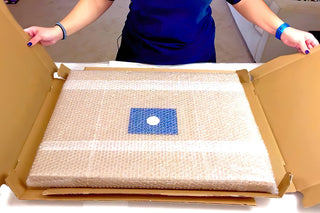
STEP 2 - SHIPPING
We ship your order. We send you an email to track the progress

STEP 3 - DELIVERY
You receive your order. You can also, according to your choice, be delivered to a relay point.
Matte finish
View from behind
Frame (optional)
In the fascinating world of still life, the work of Gillis Gillisz de Bergh, titled "Art print with a Roemer, peeled lemon cherries, and a small bread on a partially draped table," stands out for its elegance and visual richness. This piece, emblematic of 17th-century Dutch art, invites the viewer to an immersive contemplation, where each element tells a story. The fruits, with their shine and texture, seem almost tangible, while the Roemer, this delicate glass, evokes conviviality and sharing. The composition, both harmonious and skillfully unbalanced, captures the eye and prompts reflection on the fleeting beauty of life.
Style and uniqueness of the work
Gillis Gillisz de Bergh's style is characterized by meticulous attention to detail and mastery of light play. In this art print, light plays a crucial role, illuminating the juicy cherries and the peeled lemon, creating reflections that add depth to the scene. The color palette, subtly chosen, oscillates between warm tones and cooler shades, enhancing realism while imparting an almost poetic atmosphere to the piece. Textures are rendered with such precision that one could almost feel the roughness of the small bread's crust or the softness of the fruits. This attention to detail demonstrates refined technique, where each element is carefully arranged to offer a balanced and captivating composition.
The artist and his influence
Gillis Gillisz de Bergh, active in the 17th century, is often regarded as a master of still life. His work is rooted in the Dutch tradition, which celebrates the beauty of everyday objects. Influenced by his contemporaries, he developed a personal style that combines realism and poetry. Bergh's works are marked by a particular sensitivity, where a reflection on life's transience and the value of simple moments can be perceived. His legacy endures, inspiring many contemporary artists who seek
12,34 €