
Flower Still Life in a Vase on a Stone Ledge with a Corn Ear and a Snail - Jacob Rootius | Art print


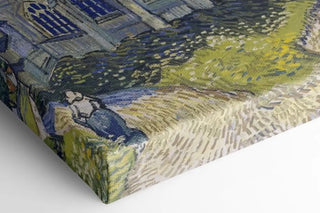
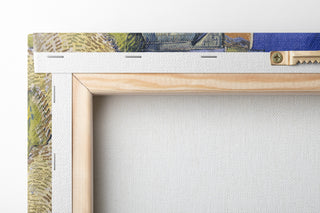
View from behind
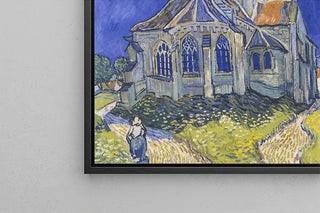
Frame (optional)
In the fascinating world of still life, Jacob Rootius's work stands out for its elegance and delicacy. The art print of his famous composition, "Nature morte de fleurs dans un vase sur un rebord de pierre avec un épi de maïs et un escargot," immerses us in a realm where the fleeting beauty of nature is captured with remarkable precision. Every element, from the ceramic vase to the carefully arranged flowers, tells a story—an interaction between life and death, between blooming and withering. This piece, both simple and complex, invites us to contemplate the richness of the details surrounding it, to appreciate the light and shadows dancing on the stone, to almost feel the texture of the corn and the discreet presence of the snail, a symbol of slowness and contemplation.
Style and uniqueness of the work
The uniqueness of this work lies in how Rootius manages to marry meticulous detail with a harmonious composition. The vibrant colors of the flowers, ranging from deep reds to bright yellows, subtly contrast with the neutral tones of the stone. Each petal appears to have been painted with extreme care, as if the artist aimed to immortalize a fleeting moment of natural beauty. The choice of elements, the corn ear and the snail, is not accidental. They evoke the richness and simplicity of rural life, while adding a symbolic dimension to the piece. This art print does not merely depict inanimate objects; it also evokes emotions, memories, and a reflection on the passage of time.
The artist and his influence
Jacob Rootius, though less known than some of his contemporaries, managed to leave his mark on his era with his unique vision of still life. Influenced by the great masters of the 17th century, he reinterpreted the codes of this artistic genre while infusing it with his own sensitivity. His work demonstrates a deep understanding of light and textures, essential elements in still life painting. Rootius also was a pioneer in...
Flower Still Life in a Vase on a Stone Ledge with a Corn Ear and a Snail - Jacob Rootius | Art print

-10% FROM €95 IN PURCHASES
-15% FROM €195 IN PURCHASES
Regular price
- Unit price
- per
Tax included.
Free shipping
€4.90 / Free shipping on orders over €39
Satisfied or Money Back
Free returns within 30 days
10-year warranty
Our prints are guaranteed for 10 years
Any questions? We are here!
by email to contact@artemlegrand.com
THE STEPS OF YOUR ORDER

STEP 1 - ORDER PLACED
Your order has been confirmed and we are starting production
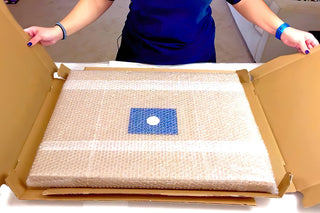
STEP 2 - SHIPPING
We ship your order. We send you an email to track the progress

STEP 3 - DELIVERY
You receive your order. You can also, according to your choice, be delivered to a relay point.
Matte finish
View from behind
Frame (optional)
In the fascinating world of still life, Jacob Rootius's work stands out for its elegance and delicacy. The art print of his famous composition, "Nature morte de fleurs dans un vase sur un rebord de pierre avec un épi de maïs et un escargot," immerses us in a realm where the fleeting beauty of nature is captured with remarkable precision. Every element, from the ceramic vase to the carefully arranged flowers, tells a story—an interaction between life and death, between blooming and withering. This piece, both simple and complex, invites us to contemplate the richness of the details surrounding it, to appreciate the light and shadows dancing on the stone, to almost feel the texture of the corn and the discreet presence of the snail, a symbol of slowness and contemplation.
Style and uniqueness of the work
The uniqueness of this work lies in how Rootius manages to marry meticulous detail with a harmonious composition. The vibrant colors of the flowers, ranging from deep reds to bright yellows, subtly contrast with the neutral tones of the stone. Each petal appears to have been painted with extreme care, as if the artist aimed to immortalize a fleeting moment of natural beauty. The choice of elements, the corn ear and the snail, is not accidental. They evoke the richness and simplicity of rural life, while adding a symbolic dimension to the piece. This art print does not merely depict inanimate objects; it also evokes emotions, memories, and a reflection on the passage of time.
The artist and his influence
Jacob Rootius, though less known than some of his contemporaries, managed to leave his mark on his era with his unique vision of still life. Influenced by the great masters of the 17th century, he reinterpreted the codes of this artistic genre while infusing it with his own sensitivity. His work demonstrates a deep understanding of light and textures, essential elements in still life painting. Rootius also was a pioneer in...
12,34 €