
Painting Quadrille at the Bal Tabarin - Louis Abel-Truchet | Art print


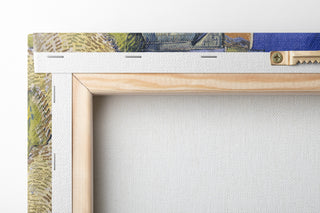
View from behind
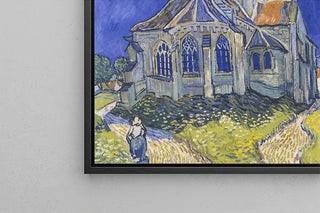
Frame (optional)
In the vibrant world of the Belle Époque, "Quadrille at the Tabarin Ball" by Louis Abel-Truchet stands as a compelling testament to the social and artistic effervescence of its time. This artwork, which captures the very essence of Parisian evenings, transports us to a world where dance, music, and joie de vivre intertwine in a lively ball. Through this art print, viewers are invited to immerse themselves in a festive atmosphere, where every detail evokes the elegance and lightness of the costumes, as well as the contagious energy of the dancers. The lively and colorful scene reminds us of the importance of gathering and celebration venues in early 20th-century French society.
Style and uniqueness of the work
Louis Abel-Truchet's style is distinguished by his ability to blend realism and impressionism, creating a piece that is both lively and poetic. In "Quadrille at the Tabarin Ball," the vibrant colors and graceful movements of the characters are rendered with remarkable finesse. The faces of the dancers, though stylized, express a range of emotions that reflect the festive atmosphere of the ball. The artist skillfully plays with light, creating shadows and reflections that add an almost tactile dimension to the scene. The composition, dynamic and balanced, guides the viewer's eye through the crowd, allowing appreciation of every detail, from the flamboyant costumes to the joyful expressions. This work is not merely a depiction of a social event but a true celebration of life and the culture of its era.
The artist and his influence
Louis Abel-Truchet, born at the end of the 19th century, is one of the emblematic artists of his time, navigating between several artistic movements while developing a distinctive personal style. Influenced by Impressionist masters, he captured the spirit of his era through scenes of daily life, ballet performances, and spectacles. His work demonstrates meticulous observation of society, but also a desire to celebrate the beauty of human interactions. Abel-Truchet established himself as a visual chronicler of the Belle Époque, offering future generations
Painting Quadrille at the Bal Tabarin - Louis Abel-Truchet | Art print

-10% FROM €95 IN PURCHASES
-15% FROM €195 IN PURCHASES
Regular price
- Unit price
- per
Tax included.
Free shipping
€4.90 / Free shipping on orders over €39
Satisfied or Money Back
Free returns within 30 days
10-year warranty
Our prints are guaranteed for 10 years
Any questions? We are here!
by email to contact@artemlegrand.com
THE STEPS OF YOUR ORDER
STEP 1 - ORDER PLACED
Your order has been confirmed and we are starting production
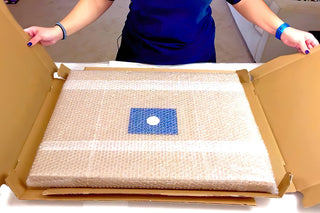
STEP 2 - SHIPPING
We ship your order. We send you an email to track the progress

STEP 3 - DELIVERY
You receive your order. You can also, according to your choice, be delivered to a relay point.
Matte finish
View from behind
Frame (optional)
In the vibrant world of the Belle Époque, "Quadrille at the Tabarin Ball" by Louis Abel-Truchet stands as a compelling testament to the social and artistic effervescence of its time. This artwork, which captures the very essence of Parisian evenings, transports us to a world where dance, music, and joie de vivre intertwine in a lively ball. Through this art print, viewers are invited to immerse themselves in a festive atmosphere, where every detail evokes the elegance and lightness of the costumes, as well as the contagious energy of the dancers. The lively and colorful scene reminds us of the importance of gathering and celebration venues in early 20th-century French society.
Style and uniqueness of the work
Louis Abel-Truchet's style is distinguished by his ability to blend realism and impressionism, creating a piece that is both lively and poetic. In "Quadrille at the Tabarin Ball," the vibrant colors and graceful movements of the characters are rendered with remarkable finesse. The faces of the dancers, though stylized, express a range of emotions that reflect the festive atmosphere of the ball. The artist skillfully plays with light, creating shadows and reflections that add an almost tactile dimension to the scene. The composition, dynamic and balanced, guides the viewer's eye through the crowd, allowing appreciation of every detail, from the flamboyant costumes to the joyful expressions. This work is not merely a depiction of a social event but a true celebration of life and the culture of its era.
The artist and his influence
Louis Abel-Truchet, born at the end of the 19th century, is one of the emblematic artists of his time, navigating between several artistic movements while developing a distinctive personal style. Influenced by Impressionist masters, he captured the spirit of his era through scenes of daily life, ballet performances, and spectacles. His work demonstrates meticulous observation of society, but also a desire to celebrate the beauty of human interactions. Abel-Truchet established himself as a visual chronicler of the Belle Époque, offering future generations
12,34 €