
Portrait of the Countess of Goyon - Jean-Hippolyte Flandrin | Art print


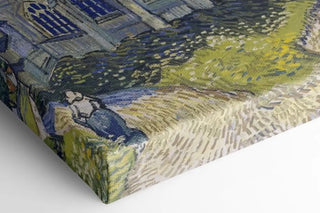
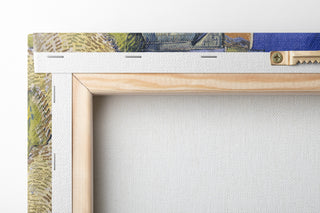
View from behind
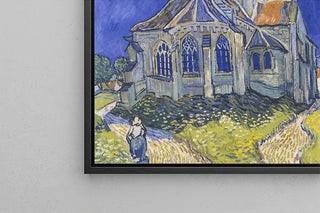
Frame (optional)
Portrait of the Countess of Goyon - Jean-Hippolyte Flandrin – Captivating Introduction
The "Portrait of the Countess of Goyon" by Jean-Hippolyte Flandrin is an iconic 19th-century artwork that transcends mere representation to immerse the viewer in the intimacy of a fascinating personality. Created in 1854, this art print does not merely capture the physical features of the countess; it also evokes her essence, her status, and her era. The delicacy of the details and the harmony of colors invite prolonged contemplation, allowing one to feel the depth of emotion emanating from this painting. In a world where art is often just a simple image, Flandrin succeeds in creating a tangible connection between the subject and the observer, making this art print all the more captivating.
Style and uniqueness of the work
Flandrin's style is characterized by an exceptional mastery of chiaroscuro and meticulous attention to textures. In the "Portrait of the Countess of Goyon," he uses subtle nuances to bring the countess's skin to life, emphasizing the softness of her face and the richness of her hair. The drapery of her dress is rendered with such precision that it almost feels tangible, demonstrating the artist's skill in capturing movement and light. The neutral background highlights the subject, creating a contrast that immediately draws the eye to the serene face of the countess. This work also stands out for its psychological approach, where each gaze, each expression seems to tell a story, making this art print a true mirror of the soul.
The artist and his influence
Jean-Hippolyte Flandrin, a major figure of the École de Paris, established himself as a renowned portraitist throughout his career. Influenced by the classical tradition while incorporating elements of modernity, he developed a style that is uniquely his own, combining academic rigor with sensitivity. Flandrin was also a pioneer in exploring human emotions through portraiture, a process that inspired many artists of his time and subsequent generations. His ability to translate the psychology of his subjects onto the canvas has made
Portrait of the Countess of Goyon - Jean-Hippolyte Flandrin | Art print

-10% FROM €95 IN PURCHASES
-15% FROM €195 IN PURCHASES
Regular price
- Unit price
- per
Tax included.
Free shipping
€4.90 / Free shipping on orders over €39
Satisfied or Money Back
Free returns within 30 days
10-year warranty
Our prints are guaranteed for 10 years
Any questions? We are here!
by email to contact@artemlegrand.com
THE STEPS OF YOUR ORDER

STEP 1 - ORDER PLACED
Your order has been confirmed and we are starting production
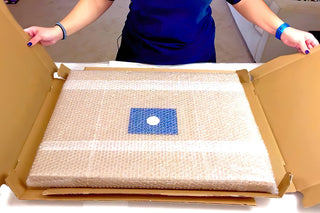
STEP 2 - SHIPPING
We ship your order. We send you an email to track the progress

STEP 3 - DELIVERY
You receive your order. You can also, according to your choice, be delivered to a relay point.
Matte finish
View from behind
Frame (optional)
Portrait of the Countess of Goyon - Jean-Hippolyte Flandrin – Captivating Introduction
The "Portrait of the Countess of Goyon" by Jean-Hippolyte Flandrin is an iconic 19th-century artwork that transcends mere representation to immerse the viewer in the intimacy of a fascinating personality. Created in 1854, this art print does not merely capture the physical features of the countess; it also evokes her essence, her status, and her era. The delicacy of the details and the harmony of colors invite prolonged contemplation, allowing one to feel the depth of emotion emanating from this painting. In a world where art is often just a simple image, Flandrin succeeds in creating a tangible connection between the subject and the observer, making this art print all the more captivating.
Style and uniqueness of the work
Flandrin's style is characterized by an exceptional mastery of chiaroscuro and meticulous attention to textures. In the "Portrait of the Countess of Goyon," he uses subtle nuances to bring the countess's skin to life, emphasizing the softness of her face and the richness of her hair. The drapery of her dress is rendered with such precision that it almost feels tangible, demonstrating the artist's skill in capturing movement and light. The neutral background highlights the subject, creating a contrast that immediately draws the eye to the serene face of the countess. This work also stands out for its psychological approach, where each gaze, each expression seems to tell a story, making this art print a true mirror of the soul.
The artist and his influence
Jean-Hippolyte Flandrin, a major figure of the École de Paris, established himself as a renowned portraitist throughout his career. Influenced by the classical tradition while incorporating elements of modernity, he developed a style that is uniquely his own, combining academic rigor with sensitivity. Flandrin was also a pioneer in exploring human emotions through portraiture, a process that inspired many artists of his time and subsequent generations. His ability to translate the psychology of his subjects onto the canvas has made
12,34 €