
Portrait of Monseigneur Vintimille Du Luc, Archbishop of Paris - Maurice Quentin de La Tour


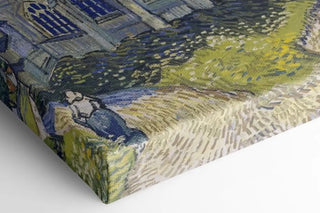
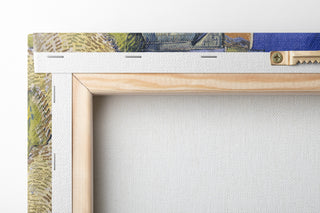
View from behind
Frame (optional)
The "Portrait Of Monseigneur Vintimille Du Luc Archbishop Of Paris" by Maurice Quentin de La Tour is an iconic artwork that embodies the very essence of 18th-century portraiture. This painting, depicting the Archbishop of Paris, is much more than a simple representation; it is a living testament to the era, where painting becomes a reflection of the social and religious issues of its time. By observing this portrait, the viewer is immediately transported to the heart of Old Regime France, where ecclesiastical hierarchy played a central role in public and private life. The finesse of the details and the depth of the expressions capture the very essence of the individual, making this piece essential for anyone interested in art history and French culture.
Style and uniqueness of the work
Maurice Quentin de La Tour's style is distinguished by his ability to combine realism and idealization. In the portrait of Monseigneur Vintimille, the artist uses a subtle color palette, blending warm tones with delicate shadows, which gives the work a unique luminosity. The texture of the painting, carefully crafted, allows one to feel the richness of the fabrics and the delicacy of the facial features. The archbishop's posture, slightly turned towards the viewer, and his penetrating gaze create an immediate, almost intimate connection. La Tour does not merely depict a man of the Church; he captures the personality, authority, and dignity of Vintimille, making this portrait a key piece of the genre. The attention to detail, from accessories to drapery, demonstrates exceptional craftsmanship while revealing a deep understanding of human psychology.
The artist and his influence
Maurice Quentin de La Tour, born in 1704, is one of the most respected portraitists of his time. Trained in Parisian workshops, he develops a style that combines academic rigor with personal sensitivity. His career is marked by a prestigious clientele, ranging from nobles to clergy members, which testifies to his success and
Portrait of Monseigneur Vintimille Du Luc, Archbishop of Paris - Maurice Quentin de La Tour

-10% FROM €95 IN PURCHASES
-15% FROM €195 IN PURCHASES
Regular price
- Unit price
- per
Tax included.
Free shipping
€4.90 / Free shipping on orders over €39
Satisfied or Money Back
Free returns within 30 days
10-year warranty
Our prints are guaranteed for 10 years
Any questions? We are here!
by email to contact@artemlegrand.com
THE STEPS OF YOUR ORDER
STEP 1 - ORDER PLACED
Your order has been confirmed and we are starting production
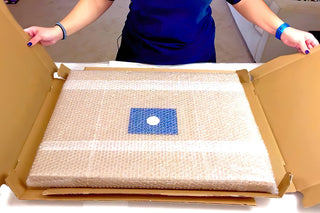
STEP 2 - SHIPPING
We ship your order. We send you an email to track the progress
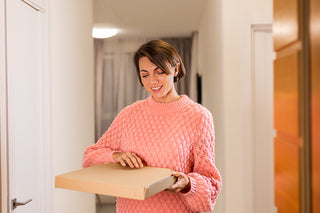
STEP 3 - DELIVERY
You receive your order. You can also, according to your choice, be delivered to a relay point.
Matte finish
View from behind
Frame (optional)
The "Portrait Of Monseigneur Vintimille Du Luc Archbishop Of Paris" by Maurice Quentin de La Tour is an iconic artwork that embodies the very essence of 18th-century portraiture. This painting, depicting the Archbishop of Paris, is much more than a simple representation; it is a living testament to the era, where painting becomes a reflection of the social and religious issues of its time. By observing this portrait, the viewer is immediately transported to the heart of Old Regime France, where ecclesiastical hierarchy played a central role in public and private life. The finesse of the details and the depth of the expressions capture the very essence of the individual, making this piece essential for anyone interested in art history and French culture.
Style and uniqueness of the work
Maurice Quentin de La Tour's style is distinguished by his ability to combine realism and idealization. In the portrait of Monseigneur Vintimille, the artist uses a subtle color palette, blending warm tones with delicate shadows, which gives the work a unique luminosity. The texture of the painting, carefully crafted, allows one to feel the richness of the fabrics and the delicacy of the facial features. The archbishop's posture, slightly turned towards the viewer, and his penetrating gaze create an immediate, almost intimate connection. La Tour does not merely depict a man of the Church; he captures the personality, authority, and dignity of Vintimille, making this portrait a key piece of the genre. The attention to detail, from accessories to drapery, demonstrates exceptional craftsmanship while revealing a deep understanding of human psychology.
The artist and his influence
Maurice Quentin de La Tour, born in 1704, is one of the most respected portraitists of his time. Trained in Parisian workshops, he develops a style that combines academic rigor with personal sensitivity. His career is marked by a prestigious clientele, ranging from nobles to clergy members, which testifies to his success and
12,34 €