
Portrait painting of Jean Scitowski, Archbishop of Gran and Primate of Hungary and Cardinal of Santa Croce in Jerusalem - Karl von Blaas


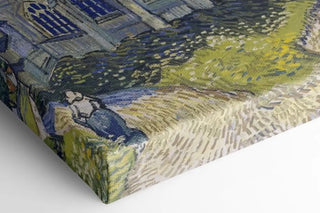
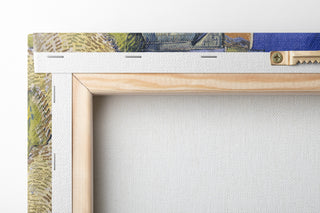
View from behind
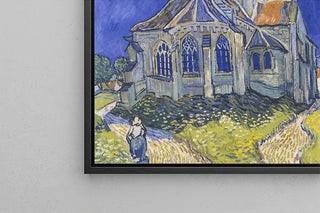
Frame (optional)
Reproduction Portrait of Jean Scitowski, Archbishop of Gran and Primate of Hungary and Cardinal of Santa Croce in Jerusalem - Karl von Blaas – Captivating Introduction
In the vast panorama of art history, some works manage to capture the essence of an era and a personality with such strength that they transcend the simple status of a painting. The "Portrait of Jean Scitowski, Archbishop of Gran and Primate of Hungary and Cardinal of Santa Croce in Jerusalem" by Karl von Blaas is one of these exceptional creations. This portrait, distinguished by its striking realism and psychological depth, invites us to delve into the complex universe of the Catholic Church in the 19th century. Through Scitowski's penetrating gaze, the viewer is transported into a silent dialogue with history, a conversation that evokes the spiritual and political power of the time.
Style and uniqueness of the work
Karl von Blaas's technical mastery is evident in every detail of this piece. The choice of colors, the finesse of the strokes, and the balanced composition all demonstrate a deep understanding of the principles of academic painting. Jean Scitowski's face, with its nuanced expressions, exudes an aura of wisdom and authority. The skillfully used light accentuates the volumes and creates a play of shadows that brings the character to life. The richness of textures, whether in the velvet of the chasuble or in the reflections of light on the skin, contributes to an almost palpable sense of realism. This naturalistic approach, combined with meticulous attention to detail, makes this portrait a work of great singularity, both intimate and monumental.
The artist and his influence
Karl von Blaas, born in 1815, belongs to the tradition of great European portraitists. His work is set against a historical backdrop marked by political and social upheavals, and he was able to capture the aspirations and concerns of his time through his portraits. Influenced by the masters of classical painting, he manages to combine a rigorous academic style with modern sensitivity. His work not only enriched the artistic heritage of his era but also paved the way for new explorations in the field of portraiture. By representing emblematic figures
Portrait painting of Jean Scitowski, Archbishop of Gran and Primate of Hungary and Cardinal of Santa Croce in Jerusalem - Karl von Blaas

-10% FROM €95 IN PURCHASES
-15% FROM €195 IN PURCHASES
Regular price
- Unit price
- per
Tax included.
Free shipping
€4.90 / Free shipping on orders over €39
Satisfied or Money Back
Free returns within 30 days
10-year warranty
Our prints are guaranteed for 10 years
Any questions? We are here!
by email to contact@artemlegrand.com
THE STEPS OF YOUR ORDER

STEP 1 - ORDER PLACED
Your order has been confirmed and we are starting production
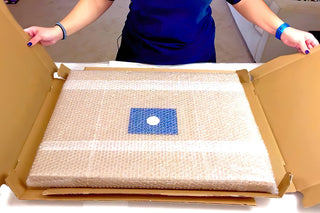
STEP 2 - SHIPPING
We ship your order. We send you an email to track the progress

STEP 3 - DELIVERY
You receive your order. You can also, according to your choice, be delivered to a relay point.
Matte finish
View from behind
Frame (optional)
Reproduction Portrait of Jean Scitowski, Archbishop of Gran and Primate of Hungary and Cardinal of Santa Croce in Jerusalem - Karl von Blaas – Captivating Introduction
In the vast panorama of art history, some works manage to capture the essence of an era and a personality with such strength that they transcend the simple status of a painting. The "Portrait of Jean Scitowski, Archbishop of Gran and Primate of Hungary and Cardinal of Santa Croce in Jerusalem" by Karl von Blaas is one of these exceptional creations. This portrait, distinguished by its striking realism and psychological depth, invites us to delve into the complex universe of the Catholic Church in the 19th century. Through Scitowski's penetrating gaze, the viewer is transported into a silent dialogue with history, a conversation that evokes the spiritual and political power of the time.
Style and uniqueness of the work
Karl von Blaas's technical mastery is evident in every detail of this piece. The choice of colors, the finesse of the strokes, and the balanced composition all demonstrate a deep understanding of the principles of academic painting. Jean Scitowski's face, with its nuanced expressions, exudes an aura of wisdom and authority. The skillfully used light accentuates the volumes and creates a play of shadows that brings the character to life. The richness of textures, whether in the velvet of the chasuble or in the reflections of light on the skin, contributes to an almost palpable sense of realism. This naturalistic approach, combined with meticulous attention to detail, makes this portrait a work of great singularity, both intimate and monumental.
The artist and his influence
Karl von Blaas, born in 1815, belongs to the tradition of great European portraitists. His work is set against a historical backdrop marked by political and social upheavals, and he was able to capture the aspirations and concerns of his time through his portraits. Influenced by the masters of classical painting, he manages to combine a rigorous academic style with modern sensitivity. His work not only enriched the artistic heritage of his era but also paved the way for new explorations in the field of portraiture. By representing emblematic figures
12,34 €