
Painting Portrait of Félix Schadow - Friedrich Wilhelm Schadow


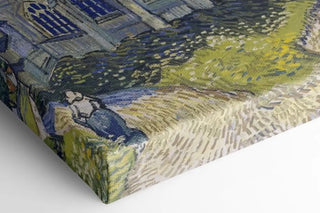
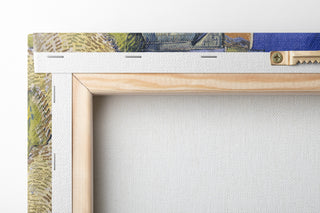
View from behind
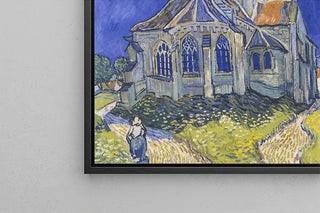
Frame (optional)
Portrait of Félix Schadow - Friedrich Wilhelm Schadow – Captivating Introduction
The "Portrait of Félix Schadow" by Friedrich Wilhelm Schadow is a work that transcends the simple framework of representation. This painting, imbued with great delicacy, immerses us in the intimate and artistic universe of the 19th century. Schadow, as a painter of the German Romantic period, manages to capture not only the physical features of his model but also the very essence of his being. The work does not merely depict a face; it tells a story, that of a man whose gaze seems to carry the weight of his thoughts and aspirations. Through this art print, the viewer is invited to explore the nuances of the human soul, to question the emotions hidden behind each brushstroke.
Style and uniqueness of the work
Schadow's style is characterized by a finesse and sensitivity that are unique to him. In the "Portrait of Félix Schadow," light plays a crucial role, subtly illuminating the facial features while creating delicate shadows that add depth and dimension to the whole. The color palette chosen by the artist evokes an atmosphere that is both serene and melancholic, where each hue seems to vibrate with a palpable emotion. The meticulous details, such as the texture of the clothing and the expression on the face, demonstrate remarkable technical mastery. This painting stands out for its ability to establish an emotional connection between the model and the viewer, making the scene lively and engaging. It is this singularity that makes the work a true masterpiece, transcending eras and styles.
The artist and his influence
Friedrich Wilhelm Schadow, an emblematic figure of German Romanticism, managed to leave his mark on his time with his unique artistic vision. Trained at the Berlin Academy of Fine Arts, he was influenced by masters such as David and Ingres, while developing a style that is entirely his own. His approach to portraiture, focused on expressing emotions, paved the way for many artists who followed. Schadow also played a crucial role in arts education, training young talents and encouraging the emergence of a new generation of artists. His impact is not limited to his era
Painting Portrait of Félix Schadow - Friedrich Wilhelm Schadow

-10% FROM €95 IN PURCHASES
-15% FROM €195 IN PURCHASES
Regular price
- Unit price
- by
Free shipping
€4.90 / Free shipping on orders over €39
Satisfied or Money Back
Free returns within 30 days
10-year warranty
Our prints are guaranteed for 10 years
Any questions? We are here!
by email to contact@artemlegrand.com
THE STEPS OF YOUR ORDER

STEP 1 - ORDER PLACED
Your order has been confirmed and we are starting production
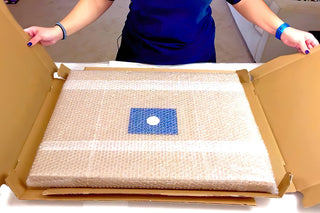
STEP 2 - SHIPPING
We ship your order. We send you an email to track the progress

STEP 3 - DELIVERY
You receive your order. You can also, according to your choice, be delivered to a relay point.
Matte finish
View from behind
Frame (optional)
Portrait of Félix Schadow - Friedrich Wilhelm Schadow – Captivating Introduction
The "Portrait of Félix Schadow" by Friedrich Wilhelm Schadow is a work that transcends the simple framework of representation. This painting, imbued with great delicacy, immerses us in the intimate and artistic universe of the 19th century. Schadow, as a painter of the German Romantic period, manages to capture not only the physical features of his model but also the very essence of his being. The work does not merely depict a face; it tells a story, that of a man whose gaze seems to carry the weight of his thoughts and aspirations. Through this art print, the viewer is invited to explore the nuances of the human soul, to question the emotions hidden behind each brushstroke.
Style and uniqueness of the work
Schadow's style is characterized by a finesse and sensitivity that are unique to him. In the "Portrait of Félix Schadow," light plays a crucial role, subtly illuminating the facial features while creating delicate shadows that add depth and dimension to the whole. The color palette chosen by the artist evokes an atmosphere that is both serene and melancholic, where each hue seems to vibrate with a palpable emotion. The meticulous details, such as the texture of the clothing and the expression on the face, demonstrate remarkable technical mastery. This painting stands out for its ability to establish an emotional connection between the model and the viewer, making the scene lively and engaging. It is this singularity that makes the work a true masterpiece, transcending eras and styles.
The artist and his influence
Friedrich Wilhelm Schadow, an emblematic figure of German Romanticism, managed to leave his mark on his time with his unique artistic vision. Trained at the Berlin Academy of Fine Arts, he was influenced by masters such as David and Ingres, while developing a style that is entirely his own. His approach to portraiture, focused on expressing emotions, paved the way for many artists who followed. Schadow also played a crucial role in arts education, training young talents and encouraging the emergence of a new generation of artists. His impact is not limited to his era