
Portrait painting of D. F. Desrues - Joseph Marie Vien the Younger | Art print


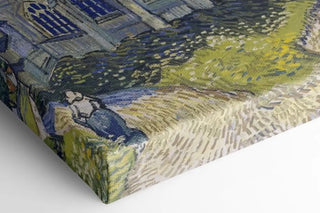
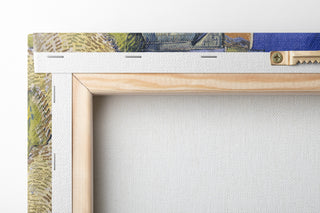
View from behind
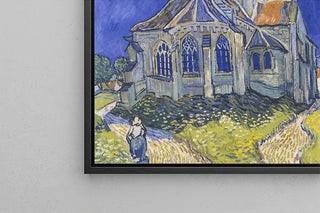
Frame (optional)
In the fascinating world of art, some works stand out for their ability to capture not only the appearance of an individual but also the very essence of their character. The "Art print of D. F. Desrues" by Joseph Marie Vien the Younger is one of those creations that transcends the simple pictorial frame to offer a glimpse into the soul of its subject. This painting, created in the 18th century, bears witness to an era when portrait painting was at its peak, and every brushstroke was designed to tell a story. Through this art print, we are invited to explore the nuances of Desrues's personality, as well as the historical and artistic context surrounding him.
Style and uniqueness of the work
Joseph Marie Vien the Younger's style is characterized by delicacy and meticulous attention to detail. In this portrait, light plays a fundamental role, illuminating Desrues's face with a softness that evokes both nobility and simplicity. The chosen colors, subtly harmonized, enhance the impression of depth and vitality. Vien, a master of academic painting, manages to establish a perfect balance between realism and idealization. Every element of the painting, from the choice of clothing to the expression on the face, is carefully orchestrated to create an image that does not merely represent but evokes a palpable emotion. This portrait is thus much more than a simple image; it is an open window into the mind of a man, a visual testimony of a time rich in transformations and reflections.
The artist and his influence
Joseph Marie Vien the Younger, an emblematic figure of the 18th century, knew how to mark his era with an innovative approach to painting. A student of François Boucher, he moved away from the excesses of rococo to embrace a more sober and refined style, thus prefiguring Neoclassicism. Vien did not merely paint portraits; he shaped visual narratives that resonate with the concerns of his time. As a professor at the École des beaux-arts in Paris, he also influenced an entire generation of artists, instilling in them the values of faithful representation and
Portrait painting of D. F. Desrues - Joseph Marie Vien the Younger | Art print

-10% FROM €95 IN PURCHASES
-15% FROM €195 IN PURCHASES
Regular price
- Unit price
- per
Tax included.
Free shipping
€4.90 / Free shipping on orders over €39
Satisfied or Money Back
Free returns within 30 days
10-year warranty
Our prints are guaranteed for 10 years
Any questions? We are here!
by email to contact@artemlegrand.com
THE STEPS OF YOUR ORDER
STEP 1 - ORDER PLACED
Your order has been confirmed and we are starting production
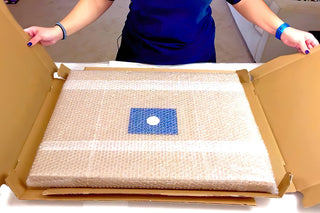
STEP 2 - SHIPPING
We ship your order. We send you an email to track the progress

STEP 3 - DELIVERY
You receive your order. You can also, according to your choice, be delivered to a relay point.
Matte finish
View from behind
Frame (optional)
In the fascinating world of art, some works stand out for their ability to capture not only the appearance of an individual but also the very essence of their character. The "Art print of D. F. Desrues" by Joseph Marie Vien the Younger is one of those creations that transcends the simple pictorial frame to offer a glimpse into the soul of its subject. This painting, created in the 18th century, bears witness to an era when portrait painting was at its peak, and every brushstroke was designed to tell a story. Through this art print, we are invited to explore the nuances of Desrues's personality, as well as the historical and artistic context surrounding him.
Style and uniqueness of the work
Joseph Marie Vien the Younger's style is characterized by delicacy and meticulous attention to detail. In this portrait, light plays a fundamental role, illuminating Desrues's face with a softness that evokes both nobility and simplicity. The chosen colors, subtly harmonized, enhance the impression of depth and vitality. Vien, a master of academic painting, manages to establish a perfect balance between realism and idealization. Every element of the painting, from the choice of clothing to the expression on the face, is carefully orchestrated to create an image that does not merely represent but evokes a palpable emotion. This portrait is thus much more than a simple image; it is an open window into the mind of a man, a visual testimony of a time rich in transformations and reflections.
The artist and his influence
Joseph Marie Vien the Younger, an emblematic figure of the 18th century, knew how to mark his era with an innovative approach to painting. A student of François Boucher, he moved away from the excesses of rococo to embrace a more sober and refined style, thus prefiguring Neoclassicism. Vien did not merely paint portraits; he shaped visual narratives that resonate with the concerns of his time. As a professor at the École des beaux-arts in Paris, he also influenced an entire generation of artists, instilling in them the values of faithful representation and
12,34 €