
Portrait Painting of Clemens van Demmeltraadt 1773-1841 - Louis Moritz | Art print


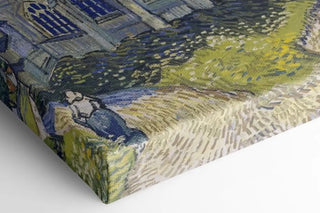
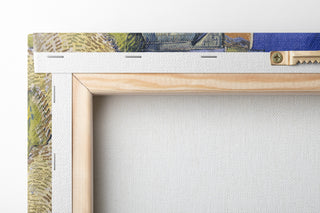
View from behind
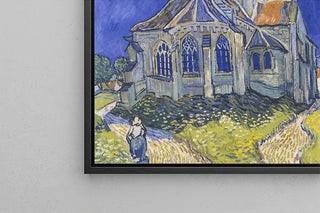
Frame (optional)
Louis Moritz's "Portrait of Clemens van Demmeltraadt" is a work that transcends the simple frame of painting. This representation, capturing the essence of a man at the turn of the 19th century, invites us to immerse ourselves in an era where art and daily life intertwine with rare delicacy. Moritz, with his technical skill and keen sense of observation, offers an intimate vision of his subject, a man whose gaze seems to bear the weight of the years while revealing a certain serenity. The light caressing Clemens's face, along with the meticulous details of his attire, testify to a time when every stroke was carefully thought out to tell a story.
Style and uniqueness of the work
Louis Moritz's style is distinguished by his ability to combine realism and sensitivity. In this portrait, he manages to create an atmosphere that is both intimate and solemn. The chosen colors, both soft and deep, evoke subtle melancholy, while the delicately worked shadows add an almost sculptural dimension to Clemens's face. Each brushstroke appears charged with emotion, revealing not only the physical features of the man but also a part of his soul. Moritz succeeds in capturing not only the external appearance of his subject but also a deeper essence, making the viewer a confidant of a moment frozen in time. This portrait, far from being a simple representation, becomes an open window into the psychology of Clemens van Demmeltraadt, a true dialogue between the artwork and its observer.
The artist and his influence
Louis Moritz, born in 1790, is an artist whose career is marked by an incessant quest for pictorial truth. Trained in the workshops of the great masters of his time, he developed a style that is uniquely his own, skillfully blending tradition and innovation. Beyond his talent for portraiture, Moritz was also influenced by the artistic movements that emerged during his career, notably Romanticism, which advocates the expression of emotions and feelings. His work thus reflects a time of great change.
Portrait Painting of Clemens van Demmeltraadt 1773-1841 - Louis Moritz | Art print

-10% FROM €95 IN PURCHASES
-15% FROM €195 IN PURCHASES
Regular price
- Unit price
- per
Tax included.
Free shipping
€4.90 / Free shipping on orders over €39
Satisfied or Money Back
Free returns within 30 days
10-year warranty
Our prints are guaranteed for 10 years
Any questions? We are here!
by email to contact@artemlegrand.com
THE STEPS OF YOUR ORDER

STEP 1 - ORDER PLACED
Your order has been confirmed and we are starting production
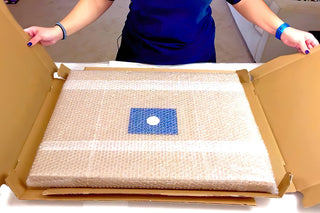
STEP 2 - SHIPPING
We ship your order. We send you an email to track the progress

STEP 3 - DELIVERY
You receive your order. You can also, according to your choice, be delivered to a relay point.
Matte finish
View from behind
Frame (optional)
Louis Moritz's "Portrait of Clemens van Demmeltraadt" is a work that transcends the simple frame of painting. This representation, capturing the essence of a man at the turn of the 19th century, invites us to immerse ourselves in an era where art and daily life intertwine with rare delicacy. Moritz, with his technical skill and keen sense of observation, offers an intimate vision of his subject, a man whose gaze seems to bear the weight of the years while revealing a certain serenity. The light caressing Clemens's face, along with the meticulous details of his attire, testify to a time when every stroke was carefully thought out to tell a story.
Style and uniqueness of the work
Louis Moritz's style is distinguished by his ability to combine realism and sensitivity. In this portrait, he manages to create an atmosphere that is both intimate and solemn. The chosen colors, both soft and deep, evoke subtle melancholy, while the delicately worked shadows add an almost sculptural dimension to Clemens's face. Each brushstroke appears charged with emotion, revealing not only the physical features of the man but also a part of his soul. Moritz succeeds in capturing not only the external appearance of his subject but also a deeper essence, making the viewer a confidant of a moment frozen in time. This portrait, far from being a simple representation, becomes an open window into the psychology of Clemens van Demmeltraadt, a true dialogue between the artwork and its observer.
The artist and his influence
Louis Moritz, born in 1790, is an artist whose career is marked by an incessant quest for pictorial truth. Trained in the workshops of the great masters of his time, he developed a style that is uniquely his own, skillfully blending tradition and innovation. Beyond his talent for portraiture, Moritz was also influenced by the artistic movements that emerged during his career, notably Romanticism, which advocates the expression of emotions and feelings. His work thus reflects a time of great change.
12,34 €