
Portrait painting of Caspar Adriaen Parduyn 1685-1735 Bailli de Middelburg - Philip van Dijk | Art print


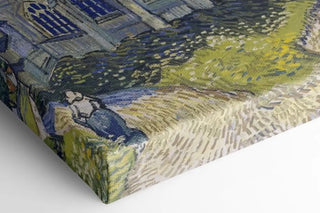
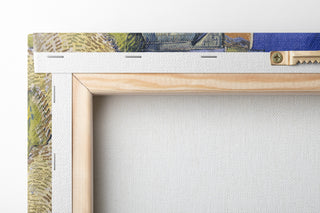
View from behind
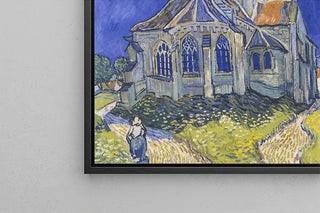
Frame (optional)
In the fascinating world of Dutch baroque art, the work of Philip van Dijk, "Art print of Caspar Adriaen Parduyn 1685-1735 Bailli de Middelburg", stands out for its elegance and refinement. This portrait, which captures the very essence of its subject, transports us to the heart of the 18th century, an era when portraiture was not only a means of immortalizing important figures but also a reflection of the values and aspirations of a society in full evolution. The depiction of Caspar Adriaen Parduyn, a man of power and dignity, invites us to explore the subtleties of his character through the lens of art.
Style and uniqueness of the work
Philip van Dijk's work is characterized by an exceptional mastery of details and a particular attention to the psychology of his subjects. In this portrait, Parduyn's pose, slightly turned to the right, suggests a certain confidence, while his gaze, both penetrating and introspective, seems to question us. The color palette chosen by the artist, oscillating between warm tones and cooler shades, helps create an atmosphere of depth and serenity. The drapery of his attire, rendered with remarkable precision, testifies not only to Van Dijk's technical virtuosity but also to the importance given to representing the social status of his model. Every element, from the choice of colors to the texture of the clothing, is designed to reinforce the impression of dignity and majesty emanating from this art print.
The artist and his influence
Philip van Dijk, active during the 18th century, established himself as one of the most prominent portrait artists of his time. Raised in a rich artistic environment, he was influenced by the great masters of Flemish painting, while developing a style that is uniquely his own. His innovative approach to portraiture, blending realism and idealization, left a lasting mark on his contemporaries and on subsequent generations of artists. By choosing to depict notable figures of his era, Van Dijk contributed to shaping
Portrait painting of Caspar Adriaen Parduyn 1685-1735 Bailli de Middelburg - Philip van Dijk | Art print

-10% FROM €95 IN PURCHASES
-15% FROM €195 IN PURCHASES
Regular price
- Unit price
- per
Tax included.
Free shipping
€4.90 / Free shipping on orders over €39
Satisfied or Money Back
Free returns within 30 days
10-year warranty
Our prints are guaranteed for 10 years
Any questions? We are here!
by email to contact@artemlegrand.com
THE STEPS OF YOUR ORDER
STEP 1 - ORDER PLACED
Your order has been confirmed and we are starting production
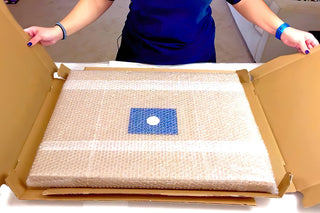
STEP 2 - SHIPPING
We ship your order. We send you an email to track the progress

STEP 3 - DELIVERY
You receive your order. You can also, according to your choice, be delivered to a relay point.
Matte finish
View from behind
Frame (optional)
In the fascinating world of Dutch baroque art, the work of Philip van Dijk, "Art print of Caspar Adriaen Parduyn 1685-1735 Bailli de Middelburg", stands out for its elegance and refinement. This portrait, which captures the very essence of its subject, transports us to the heart of the 18th century, an era when portraiture was not only a means of immortalizing important figures but also a reflection of the values and aspirations of a society in full evolution. The depiction of Caspar Adriaen Parduyn, a man of power and dignity, invites us to explore the subtleties of his character through the lens of art.
Style and uniqueness of the work
Philip van Dijk's work is characterized by an exceptional mastery of details and a particular attention to the psychology of his subjects. In this portrait, Parduyn's pose, slightly turned to the right, suggests a certain confidence, while his gaze, both penetrating and introspective, seems to question us. The color palette chosen by the artist, oscillating between warm tones and cooler shades, helps create an atmosphere of depth and serenity. The drapery of his attire, rendered with remarkable precision, testifies not only to Van Dijk's technical virtuosity but also to the importance given to representing the social status of his model. Every element, from the choice of colors to the texture of the clothing, is designed to reinforce the impression of dignity and majesty emanating from this art print.
The artist and his influence
Philip van Dijk, active during the 18th century, established himself as one of the most prominent portrait artists of his time. Raised in a rich artistic environment, he was influenced by the great masters of Flemish painting, while developing a style that is uniquely his own. His innovative approach to portraiture, blending realism and idealization, left a lasting mark on his contemporaries and on subsequent generations of artists. By choosing to depict notable figures of his era, Van Dijk contributed to shaping
12,34 €