
Art print Portrait of Camille, daughter of Sutton Palmer - Thomas Francis Dicksee


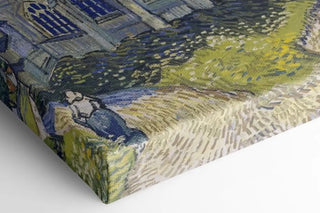
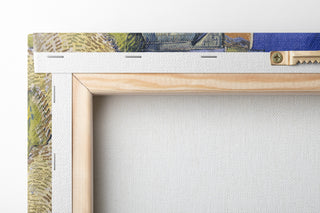
View from behind
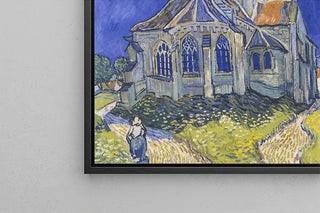
Frame (optional)
In the fascinating world of art, some works stand out for their ability to capture the very essence of humanity. The "Portrait of Camille, daughter of Sutton Palmer" by Thomas Francis Dicksee is one of those creations that, through its intensity and delicacy, transports the viewer into a world where time seems to stand still. This painting, which depicts the daughter of the eminent art collector Sutton Palmer, is much more than a simple representation; it embodies a story of tenderness and beauty, revealing the soul of a young girl through the artist's penetrating gaze. The finesse of the details and the brilliance of the colors invite deep contemplation, making this piece a true masterpiece of Victorian portrait art.
Style and uniqueness of the work
Dicksee's style is characterized by an exceptional mastery of pictorial techniques, blending realism and romanticism. In the "Portrait of Camille," light plays a crucial role, illuminating the child's face with an almost angelic softness. The delicate nuances of the skin, the reflections in the hair, and the texture of the clothing demonstrate an unparalleled attention to detail. Every brushstroke seems charged with emotion, and Camille's expression, both innocent and thoughtful, captivates the viewer. The composition, with its blurred background and pastel colors, creates an intimate atmosphere that allows the viewer to immerse themselves in the young girl's universe. This portrait does not merely depict a face; it tells a story, that of preserved childhood, of a moment frozen in time.
The artist and his influence
Thomas Francis Dicksee, an emblematic figure of Victorian painting, established himself as a master of portraiture thanks to his ability to capture the personality of his subjects. Trained at the Royal Academy, he developed a style that is uniquely his own, combining precise technique with emotional sensitivity. Dicksee was influenced by the Pre-Raphaelites, but he distanced himself from them to create a work that is truly his own. His work on the "Portrait of Camille" perfectly illustrates his talent for conveying deep feelings through his portraits. By highlighting
Art print Portrait of Camille, daughter of Sutton Palmer - Thomas Francis Dicksee

-10% FROM €95 IN PURCHASES
-15% FROM €195 IN PURCHASES
Regular price
- Unit price
- per
Tax included.
Free shipping
€4.90 / Free shipping on orders over €39
Satisfied or Money Back
Free returns within 30 days
10-year warranty
Our prints are guaranteed for 10 years
Any questions? We are here!
by email to contact@artemlegrand.com
THE STEPS OF YOUR ORDER

STEP 1 - ORDER PLACED
Your order has been confirmed and we are starting production
STEP 2 - SHIPPING
We ship your order. We send you an email to track the progress

STEP 3 - DELIVERY
You receive your order. You can also, according to your choice, be delivered to a relay point.
Matte finish
View from behind
Frame (optional)
In the fascinating world of art, some works stand out for their ability to capture the very essence of humanity. The "Portrait of Camille, daughter of Sutton Palmer" by Thomas Francis Dicksee is one of those creations that, through its intensity and delicacy, transports the viewer into a world where time seems to stand still. This painting, which depicts the daughter of the eminent art collector Sutton Palmer, is much more than a simple representation; it embodies a story of tenderness and beauty, revealing the soul of a young girl through the artist's penetrating gaze. The finesse of the details and the brilliance of the colors invite deep contemplation, making this piece a true masterpiece of Victorian portrait art.
Style and uniqueness of the work
Dicksee's style is characterized by an exceptional mastery of pictorial techniques, blending realism and romanticism. In the "Portrait of Camille," light plays a crucial role, illuminating the child's face with an almost angelic softness. The delicate nuances of the skin, the reflections in the hair, and the texture of the clothing demonstrate an unparalleled attention to detail. Every brushstroke seems charged with emotion, and Camille's expression, both innocent and thoughtful, captivates the viewer. The composition, with its blurred background and pastel colors, creates an intimate atmosphere that allows the viewer to immerse themselves in the young girl's universe. This portrait does not merely depict a face; it tells a story, that of preserved childhood, of a moment frozen in time.
The artist and his influence
Thomas Francis Dicksee, an emblematic figure of Victorian painting, established himself as a master of portraiture thanks to his ability to capture the personality of his subjects. Trained at the Royal Academy, he developed a style that is uniquely his own, combining precise technique with emotional sensitivity. Dicksee was influenced by the Pre-Raphaelites, but he distanced himself from them to create a work that is truly his own. His work on the "Portrait of Camille" perfectly illustrates his talent for conveying deep feelings through his portraits. By highlighting
12,34 €