
Portrait of a young man said to be Louis Berthier Bizy - Nicolas Bernard Lépicié | Art print


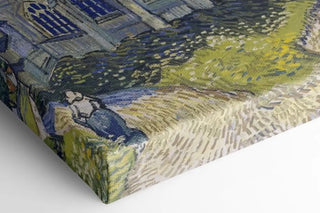
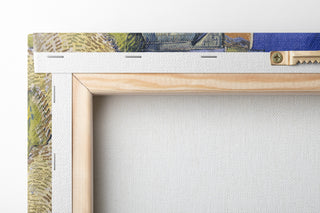
View from behind
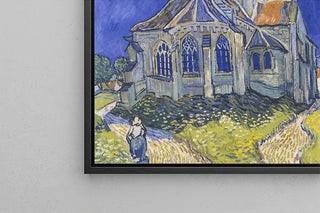
Frame (optional)
In the rich and diverse panorama of art history, some works stand out for their ability to capture the essence of a particular era, character, or emotion. The "Art print of a young man said to be Louis Berthier Bizy" by Nicolas Bernard Lépicié is a perfect example. This painting, both intimate and revealing, transports us to 18th-century France, a period marked by social and cultural upheavals. Lépicié, through this portrait, invites us to explore not only the face of his subject but also the subtleties of his character and status. By examining this piece, the viewer is engaged in a silent dialogue with the past, where every detail matters and every gaze tells a story.
Style and uniqueness of the work
Nicolas Bernard Lépicié's style is characterized by remarkable finesse and meticulous attention to detail. In this portrait, the delicate nuances of the young man's skin, as well as the texture of the clothing, testify to exceptional craftsmanship. The artist skillfully plays with light and shadow, creating a depth effect that brings the subject to life. The young man's gaze, both thoughtful and engaging, seems to capture the present moment while hinting at psychological depth. This duality is one of Lépicié's strengths, who manages to combine realism and idealization, making his model both accessible and enigmatic. The colors chosen, subtly harmonized, enhance the elegance of the composition, while the posture of the young man evokes a certain nobility, reflecting his social status.
The artist and his influence
Nicolas Bernard Lépicié, born in 1735, was a French painter whose work is part of the lineage of 18th-century portraitists. Trained at the Royal Academy of Painting and Sculpture, he established himself as a master of portraiture, influencing his contemporaries with his innovative approach. Lépicié does not merely reproduce the external appearance of his subjects; he seeks to reveal their personality and soul. This portrait is an illustration of that approach.
Portrait of a young man said to be Louis Berthier Bizy - Nicolas Bernard Lépicié | Art print

-10% FROM €95 IN PURCHASES
-15% FROM €195 IN PURCHASES
Regular price
- Unit price
- per
Tax included.
Free shipping
€4.90 / Free shipping on orders over €39
Satisfied or Money Back
Free returns within 30 days
10-year warranty
Our prints are guaranteed for 10 years
Any questions? We are here!
by email to contact@artemlegrand.com
THE STEPS OF YOUR ORDER

STEP 1 - ORDER PLACED
Your order has been confirmed and we are starting production
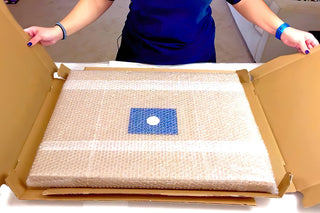
STEP 2 - SHIPPING
We ship your order. We send you an email to track the progress

STEP 3 - DELIVERY
You receive your order. You can also, according to your choice, be delivered to a relay point.
Matte finish
View from behind
Frame (optional)
In the rich and diverse panorama of art history, some works stand out for their ability to capture the essence of a particular era, character, or emotion. The "Art print of a young man said to be Louis Berthier Bizy" by Nicolas Bernard Lépicié is a perfect example. This painting, both intimate and revealing, transports us to 18th-century France, a period marked by social and cultural upheavals. Lépicié, through this portrait, invites us to explore not only the face of his subject but also the subtleties of his character and status. By examining this piece, the viewer is engaged in a silent dialogue with the past, where every detail matters and every gaze tells a story.
Style and uniqueness of the work
Nicolas Bernard Lépicié's style is characterized by remarkable finesse and meticulous attention to detail. In this portrait, the delicate nuances of the young man's skin, as well as the texture of the clothing, testify to exceptional craftsmanship. The artist skillfully plays with light and shadow, creating a depth effect that brings the subject to life. The young man's gaze, both thoughtful and engaging, seems to capture the present moment while hinting at psychological depth. This duality is one of Lépicié's strengths, who manages to combine realism and idealization, making his model both accessible and enigmatic. The colors chosen, subtly harmonized, enhance the elegance of the composition, while the posture of the young man evokes a certain nobility, reflecting his social status.
The artist and his influence
Nicolas Bernard Lépicié, born in 1735, was a French painter whose work is part of the lineage of 18th-century portraitists. Trained at the Royal Academy of Painting and Sculpture, he established himself as a master of portraiture, influencing his contemporaries with his innovative approach. Lépicié does not merely reproduce the external appearance of his subjects; he seeks to reveal their personality and soul. This portrait is an illustration of that approach.
12,34 €