
Painting Portrait of a Young Man - Giuseppe Ghislandi | Art print


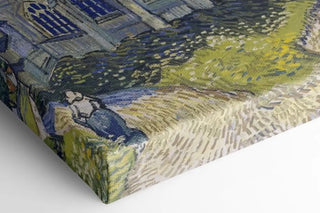
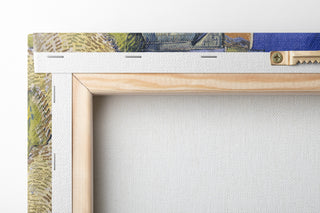
View from behind
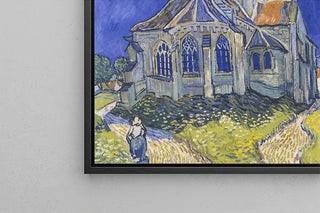
Frame (optional)
Portrait of a Young Man - Giuseppe Ghislandi – Captivating Introduction
In the vast panorama of art history, certain works stand out for their ability to capture the very essence of humanity. The "Portrait of a Young Man" by Giuseppe Ghislandi is one of those creations that transcends time and eras. Created in the 17th century, this painting embodies not only a frozen moment in time but also an exploration of human emotions and aspirations. Through the gaze and expressions, the artist manages to establish a silent dialogue between the subject and the viewer, inviting this last to delve into a universe rich in nuances and subtleties.
Style and uniqueness of the work
Ghislandi's style, often associated with the Baroque movement, is characterized by an exceptional mastery of light and shadow. In this portrait, every detail is carefully crafted, from the folds of the clothing to the reflections in the young man's eyes. The color palette, both soft and vibrant, creates an intimate atmosphere that draws the eye and captivates the mind. The artist skillfully plays with contrasts to bring his model to life, making the personality of the young man palpable. He is not merely a simple subject; he becomes a reflection of the ideals and concerns of his time, rooted in an artistic tradition that celebrates the beauty and complexity of the human being.
The artist and his influence
Giuseppe Ghislandi, also known as Giovan Battista Moroni, is a significant figure in Italian painting. His work, although less well-known than that of some of his contemporaries, has nonetheless exerted a considerable influence on subsequent generations of artists. Ghislandi stands out for his ability to combine realism and idealization, a duality that is reflected in many portraits of the period. By emphasizing the psychology of his subjects, he paves the way for a more introspective approach to portraiture, where the individual is perceived not only as an external representation but also as a complex being, rich in emotions and thoughts. His legacy endures in modern art, where the study of the human face continues to be an inexhaustible source of inspiration.
An exceptional wall decoration signed Artem Legrand
In
Painting Portrait of a Young Man - Giuseppe Ghislandi | Art print

-10% FROM €95 IN PURCHASES
-15% FROM €195 IN PURCHASES
Regular price
- Unit price
- per
Tax included.
Free shipping
€4.90 / Free shipping on orders over €39
Satisfied or Money Back
Free returns within 30 days
10-year warranty
Our prints are guaranteed for 10 years
Any questions? We are here!
by email to contact@artemlegrand.com
THE STEPS OF YOUR ORDER

STEP 1 - ORDER PLACED
Your order has been confirmed and we are starting production
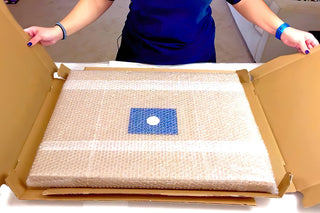
STEP 2 - SHIPPING
We ship your order. We send you an email to track the progress

STEP 3 - DELIVERY
You receive your order. You can also, according to your choice, be delivered to a relay point.
Matte finish
View from behind
Frame (optional)
Portrait of a Young Man - Giuseppe Ghislandi – Captivating Introduction
In the vast panorama of art history, certain works stand out for their ability to capture the very essence of humanity. The "Portrait of a Young Man" by Giuseppe Ghislandi is one of those creations that transcends time and eras. Created in the 17th century, this painting embodies not only a frozen moment in time but also an exploration of human emotions and aspirations. Through the gaze and expressions, the artist manages to establish a silent dialogue between the subject and the viewer, inviting this last to delve into a universe rich in nuances and subtleties.
Style and uniqueness of the work
Ghislandi's style, often associated with the Baroque movement, is characterized by an exceptional mastery of light and shadow. In this portrait, every detail is carefully crafted, from the folds of the clothing to the reflections in the young man's eyes. The color palette, both soft and vibrant, creates an intimate atmosphere that draws the eye and captivates the mind. The artist skillfully plays with contrasts to bring his model to life, making the personality of the young man palpable. He is not merely a simple subject; he becomes a reflection of the ideals and concerns of his time, rooted in an artistic tradition that celebrates the beauty and complexity of the human being.
The artist and his influence
Giuseppe Ghislandi, also known as Giovan Battista Moroni, is a significant figure in Italian painting. His work, although less well-known than that of some of his contemporaries, has nonetheless exerted a considerable influence on subsequent generations of artists. Ghislandi stands out for his ability to combine realism and idealization, a duality that is reflected in many portraits of the period. By emphasizing the psychology of his subjects, he paves the way for a more introspective approach to portraiture, where the individual is perceived not only as an external representation but also as a complex being, rich in emotions and thoughts. His legacy endures in modern art, where the study of the human face continues to be an inexhaustible source of inspiration.
An exceptional wall decoration signed Artem Legrand
In
12,34 €