
Portrait of a seated man at a table with an open book reading a letter - Giovanni Battista Trotti | Art print


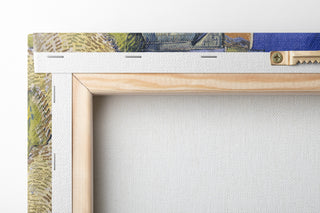
View from behind
Frame (optional)
In the fascinating world of art, some works manage to transcend their era to capture the very essence of humanity. The "Art print of a man sitting at a table with an open book reading a letter" by Giovanni Battista Trotti is a striking example. This painting, imbued with subtlety and depth, invites the viewer to delve into the intimacy of a moment frozen in time. The depicted man, immersed in reading a letter, seems to embody a reflection on solitude, knowledge, and human emotions. Through this piece, Trotti offers us a window into the soul, where every detail, every shadow, tells a unique story.
Style and uniqueness of the work
Giovanni Battista Trotti's style, also known as "Il Malosso," is distinguished by his ability to blend realism and emotion. In this portrait, mastery of lighting and shadows creates an intimate atmosphere, where light gently caresses the man's face, revealing nuances of his expression. The open book, symbol of knowledge and reflection, becomes a central element of the composition, connecting the character to a world of thoughts and feelings. The color palette, soft and soothing, enhances this contemplative ambiance, while the meticulous details of the clothing and table demonstrate a concern for realism that characterizes Trotti's art. Every brushstroke seems charged with meaning, inviting the viewer to question the nature of reading and writing, and their power of transformation.
The artist and his influence
Giovanni Battista Trotti, born at the end of the 16th century, is an emblematic figure of Italian Renaissance painting. Trained under the influence of great masters, he developed a personal style that combines tradition and innovation. His work was marked by a deep understanding of human emotion, and his portraits, such as this one, reveal rare sensitivity. Trotti also contributed to the evolution of portraiture as a genre, placing the individual at the heart of his work, while incorporating narrative elements.
Portrait of a seated man at a table with an open book reading a letter - Giovanni Battista Trotti | Art print

-10% FROM €95 IN PURCHASES
-15% FROM €195 IN PURCHASES
Regular price
- Unit price
- per
Tax included.
Free shipping
€4.90 / Free shipping on orders over €39
Satisfied or Money Back
Free returns within 30 days
10-year warranty
Our prints are guaranteed for 10 years
Any questions? We are here!
by email to contact@artemlegrand.com
THE STEPS OF YOUR ORDER
STEP 1 - ORDER PLACED
Your order has been confirmed and we are starting production
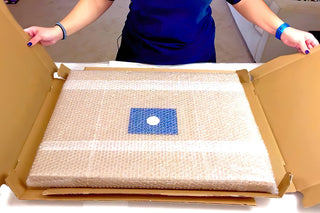
STEP 2 - SHIPPING
We ship your order. We send you an email to track the progress

STEP 3 - DELIVERY
You receive your order. You can also, according to your choice, be delivered to a relay point.
Matte finish
View from behind
Frame (optional)
In the fascinating world of art, some works manage to transcend their era to capture the very essence of humanity. The "Art print of a man sitting at a table with an open book reading a letter" by Giovanni Battista Trotti is a striking example. This painting, imbued with subtlety and depth, invites the viewer to delve into the intimacy of a moment frozen in time. The depicted man, immersed in reading a letter, seems to embody a reflection on solitude, knowledge, and human emotions. Through this piece, Trotti offers us a window into the soul, where every detail, every shadow, tells a unique story.
Style and uniqueness of the work
Giovanni Battista Trotti's style, also known as "Il Malosso," is distinguished by his ability to blend realism and emotion. In this portrait, mastery of lighting and shadows creates an intimate atmosphere, where light gently caresses the man's face, revealing nuances of his expression. The open book, symbol of knowledge and reflection, becomes a central element of the composition, connecting the character to a world of thoughts and feelings. The color palette, soft and soothing, enhances this contemplative ambiance, while the meticulous details of the clothing and table demonstrate a concern for realism that characterizes Trotti's art. Every brushstroke seems charged with meaning, inviting the viewer to question the nature of reading and writing, and their power of transformation.
The artist and his influence
Giovanni Battista Trotti, born at the end of the 16th century, is an emblematic figure of Italian Renaissance painting. Trained under the influence of great masters, he developed a personal style that combines tradition and innovation. His work was marked by a deep understanding of human emotion, and his portraits, such as this one, reveal rare sensitivity. Trotti also contributed to the evolution of portraiture as a genre, placing the individual at the heart of his work, while incorporating narrative elements.
12,34 €