
Portrait of a man with a watch - Pieter Cornelisz van Slingelandt | Art print


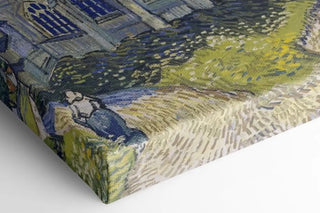
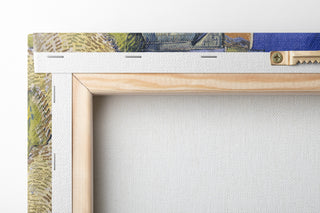
View from behind
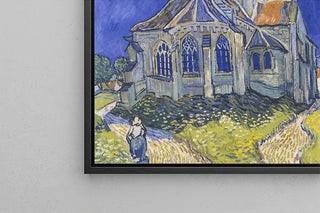
Frame (optional)
In the fascinating world of 17th-century Dutch painting, the "Portrait of a Man with a Watch" by Pieter Cornelisz van Slingelandt stands out for its psychological depth and technical refinement. This painting, which captures the very essence of its era, invites viewers to immerse themselves in the life of a man whose gaze seems to carry the weight of hours. The watch, delicately held between his fingers, is not merely an accessory; it becomes the symbol of passing time, vanity, and human existence. Through this work, Van Slingelandt transcends the simple portrait to offer a reflection on the human condition, the passage of time, and self-awareness.
Style and uniqueness of the work
Van Slingelandt's style is characterized by an exceptional mastery of chiaroscuro, a technique that plays with light to emphasize volumes and create an intimate atmosphere. In this portrait, meticulous details, such as the rendering of clothing textures and the finesse of facial features, demonstrate striking realism. Every element, from the dark background that highlights the subject to the subtle luminosity illuminating the face, is carefully orchestrated to evoke emotion. The man's posture, slightly turned to the right, along with the pensive expression on his face, captures a moment of reflection—a pause amid the tumult of daily life. This painting is not just a simple representation; it is an invitation to contemplate time, to question what it truly means to live.
The artist and his influence
Pieter Cornelisz van Slingelandt, active during the 17th century, is often regarded as one of the masters of Dutch portraiture. Trained in the workshop of the illustrious painter Frans Hals, he developed a style that is uniquely his own, blending realism with introspection. His work, although less well-known than that of some of his contemporaries, has influenced many artists through his ability to capture the human soul. Van Slingelandt established himself in a rich and competitive artistic environment, demonstrating a unique sensitivity that allowed him to bring his subjects to life. Through his portraits, he
Portrait of a man with a watch - Pieter Cornelisz van Slingelandt | Art print

-10% FROM €95 IN PURCHASES
-15% FROM €195 IN PURCHASES
Regular price
- Unit price
- per
Tax included.
Free shipping
€4.90 / Free shipping on orders over €39
Satisfied or Money Back
Free returns within 30 days
10-year warranty
Our prints are guaranteed for 10 years
Any questions? We are here!
by email to contact@artemlegrand.com
THE STEPS OF YOUR ORDER

STEP 1 - ORDER PLACED
Your order has been confirmed and we are starting production
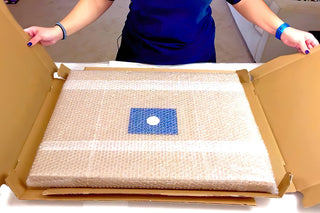
STEP 2 - SHIPPING
We ship your order. We send you an email to track the progress

STEP 3 - DELIVERY
You receive your order. You can also, according to your choice, be delivered to a relay point.
Matte finish
View from behind
Frame (optional)
In the fascinating world of 17th-century Dutch painting, the "Portrait of a Man with a Watch" by Pieter Cornelisz van Slingelandt stands out for its psychological depth and technical refinement. This painting, which captures the very essence of its era, invites viewers to immerse themselves in the life of a man whose gaze seems to carry the weight of hours. The watch, delicately held between his fingers, is not merely an accessory; it becomes the symbol of passing time, vanity, and human existence. Through this work, Van Slingelandt transcends the simple portrait to offer a reflection on the human condition, the passage of time, and self-awareness.
Style and uniqueness of the work
Van Slingelandt's style is characterized by an exceptional mastery of chiaroscuro, a technique that plays with light to emphasize volumes and create an intimate atmosphere. In this portrait, meticulous details, such as the rendering of clothing textures and the finesse of facial features, demonstrate striking realism. Every element, from the dark background that highlights the subject to the subtle luminosity illuminating the face, is carefully orchestrated to evoke emotion. The man's posture, slightly turned to the right, along with the pensive expression on his face, captures a moment of reflection—a pause amid the tumult of daily life. This painting is not just a simple representation; it is an invitation to contemplate time, to question what it truly means to live.
The artist and his influence
Pieter Cornelisz van Slingelandt, active during the 17th century, is often regarded as one of the masters of Dutch portraiture. Trained in the workshop of the illustrious painter Frans Hals, he developed a style that is uniquely his own, blending realism with introspection. His work, although less well-known than that of some of his contemporaries, has influenced many artists through his ability to capture the human soul. Van Slingelandt established himself in a rich and competitive artistic environment, demonstrating a unique sensitivity that allowed him to bring his subjects to life. Through his portraits, he
12,34 €