
Portrait of a man in a top hat - Samuel Finley Breese Morse | Art print


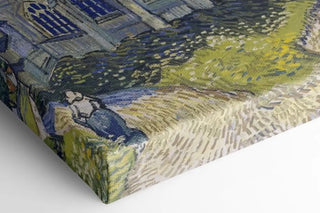
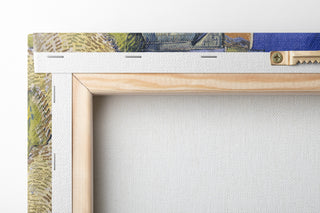
View from behind
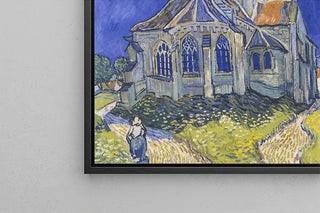
Frame (optional)
The "Portrait of a Man in a Top Hat" by Samuel Finley Breese Morse is a work that transcends the simple frame of painting to offer a true immersion into the history and culture of the early 19th century. This piece, created by a man who was not content to be just an artist but also an inventor and a pioneer of photography, invites us to contemplate the penetrating gaze of a man whose identity remains mysterious. Indeed, the portrait is not limited to a physical representation; it evokes stories of life, aspirations, and dreams, while capturing the essence of an era when art and science began to intersect in unprecedented ways.
Style and uniqueness of the work
In this portrait, Morse deploys a style that combines realism with an almost romantic delicacy. Light plays a crucial role, illuminating the man's face while subtle shadows dance around him. The details of the top hat, a symbol of status and elegance, are rendered with remarkable precision, while the texture of the clothing demonstrates meticulous craftsmanship. What strikes in this work is the artist's ability to infuse an inner life into the subject, through features that seem to vibrate with emotion. The man's gaze, both confident and contemplative, questions us, encourages us to wonder what he thinks, what he feels. Thus, the portrait becomes a mirror of our own reflections and questions.
The artist and his influence
Samuel Finley Breese Morse, born in 1791, is often recognized for his role in the invention of the telegraph and the code that bears his name. However, his artistic journey is just as fascinating. Morse studied at the Royal Academy of Arts in London, where he was influenced by European masters. His return to America marked the beginning of a career where he skillfully combined his passions for art and technology. As a founding member of the National Academy of Design, he played a crucial role in the evolution of art in the United States. His ability to capture portraits
Portrait of a man in a top hat - Samuel Finley Breese Morse | Art print

-10% FROM €95 IN PURCHASES
-15% FROM €195 IN PURCHASES
Regular price
- Unit price
- per
Tax included.
Free shipping
€4.90 / Free shipping on orders over €39
Satisfied or Money Back
Free returns within 30 days
10-year warranty
Our prints are guaranteed for 10 years
Any questions? We are here!
by email to contact@artemlegrand.com
THE STEPS OF YOUR ORDER

STEP 1 - ORDER PLACED
Your order has been confirmed and we are starting production
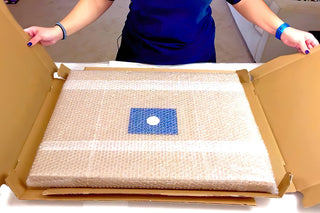
STEP 2 - SHIPPING
We ship your order. We send you an email to track the progress

STEP 3 - DELIVERY
You receive your order. You can also, according to your choice, be delivered to a relay point.
Matte finish
View from behind
Frame (optional)
The "Portrait of a Man in a Top Hat" by Samuel Finley Breese Morse is a work that transcends the simple frame of painting to offer a true immersion into the history and culture of the early 19th century. This piece, created by a man who was not content to be just an artist but also an inventor and a pioneer of photography, invites us to contemplate the penetrating gaze of a man whose identity remains mysterious. Indeed, the portrait is not limited to a physical representation; it evokes stories of life, aspirations, and dreams, while capturing the essence of an era when art and science began to intersect in unprecedented ways.
Style and uniqueness of the work
In this portrait, Morse deploys a style that combines realism with an almost romantic delicacy. Light plays a crucial role, illuminating the man's face while subtle shadows dance around him. The details of the top hat, a symbol of status and elegance, are rendered with remarkable precision, while the texture of the clothing demonstrates meticulous craftsmanship. What strikes in this work is the artist's ability to infuse an inner life into the subject, through features that seem to vibrate with emotion. The man's gaze, both confident and contemplative, questions us, encourages us to wonder what he thinks, what he feels. Thus, the portrait becomes a mirror of our own reflections and questions.
The artist and his influence
Samuel Finley Breese Morse, born in 1791, is often recognized for his role in the invention of the telegraph and the code that bears his name. However, his artistic journey is just as fascinating. Morse studied at the Royal Academy of Arts in London, where he was influenced by European masters. His return to America marked the beginning of a career where he skillfully combined his passions for art and technology. As a founding member of the National Academy of Design, he played a crucial role in the evolution of art in the United States. His ability to capture portraits
12,34 €