
Painting Portrait of a man with a black hat - Pier Francesco Foschi | Art print


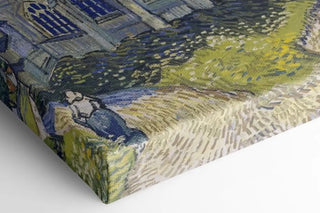
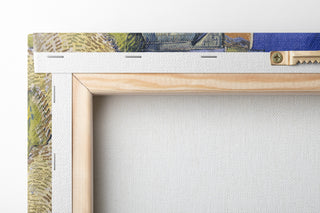
View from behind
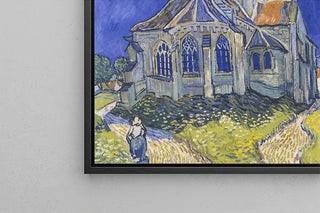
Frame (optional)
In the world of 16th-century Italian painting, certain works stand out for their ability to capture not only appearance but also the very essence of their subjects. The "Portrait of a Man in a Black Hat" by Pier Francesco Foschi is a perfect example. This painting, imbued with mystery and depth, invites the viewer to delve into the intimacy of its subject. The way Foschi plays with light and shadow, as well as the texture of the clothing, brings to life a character who seems almost to step out of the canvas to address us. This piece is much more than a simple portrait; it is a window into a period, a culture, and an artistic savoir-faire that continue to fascinate.
Style and uniqueness of the work
Foschi's style is characterized by meticulous attention to detail and an impressive mastery of pictorial technique. In this art print, every element, from the black hat to the facial expression, is carefully studied. The color palette, subtle and nuanced, creates an atmosphere that is both serene and intriguing. The play of light, highlighting the facial features and the folds of the clothing, gives the piece an almost three-dimensional quality. This striking realism is reinforced by the posture of the figure, which, although static, seems to carry a story, a lived experience. Foschi succeeds in transcending the simple exercise of representation to offer a true reflection on identity and human presence.
The artist and his influence
Pier Francesco Foschi, active in Florence during the 16th century, is often regarded as one of the masters of portraiture of his time. A pupil of Domenico Ghirlandaio, he managed to incorporate Renaissance techniques while developing a style that is uniquely his own. His influence extends beyond his era, inspiring many artists who followed. By capturing the psychology of his subjects with such finesse, Foschi paved the way for a new approach to portraiture, where individuality and personal expression take precedence over mere representation. His works are often marked by a certain melancholy, an introspection that still resonates today with art enthusiasts.
An exceptional wall decoration
Painting Portrait of a man with a black hat - Pier Francesco Foschi | Art print

-10% FROM €95 IN PURCHASES
-15% FROM €195 IN PURCHASES
Regular price
- Unit price
- per
Tax included.
Free shipping
€4.90 / Free shipping on orders over €39
Satisfied or Money Back
Free returns within 30 days
10-year warranty
Our prints are guaranteed for 10 years
Any questions? We are here!
by email to contact@artemlegrand.com
THE STEPS OF YOUR ORDER

STEP 1 - ORDER PLACED
Your order has been confirmed and we are starting production
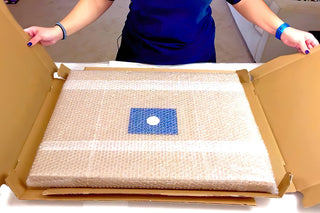
STEP 2 - SHIPPING
We ship your order. We send you an email to track the progress

STEP 3 - DELIVERY
You receive your order. You can also, according to your choice, be delivered to a relay point.
Matte finish
View from behind
Frame (optional)
In the world of 16th-century Italian painting, certain works stand out for their ability to capture not only appearance but also the very essence of their subjects. The "Portrait of a Man in a Black Hat" by Pier Francesco Foschi is a perfect example. This painting, imbued with mystery and depth, invites the viewer to delve into the intimacy of its subject. The way Foschi plays with light and shadow, as well as the texture of the clothing, brings to life a character who seems almost to step out of the canvas to address us. This piece is much more than a simple portrait; it is a window into a period, a culture, and an artistic savoir-faire that continue to fascinate.
Style and uniqueness of the work
Foschi's style is characterized by meticulous attention to detail and an impressive mastery of pictorial technique. In this art print, every element, from the black hat to the facial expression, is carefully studied. The color palette, subtle and nuanced, creates an atmosphere that is both serene and intriguing. The play of light, highlighting the facial features and the folds of the clothing, gives the piece an almost three-dimensional quality. This striking realism is reinforced by the posture of the figure, which, although static, seems to carry a story, a lived experience. Foschi succeeds in transcending the simple exercise of representation to offer a true reflection on identity and human presence.
The artist and his influence
Pier Francesco Foschi, active in Florence during the 16th century, is often regarded as one of the masters of portraiture of his time. A pupil of Domenico Ghirlandaio, he managed to incorporate Renaissance techniques while developing a style that is uniquely his own. His influence extends beyond his era, inspiring many artists who followed. By capturing the psychology of his subjects with such finesse, Foschi paved the way for a new approach to portraiture, where individuality and personal expression take precedence over mere representation. His works are often marked by a certain melancholy, an introspection that still resonates today with art enthusiasts.
An exceptional wall decoration
12,34 €