
Painting Portrait of a Man - Hyacinthe Rigaud | Art print


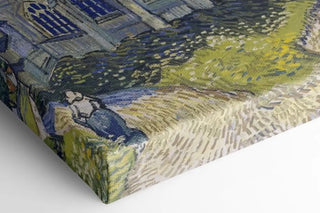
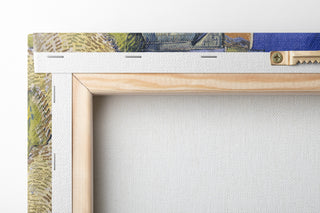
View from behind
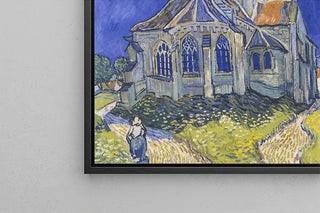
Frame (optional)
Portrait of a Man - Hyacinthe Rigaud – Captivating Introduction
The "Portrait of a Man" by Hyacinthe Rigaud is an iconic work that embodies not only the undeniable talent of its creator but also the spirit of an era when portraiture was a means of asserting social status and personality. This painting, created in the early 18th century, serves as a true window into the past, offering a fascinating glimpse into the customs and codes of the French nobility. Rigaud's technical mastery, combined with a rare artistic sensitivity, allows viewers to feel an immediate connection with the subject, whose expression and posture tell a story far richer than a simple face frozen on the canvas.
Style and uniqueness of the work
Rigaud's style is distinguished by its striking realism and meticulous attention to detail. Every element of the "Art print of a man" seems to have been chosen with care, from the sumptuous drapery of the clothing to the accessories that evoke the wealth and importance of the character. Light plays a crucial role in this work, illuminating the face with a softness that accentuates the features and reveals nuances of expression. This play of light and shadow, typical of the Baroque, gives the painting depth and an almost lifelike dimension. The composition, meanwhile, is carefully balanced, highlighting the subject while hinting at a background that, although discreet, enriches the visual story. Thus, every gaze cast on this work is an invitation to explore not only the appearance of the character but also the stories and emotions hidden behind his gaze.
The artist and his influence
Hyacinthe Rigaud is often regarded as one of the greatest portraitists of his time. Born in Perpignan in 1659, he managed to establish himself at the court of Louis XIV, becoming the king's official painter. His style, both flamboyant and delicate, influenced many artists who succeeded him, marking an era when portraiture was both an art and a tool of power. Rigaud did not merely paint faces; he captured personalities, stories, and emotions. His innovative approach to portraiture, blending realism and idealization, paved the way for a
Painting Portrait of a Man - Hyacinthe Rigaud | Art print

-10% FROM €95 IN PURCHASES
-15% FROM €195 IN PURCHASES
Regular price
- Unit price
- per
Tax included.
Free shipping
€4.90 / Free shipping on orders over €39
Satisfied or Money Back
Free returns within 30 days
10-year warranty
Our prints are guaranteed for 10 years
Any questions? We are here!
by email to contact@artemlegrand.com
THE STEPS OF YOUR ORDER
STEP 1 - ORDER PLACED
Your order has been confirmed and we are starting production
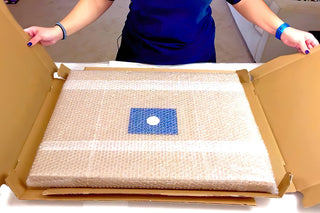
STEP 2 - SHIPPING
We ship your order. We send you an email to track the progress

STEP 3 - DELIVERY
You receive your order. You can also, according to your choice, be delivered to a relay point.
Matte finish
View from behind
Frame (optional)
Portrait of a Man - Hyacinthe Rigaud – Captivating Introduction
The "Portrait of a Man" by Hyacinthe Rigaud is an iconic work that embodies not only the undeniable talent of its creator but also the spirit of an era when portraiture was a means of asserting social status and personality. This painting, created in the early 18th century, serves as a true window into the past, offering a fascinating glimpse into the customs and codes of the French nobility. Rigaud's technical mastery, combined with a rare artistic sensitivity, allows viewers to feel an immediate connection with the subject, whose expression and posture tell a story far richer than a simple face frozen on the canvas.
Style and uniqueness of the work
Rigaud's style is distinguished by its striking realism and meticulous attention to detail. Every element of the "Art print of a man" seems to have been chosen with care, from the sumptuous drapery of the clothing to the accessories that evoke the wealth and importance of the character. Light plays a crucial role in this work, illuminating the face with a softness that accentuates the features and reveals nuances of expression. This play of light and shadow, typical of the Baroque, gives the painting depth and an almost lifelike dimension. The composition, meanwhile, is carefully balanced, highlighting the subject while hinting at a background that, although discreet, enriches the visual story. Thus, every gaze cast on this work is an invitation to explore not only the appearance of the character but also the stories and emotions hidden behind his gaze.
The artist and his influence
Hyacinthe Rigaud is often regarded as one of the greatest portraitists of his time. Born in Perpignan in 1659, he managed to establish himself at the court of Louis XIV, becoming the king's official painter. His style, both flamboyant and delicate, influenced many artists who succeeded him, marking an era when portraiture was both an art and a tool of power. Rigaud did not merely paint faces; he captured personalities, stories, and emotions. His innovative approach to portraiture, blending realism and idealization, paved the way for a
12,34 €