
Painting Portrait of a Man - Gustave Courbet | Art print Source: Tableau Portrait d'un homme - Gustave Courbet | Reproduction


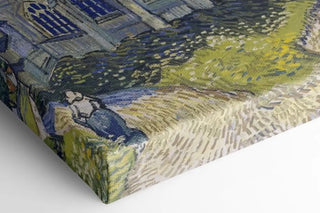
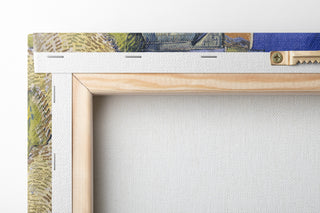
View from behind
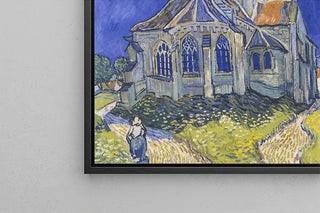
Frame (optional)
Gustave Courbet's "Portrait of a Man" stands as a powerful testament to an era when art broke free from academic conventions. Created in 1866, this artwork captures not only Courbet's undeniable talent but also a bold vision of human representation. The artist, a key figure of realism, moves away from idealized ideals to offer a raw and authentic image of his subject. In this portrait, every brushstroke seems to vibrate with palpable energy, inviting the viewer to delve into the intimacy of the depicted man.
Style and uniqueness of the work
Courbet's style is characterized by a direct and frank approach, far from the embellishments often present in the art of his time. In the "Portrait of a Man," the color palette, both rich and earthy, helps create an atmosphere of truth. The facial features, marked by shadows and highlights, reveal a psychological depth that transcends mere portraiture. The artist does not merely reproduce the external appearance; he seeks to capture the very essence of his subject. In doing so, Courbet manages to establish a dialogue between the viewer and the portrait, an interaction that echoes the sensitivity of the period. The composition, though simple, is of great strength, with each element carefully arranged to emphasize the presence of the depicted man.
The artist and his influence
Gustave Courbet, born in 1819, is often regarded as the father of realism, an artistic movement advocating direct observation of reality. His work marked a break with romanticism and academicism, paving the way for generations of artists seeking to depict the world as it is. Courbet used his art as a means of political and social expression, addressing themes often neglected by his contemporaries. His ability to portray everyday life and the struggles of the working classes resonated deeply, inspiring artists such as Édouard Manet and, later, the Impressionists. The "Portrait of a Man" is a perfect example of this desire to give
Painting Portrait of a Man - Gustave Courbet | Art print Source: Tableau Portrait d'un homme - Gustave Courbet | Reproduction

-10% FROM €95 IN PURCHASES
-15% FROM €195 IN PURCHASES
Regular price
- Unit price
- per
Tax included.
Free shipping
€4.90 / Free shipping on orders over €39
Satisfied or Money Back
Free returns within 30 days
10-year warranty
Our prints are guaranteed for 10 years
Any questions? We are here!
by email to contact@artemlegrand.com
THE STEPS OF YOUR ORDER

STEP 1 - ORDER PLACED
Your order has been confirmed and we are starting production
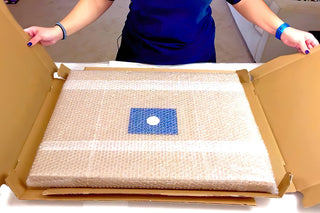
STEP 2 - SHIPPING
We ship your order. We send you an email to track the progress

STEP 3 - DELIVERY
You receive your order. You can also, according to your choice, be delivered to a relay point.
Matte finish
View from behind
Frame (optional)
Gustave Courbet's "Portrait of a Man" stands as a powerful testament to an era when art broke free from academic conventions. Created in 1866, this artwork captures not only Courbet's undeniable talent but also a bold vision of human representation. The artist, a key figure of realism, moves away from idealized ideals to offer a raw and authentic image of his subject. In this portrait, every brushstroke seems to vibrate with palpable energy, inviting the viewer to delve into the intimacy of the depicted man.
Style and uniqueness of the work
Courbet's style is characterized by a direct and frank approach, far from the embellishments often present in the art of his time. In the "Portrait of a Man," the color palette, both rich and earthy, helps create an atmosphere of truth. The facial features, marked by shadows and highlights, reveal a psychological depth that transcends mere portraiture. The artist does not merely reproduce the external appearance; he seeks to capture the very essence of his subject. In doing so, Courbet manages to establish a dialogue between the viewer and the portrait, an interaction that echoes the sensitivity of the period. The composition, though simple, is of great strength, with each element carefully arranged to emphasize the presence of the depicted man.
The artist and his influence
Gustave Courbet, born in 1819, is often regarded as the father of realism, an artistic movement advocating direct observation of reality. His work marked a break with romanticism and academicism, paving the way for generations of artists seeking to depict the world as it is. Courbet used his art as a means of political and social expression, addressing themes often neglected by his contemporaries. His ability to portray everyday life and the struggles of the working classes resonated deeply, inspiring artists such as Édouard Manet and, later, the Impressionists. The "Portrait of a Man" is a perfect example of this desire to give
12,34 €