
Painting Portrait of Emma Hamilton as Sybil - Gavin Hamilton | Art print


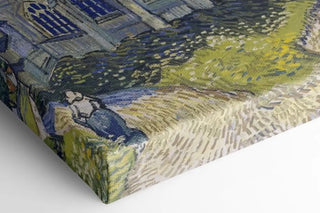
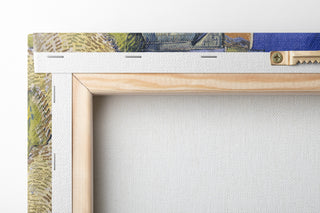
View from behind
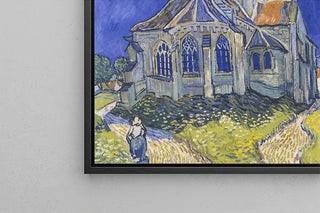
Frame (optional)
Gavin Hamilton’s “Portrait of Emma Hamilton as a Sibyl” is a piece that goes beyond mere painting, offering a true voyage through time. This artwork, capturing the beauty and personality of Emma Hamilton, embodies the aesthetic ideals of the 18th century while revealing the subtleties of an era marked by elegance and refinement. The depiction of Emma, presented as a Sibyl—a mythological figure endowed with prophetic abilities—evokes a fascinating blend of sensuality and wisdom. Gazing upon this piece, the viewer is invited to immerse themselves in a universe where beauty and intellect meet, a genuine testament to the art of portraiture of that period.
Style and uniqueness of the work
Hamilton’s style in this portrait is distinguished by his subtle use of light and shadow, which imparts a striking depth to the composition. The meticulous details of the drapery, as well as Emma’s delicate features, demonstrate exceptional craftsmanship. The artist manages to capture not only her physical appearance but also her very essence. Emma’s posture, both graceful and confident, suggests an intimacy with the viewer, as if she were sharing an ancient secret. The symbolic elements present in the artwork, such as the attributes of the Sibyl, enrich the visual storytelling and invite a deeper interpretation. This painting does not merely depict a woman but constructs a mythology around her figure, making her a timeless icon.
The artist and his influence
Gavin Hamilton, a Scottish painter and engraver, is recognized for his role in the rise of Neoclassicism. His career, marked by a constant pursuit of ideal beauty and harmony, aligns with the legacy of the great masters of the Renaissance. Hamilton was able to surround himself with influential personalities of his time, notably Emma Hamilton, who was not only his model but also his muse. The artist skillfully leveraged this relationship to create works that transcend the conventions of his era. By integrating elements
Painting Portrait of Emma Hamilton as Sybil - Gavin Hamilton | Art print

-10% FROM €95 IN PURCHASES
-15% FROM €195 IN PURCHASES
Regular price
- Unit price
- per
Tax included.
Free shipping
€4.90 / Free shipping on orders over €39
Satisfied or Money Back
Free returns within 30 days
10-year warranty
Our prints are guaranteed for 10 years
Any questions? We are here!
by email to contact@artemlegrand.com
THE STEPS OF YOUR ORDER

STEP 1 - ORDER PLACED
Your order has been confirmed and we are starting production
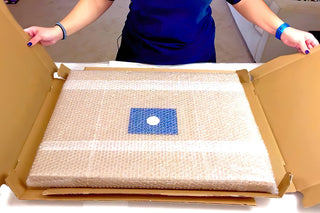
STEP 2 - SHIPPING
We ship your order. We send you an email to track the progress

STEP 3 - DELIVERY
You receive your order. You can also, according to your choice, be delivered to a relay point.
Matte finish
View from behind
Frame (optional)
Gavin Hamilton’s “Portrait of Emma Hamilton as a Sibyl” is a piece that goes beyond mere painting, offering a true voyage through time. This artwork, capturing the beauty and personality of Emma Hamilton, embodies the aesthetic ideals of the 18th century while revealing the subtleties of an era marked by elegance and refinement. The depiction of Emma, presented as a Sibyl—a mythological figure endowed with prophetic abilities—evokes a fascinating blend of sensuality and wisdom. Gazing upon this piece, the viewer is invited to immerse themselves in a universe where beauty and intellect meet, a genuine testament to the art of portraiture of that period.
Style and uniqueness of the work
Hamilton’s style in this portrait is distinguished by his subtle use of light and shadow, which imparts a striking depth to the composition. The meticulous details of the drapery, as well as Emma’s delicate features, demonstrate exceptional craftsmanship. The artist manages to capture not only her physical appearance but also her very essence. Emma’s posture, both graceful and confident, suggests an intimacy with the viewer, as if she were sharing an ancient secret. The symbolic elements present in the artwork, such as the attributes of the Sibyl, enrich the visual storytelling and invite a deeper interpretation. This painting does not merely depict a woman but constructs a mythology around her figure, making her a timeless icon.
The artist and his influence
Gavin Hamilton, a Scottish painter and engraver, is recognized for his role in the rise of Neoclassicism. His career, marked by a constant pursuit of ideal beauty and harmony, aligns with the legacy of the great masters of the Renaissance. Hamilton was able to surround himself with influential personalities of his time, notably Emma Hamilton, who was not only his model but also his muse. The artist skillfully leveraged this relationship to create works that transcend the conventions of his era. By integrating elements
12,34 €