
Portrait Painting by Bruno Chérier - Jean-Baptiste Carpeaux | Art print


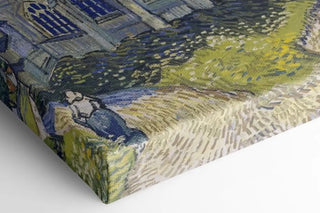
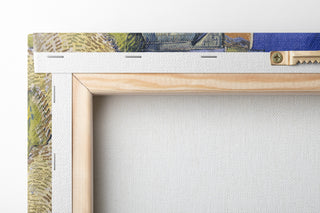
View from behind
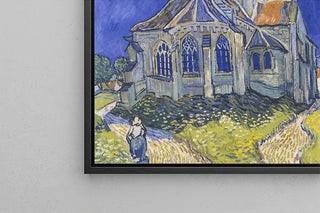
Frame (optional)
The "Portrait of Bruno Chérier" by Jean-Baptiste Carpeaux is an iconic artwork that transcends the simple framework of representation. Created in the 19th century, this painting embodies the very essence of its subject's personality, a man whose intellectual and artistic stature was undeniable. Through this portrait, Carpeaux does not merely capture Chérier's physical appearance; he manages to seize the soul of this man, revealing an emotional depth that invites the viewer to prolonged contemplation. The light, shadows, and colors intertwine to create a vibrant atmosphere, where every detail seems to tell a story.
Style and uniqueness of the work
Carpeaux's style is distinguished by its bold approach and keen sense of realism. In the "Portrait of Bruno Chérier," he employs a painting technique that combines delicacy and vigor, illustrating the complexity of his subject. Chérier's facial features are rendered with meticulous precision, while the blurred background helps to refocus attention on the main character. The color palette chosen by the artist, both rich and subtle, contributes to creating an intimate atmosphere. The earth and flesh tones evoke human warmth, while the touches of light accentuate the contours of the face, giving the whole an almost sculptural dimension. This work stands out for Carpeaux's ability to blend technique and emotion, a duality that makes each viewing of the portrait a unique experience.
The artist and his influence
Jean-Baptiste Carpeaux is one of the most influential artists of the 19th century, a painter and sculptor whose work profoundly impacted the artistic landscape of his time. Trained under the guidance of great masters, Carpeaux developed a style that is uniquely his own, characterized by intense expressiveness and sensitivity to psychological nuances. His work on the "Portrait of Bruno Chérier" perfectly illustrates this ability to transcend mere representation to touch on the very essence of humanity. Carpeaux was also a pioneer in the use of sculpture and painting to express
Portrait Painting by Bruno Chérier - Jean-Baptiste Carpeaux | Art print

-10% FROM €95 IN PURCHASES
-15% FROM €195 IN PURCHASES
Regular price
- Unit price
- per
Tax included.
Free shipping
€4.90 / Free shipping on orders over €39
Satisfied or Money Back
Free returns within 30 days
10-year warranty
Our prints are guaranteed for 10 years
Any questions? We are here!
by email to contact@artemlegrand.com
THE STEPS OF YOUR ORDER
STEP 1 - ORDER PLACED
Your order has been confirmed and we are starting production
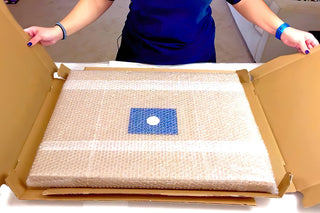
STEP 2 - SHIPPING
We ship your order. We send you an email to track the progress

STEP 3 - DELIVERY
You receive your order. You can also, according to your choice, be delivered to a relay point.
Matte finish
View from behind
Frame (optional)
The "Portrait of Bruno Chérier" by Jean-Baptiste Carpeaux is an iconic artwork that transcends the simple framework of representation. Created in the 19th century, this painting embodies the very essence of its subject's personality, a man whose intellectual and artistic stature was undeniable. Through this portrait, Carpeaux does not merely capture Chérier's physical appearance; he manages to seize the soul of this man, revealing an emotional depth that invites the viewer to prolonged contemplation. The light, shadows, and colors intertwine to create a vibrant atmosphere, where every detail seems to tell a story.
Style and uniqueness of the work
Carpeaux's style is distinguished by its bold approach and keen sense of realism. In the "Portrait of Bruno Chérier," he employs a painting technique that combines delicacy and vigor, illustrating the complexity of his subject. Chérier's facial features are rendered with meticulous precision, while the blurred background helps to refocus attention on the main character. The color palette chosen by the artist, both rich and subtle, contributes to creating an intimate atmosphere. The earth and flesh tones evoke human warmth, while the touches of light accentuate the contours of the face, giving the whole an almost sculptural dimension. This work stands out for Carpeaux's ability to blend technique and emotion, a duality that makes each viewing of the portrait a unique experience.
The artist and his influence
Jean-Baptiste Carpeaux is one of the most influential artists of the 19th century, a painter and sculptor whose work profoundly impacted the artistic landscape of his time. Trained under the guidance of great masters, Carpeaux developed a style that is uniquely his own, characterized by intense expressiveness and sensitivity to psychological nuances. His work on the "Portrait of Bruno Chérier" perfectly illustrates this ability to transcend mere representation to touch on the very essence of humanity. Carpeaux was also a pioneer in the use of sculpture and painting to express
12,34 €