
Painting Portrait of Anton Raphael Mengs - Peder Als | Art print


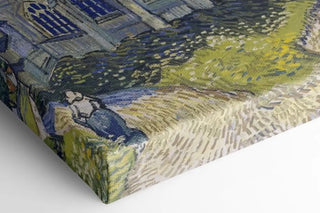
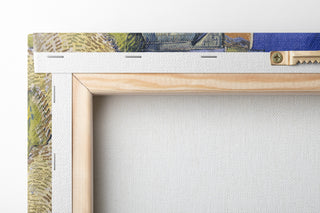
View from behind
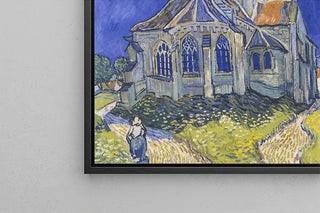
Frame (optional)
Portrait Art print of Anton Raphaël Mengs - Peder Als – Captivating Introduction
In the vast panorama of art history, certain works stand out for their ability to capture the essence of an era or an individual. The art print of Anton Raphaël Mengs - Peder Als is no exception. Immersing oneself in this representation, one is immediately transported to the 18th century, a time when baroque and neoclassical art intertwined with elegance. The portrait of Anton Raphaël Mengs, an emblematic painter of his time, reveals not only the features of a man but also the soul of an artist who marked his era with his talent and artistic vision. This painting, rich in detail and emotion, invites reflection on identity and the artist's place in society.
Style and uniqueness of the work
The style of this piece is a perfect reflection of Peder Als's technical mastery. Every brushstroke appears carefully considered, demonstrating meticulous attention to detail. The play of light and shadow, typical of 18th-century painting, adds striking depth to Mengs's face. The colors, both vivid and subtle, create a visual harmony that draws the eye and captivates the mind. The subject's posture, both relaxed and assertive, reveals a complex personality, oscillating between serenity and determination. This portrait is a celebration of the individual, where each element, from clothing choices to facial expressions, contributes to telling a unique story. The singularity of this work lies in its ability to transcend the simple portrait to become a true window into the soul of its model.
The artist and his influence
Anton Raphaël Mengs was not only a painter but also an art theorist whose influence endured well beyond his own era. Trained in Rome, he mastered the elements of classicism while adapting them to his own artistic aspirations. Mengs played a crucial role in the transition between baroque and neoclassicism, and his work inspired many contemporary and future artists. Through his portraits, he was able to capture the spirit of the personalities of his time, while laying the foundations of a
Painting Portrait of Anton Raphael Mengs - Peder Als | Art print

-10% FROM €95 IN PURCHASES
-15% FROM €195 IN PURCHASES
Regular price
- Unit price
- per
Tax included.
Free shipping
€4.90 / Free shipping on orders over €39
Satisfied or Money Back
Free returns within 30 days
10-year warranty
Our prints are guaranteed for 10 years
Any questions? We are here!
by email to contact@artemlegrand.com
THE STEPS OF YOUR ORDER

STEP 1 - ORDER PLACED
Your order has been confirmed and we are starting production
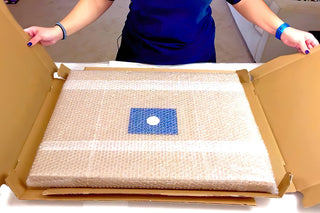
STEP 2 - SHIPPING
We ship your order. We send you an email to track the progress

STEP 3 - DELIVERY
You receive your order. You can also, according to your choice, be delivered to a relay point.
Matte finish
View from behind
Frame (optional)
Portrait Art print of Anton Raphaël Mengs - Peder Als – Captivating Introduction
In the vast panorama of art history, certain works stand out for their ability to capture the essence of an era or an individual. The art print of Anton Raphaël Mengs - Peder Als is no exception. Immersing oneself in this representation, one is immediately transported to the 18th century, a time when baroque and neoclassical art intertwined with elegance. The portrait of Anton Raphaël Mengs, an emblematic painter of his time, reveals not only the features of a man but also the soul of an artist who marked his era with his talent and artistic vision. This painting, rich in detail and emotion, invites reflection on identity and the artist's place in society.
Style and uniqueness of the work
The style of this piece is a perfect reflection of Peder Als's technical mastery. Every brushstroke appears carefully considered, demonstrating meticulous attention to detail. The play of light and shadow, typical of 18th-century painting, adds striking depth to Mengs's face. The colors, both vivid and subtle, create a visual harmony that draws the eye and captivates the mind. The subject's posture, both relaxed and assertive, reveals a complex personality, oscillating between serenity and determination. This portrait is a celebration of the individual, where each element, from clothing choices to facial expressions, contributes to telling a unique story. The singularity of this work lies in its ability to transcend the simple portrait to become a true window into the soul of its model.
The artist and his influence
Anton Raphaël Mengs was not only a painter but also an art theorist whose influence endured well beyond his own era. Trained in Rome, he mastered the elements of classicism while adapting them to his own artistic aspirations. Mengs played a crucial role in the transition between baroque and neoclassicism, and his work inspired many contemporary and future artists. Through his portraits, he was able to capture the spirit of the personalities of his time, while laying the foundations of a
12,34 €