
Painting Portrait of Antoine Fortuné Marion - Paul Cézanne | Art print Source: Tableau Portrait d'Antoine Fortuné Marion - Paul Cézanne | Reproduction


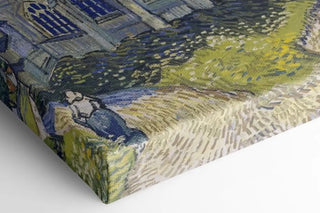
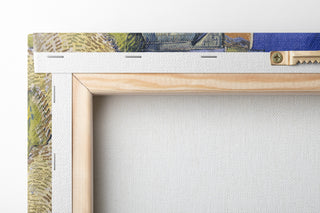
View from behind
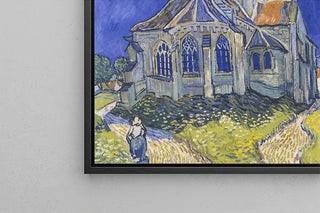
Frame (optional)
Paul Cézanne's "Portrait of Antoine Fortuné Marion" is a work that transcends the simple framework of a portrait to immerse the viewer in a profound exploration of human identity. Created at the end of the 19th century, this painting embodies Cézanne's genius, an artist whose impact on art history is immeasurable. Through this portrait, the painter does not merely depict his subject but seeks to capture the very essence of their being, offering a reflection on the nature of perception and reality. Contemplating this piece invites the observer to engage in an intimate dialogue with the depicted subject, to feel the emotions emanating from this canvas.
Style and uniqueness of the work
What sets the "Portrait of Antoine Fortuné Marion" apart is how Cézanne plays with light and color. His technique of layering paint creates a unique texture that brings the face of his model to life. Shades of blue, green, and earth tones blend harmoniously to form subtle shadows and luminous reflections that seem to vibrate on the canvas. True to his post-impressionist style, Cézanne aims to go beyond mere visual representation; he is interested in structure and form. Marion's face, although rigid in expression, is imbued with psychological depth that prompts the viewer to question the thoughts and feelings of the individual. Every brushstroke reflects a meticulous search for balance between abstraction and figuration, making this work both accessible and mysterious.
The artist and his influence
Paul Cézanne, often regarded as the father of modern painting, redefined artistic norms with an innovative approach. His work paved the way for many 20th-century artistic movements, including cubism and fauvism. In the "Portrait of Antoine Fortuné Marion," one perceives the influence of Impressionism, but also a desire to distance himself from it to explore new dimensions. Cézanne is interested in perception and how the eye
Painting Portrait of Antoine Fortuné Marion - Paul Cézanne | Art print Source: Tableau Portrait d'Antoine Fortuné Marion - Paul Cézanne | Reproduction

-10% FROM €95 IN PURCHASES
-15% FROM €195 IN PURCHASES
Regular price
- Unit price
- per
Tax included.
Free shipping
€4.90 / Free shipping on orders over €39
Satisfied or Money Back
Free returns within 30 days
10-year warranty
Our prints are guaranteed for 10 years
Any questions? We are here!
by email to contact@artemlegrand.com
THE STEPS OF YOUR ORDER
STEP 1 - ORDER PLACED
Your order has been confirmed and we are starting production
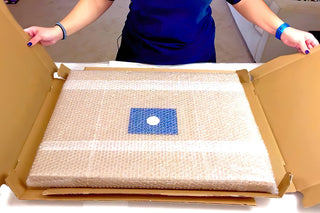
STEP 2 - SHIPPING
We ship your order. We send you an email to track the progress

STEP 3 - DELIVERY
You receive your order. You can also, according to your choice, be delivered to a relay point.
Matte finish
View from behind
Frame (optional)
Paul Cézanne's "Portrait of Antoine Fortuné Marion" is a work that transcends the simple framework of a portrait to immerse the viewer in a profound exploration of human identity. Created at the end of the 19th century, this painting embodies Cézanne's genius, an artist whose impact on art history is immeasurable. Through this portrait, the painter does not merely depict his subject but seeks to capture the very essence of their being, offering a reflection on the nature of perception and reality. Contemplating this piece invites the observer to engage in an intimate dialogue with the depicted subject, to feel the emotions emanating from this canvas.
Style and uniqueness of the work
What sets the "Portrait of Antoine Fortuné Marion" apart is how Cézanne plays with light and color. His technique of layering paint creates a unique texture that brings the face of his model to life. Shades of blue, green, and earth tones blend harmoniously to form subtle shadows and luminous reflections that seem to vibrate on the canvas. True to his post-impressionist style, Cézanne aims to go beyond mere visual representation; he is interested in structure and form. Marion's face, although rigid in expression, is imbued with psychological depth that prompts the viewer to question the thoughts and feelings of the individual. Every brushstroke reflects a meticulous search for balance between abstraction and figuration, making this work both accessible and mysterious.
The artist and his influence
Paul Cézanne, often regarded as the father of modern painting, redefined artistic norms with an innovative approach. His work paved the way for many 20th-century artistic movements, including cubism and fauvism. In the "Portrait of Antoine Fortuné Marion," one perceives the influence of Impressionism, but also a desire to distance himself from it to explore new dimensions. Cézanne is interested in perception and how the eye
12,34 €