
Painting Portrait of an Unknown Woman - Friedrich Georg Weitsch | Art print


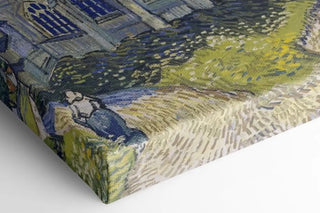
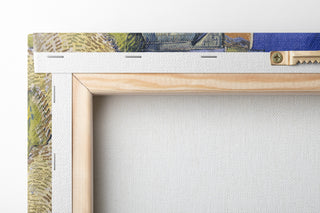
View from behind
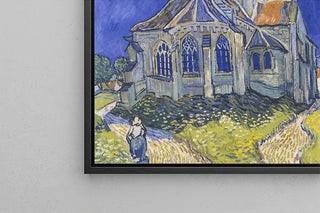
Frame (optional)
In the fascinating world of art, some works manage to capture the imagination and evoke deep emotions. The "Portrait of an Unknown Woman" by Friedrich Georg Weitsch is one of those creations that, through its mystery and beauty, invites exploration. This painting, depicting a woman whose identity remains veiled, immerses us in a universe where enigma and sensitivity meet. Through the gaze of this female figure, the artist succeeds in establishing a timeless dialogue between the viewer and the subject, awakening curiosity and contemplation.
Style and uniqueness of the work
Weitsch's style is distinguished by remarkable finesse and meticulous attention to detail, which give his portraits an almost lifelike dimension. In "Portrait of an Unknown Woman," the chosen color palette evokes a soft and melancholic atmosphere. The delicate nuances of the skin, subtle reflections in the hair, and gentle shadows create a visual harmony that draws the eye. The composition is carefully balanced, highlighting the woman's face with a captivating intimacy. Every stroke invites reflection on her story, character, and life, reminding us that behind each portrait lies a complex narrative. Weitsch's technical mastery, combined with his ability to convey emotions, makes this work a shining example of 18th-century portraiture.
The artist and his influence
Friedrich Georg Weitsch was an artist whose work is rooted in the neoclassical movement, a period marked by a return to classical forms and a quest for ideal beauty. Born in 1758, Weitsch established himself as a renowned portraitist, attracting the attention of nobility and intellectual circles of his time. His style, influenced by the masters of the past, was also nourished by the artistic developments of his era, allowing him to incorporate elements of Romantic sensitivity. Through his portraits, he succeeded in capturing not only the physical appearance of his subjects but also their essence, their personality. In doing so, he contributed to redefining portraiture as an artistic genre.
Painting Portrait of an Unknown Woman - Friedrich Georg Weitsch | Art print

-10% FROM €95 IN PURCHASES
-15% FROM €195 IN PURCHASES
Regular price
- Unit price
- by
Free shipping
€4.90 / Free shipping on orders over €39
Satisfied or Money Back
Free returns within 30 days
10-year warranty
Our prints are guaranteed for 10 years
Any questions? We are here!
by email to contact@artemlegrand.com
THE STEPS OF YOUR ORDER

STEP 1 - ORDER PLACED
Your order has been confirmed and we are starting production
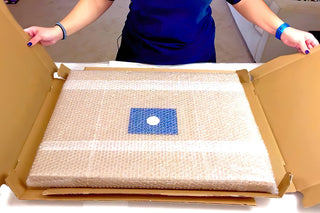
STEP 2 - SHIPPING
We ship your order. We send you an email to track the progress

STEP 3 - DELIVERY
You receive your order. You can also, according to your choice, be delivered to a relay point.
Matte finish
View from behind
Frame (optional)
In the fascinating world of art, some works manage to capture the imagination and evoke deep emotions. The "Portrait of an Unknown Woman" by Friedrich Georg Weitsch is one of those creations that, through its mystery and beauty, invites exploration. This painting, depicting a woman whose identity remains veiled, immerses us in a universe where enigma and sensitivity meet. Through the gaze of this female figure, the artist succeeds in establishing a timeless dialogue between the viewer and the subject, awakening curiosity and contemplation.
Style and uniqueness of the work
Weitsch's style is distinguished by remarkable finesse and meticulous attention to detail, which give his portraits an almost lifelike dimension. In "Portrait of an Unknown Woman," the chosen color palette evokes a soft and melancholic atmosphere. The delicate nuances of the skin, subtle reflections in the hair, and gentle shadows create a visual harmony that draws the eye. The composition is carefully balanced, highlighting the woman's face with a captivating intimacy. Every stroke invites reflection on her story, character, and life, reminding us that behind each portrait lies a complex narrative. Weitsch's technical mastery, combined with his ability to convey emotions, makes this work a shining example of 18th-century portraiture.
The artist and his influence
Friedrich Georg Weitsch was an artist whose work is rooted in the neoclassical movement, a period marked by a return to classical forms and a quest for ideal beauty. Born in 1758, Weitsch established himself as a renowned portraitist, attracting the attention of nobility and intellectual circles of his time. His style, influenced by the masters of the past, was also nourished by the artistic developments of his era, allowing him to incorporate elements of Romantic sensitivity. Through his portraits, he succeeded in capturing not only the physical appearance of his subjects but also their essence, their personality. In doing so, he contributed to redefining portraiture as an artistic genre.