
Art print Portrait of a woman - Hendrick Cornelisz van Vliet


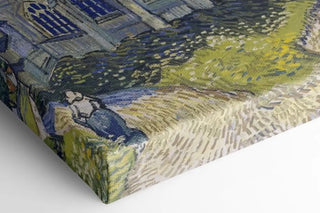
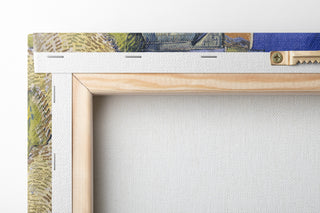
View from behind
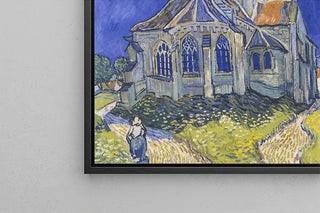
Frame (optional)
Introduction captivante
The "Portrait of a Woman" by Hendrick Cornelisz van Vliet is a work that transcends time and immerses us in the intimacy of a bygone era. This piece, created in the 17th century, is much more than a simple representation; it embodies the very essence of a woman, capturing both her beauty and her mystery. Through this art print, we are invited to discover not only the refined technique of the artist but also the social and cultural atmosphere of his time. The work challenges us, prompts us to question the identity of this woman, her story, and the perspective on women during that period.
Style and uniqueness of the work
Hendrick Cornelisz van Vliet's style is characterized by great finesse and attention to detail that manifest in every brushstroke. In "Portrait of a Woman," the delicacy of the features and the subtle use of light testify to his exceptional talent. The texture of the clothing and the depth of colors create an illusion of life, making the portrait almost tangible. The composition is carefully thought out, highlighting the woman's face while incorporating elements that evoke her social status. The shades of color, ranging from warm tones to darker hues, add an emotional dimension to the work, allowing the viewer to feel the personality of the depicted figure. This blend of realism and stylization makes this piece an eloquent example of 17th-century Dutch portraiture.
The artist and his influence
Hendrick Cornelisz van Vliet, born in Delft, is an artist whose work was heavily influenced by the masters of his era, notably Vermeer and Rembrandt. His approach to portraiture is marked by a quest for psychological truth and particular attention to detail. Van Vliet managed to establish himself in the artistic world of his time, and his influence endures to this day. By capturing not only the external appearance but also the inner essence of his subjects, he paved the way for a new way of conceptualizing the portrait. The women he depicts are not mere decorative figures but fully realized individuals, endowed with thoughts and
Art print Portrait of a woman - Hendrick Cornelisz van Vliet

-10% FROM €95 IN PURCHASES
-15% FROM €195 IN PURCHASES
Regular price
- Unit price
- per
Tax included.
Free shipping
€4.90 / Free shipping on orders over €39
Satisfied or Money Back
Free returns within 30 days
10-year warranty
Our prints are guaranteed for 10 years
Any questions? We are here!
by email to contact@artemlegrand.com
THE STEPS OF YOUR ORDER

STEP 1 - ORDER PLACED
Your order has been confirmed and we are starting production
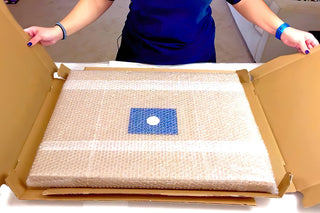
STEP 2 - SHIPPING
We ship your order. We send you an email to track the progress

STEP 3 - DELIVERY
You receive your order. You can also, according to your choice, be delivered to a relay point.
Matte finish
View from behind
Frame (optional)
Introduction captivante
The "Portrait of a Woman" by Hendrick Cornelisz van Vliet is a work that transcends time and immerses us in the intimacy of a bygone era. This piece, created in the 17th century, is much more than a simple representation; it embodies the very essence of a woman, capturing both her beauty and her mystery. Through this art print, we are invited to discover not only the refined technique of the artist but also the social and cultural atmosphere of his time. The work challenges us, prompts us to question the identity of this woman, her story, and the perspective on women during that period.
Style and uniqueness of the work
Hendrick Cornelisz van Vliet's style is characterized by great finesse and attention to detail that manifest in every brushstroke. In "Portrait of a Woman," the delicacy of the features and the subtle use of light testify to his exceptional talent. The texture of the clothing and the depth of colors create an illusion of life, making the portrait almost tangible. The composition is carefully thought out, highlighting the woman's face while incorporating elements that evoke her social status. The shades of color, ranging from warm tones to darker hues, add an emotional dimension to the work, allowing the viewer to feel the personality of the depicted figure. This blend of realism and stylization makes this piece an eloquent example of 17th-century Dutch portraiture.
The artist and his influence
Hendrick Cornelisz van Vliet, born in Delft, is an artist whose work was heavily influenced by the masters of his era, notably Vermeer and Rembrandt. His approach to portraiture is marked by a quest for psychological truth and particular attention to detail. Van Vliet managed to establish himself in the artistic world of his time, and his influence endures to this day. By capturing not only the external appearance but also the inner essence of his subjects, he paved the way for a new way of conceptualizing the portrait. The women he depicts are not mere decorative figures but fully realized individuals, endowed with thoughts and
12,34 €