
Art print Marguerite en prison - Johann Grund | Art print


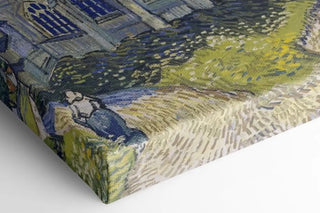
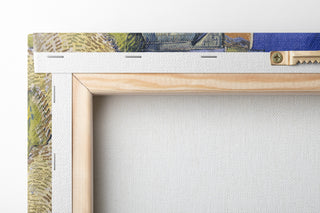
View from behind
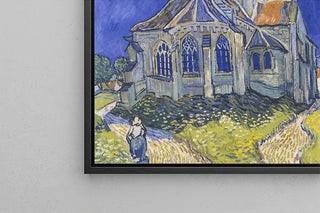
Frame (optional)
"Reproduction Marguerite en prison" by Johann Grund presents itself as a poignant artwork, revealing an emotional depth that transcends the simple frame of painting. This depiction, rooted in a rich historical context, evokes the inner struggle and suffering of a woman facing adversity. Through Grund's brushstrokes, the viewer is invited to delve into Marguerite's intimate universe, whose face expresses a poignant melancholy. The scene, both dark and luminous, plays with contrasts to convey complex feelings. By examining this piece, one discovers not only an artistic representation but also an echo of universal human struggles.
Style and uniqueness of the artwork
Johann Grund's style is characterized by meticulous attention to detail and a color palette that oscillates between dark shades and flashes of light. In "Marguerite en prison," the artist uses a carefully orchestrated composition to emphasize the isolation of his main character. The figure of Marguerite, at the center of the canvas, is surrounded by an environment that seems to weigh on her, intensifying her sense of despair. The shadows surrounding her contrast with the clarity of her face, creating a visual tension that captures the viewer's eye. This painting is not limited to a simple illustration; it is an invitation to explore human emotions, to feel the pain and hope that coexist in a desperate situation. Grund's technique, blending realism and expressionism, brings life to a scene that resonates deeply with anyone who has ever felt the anxiety of uncertainty.
The artist and his influence
Johann Grund, a 19th-century painter, is often recognized for his ability to capture moments of life imbued with dramatic intensity. His work fits within an artistic tradition that values the expression of human emotions, and "Marguerite en prison" is a perfect example. Influenced by the romantic movements of his time, Grund strives to depict not only historical or mythological figures but also emotions that touch on the universal. His innovative approach paved the way for many artists.
Art print Marguerite en prison - Johann Grund | Art print

-10% FROM €95 IN PURCHASES
-15% FROM €195 IN PURCHASES
Regular price
- Unit price
- per
Tax included.
Free shipping
€4.90 / Free shipping on orders over €39
Satisfied or Money Back
Free returns within 30 days
10-year warranty
Our prints are guaranteed for 10 years
Any questions? We are here!
by email to contact@artemlegrand.com
THE STEPS OF YOUR ORDER

STEP 1 - ORDER PLACED
Your order has been confirmed and we are starting production
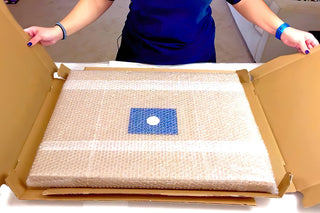
STEP 2 - SHIPPING
We ship your order. We send you an email to track the progress

STEP 3 - DELIVERY
You receive your order. You can also, according to your choice, be delivered to a relay point.
Matte finish
View from behind
Frame (optional)
"Reproduction Marguerite en prison" by Johann Grund presents itself as a poignant artwork, revealing an emotional depth that transcends the simple frame of painting. This depiction, rooted in a rich historical context, evokes the inner struggle and suffering of a woman facing adversity. Through Grund's brushstrokes, the viewer is invited to delve into Marguerite's intimate universe, whose face expresses a poignant melancholy. The scene, both dark and luminous, plays with contrasts to convey complex feelings. By examining this piece, one discovers not only an artistic representation but also an echo of universal human struggles.
Style and uniqueness of the artwork
Johann Grund's style is characterized by meticulous attention to detail and a color palette that oscillates between dark shades and flashes of light. In "Marguerite en prison," the artist uses a carefully orchestrated composition to emphasize the isolation of his main character. The figure of Marguerite, at the center of the canvas, is surrounded by an environment that seems to weigh on her, intensifying her sense of despair. The shadows surrounding her contrast with the clarity of her face, creating a visual tension that captures the viewer's eye. This painting is not limited to a simple illustration; it is an invitation to explore human emotions, to feel the pain and hope that coexist in a desperate situation. Grund's technique, blending realism and expressionism, brings life to a scene that resonates deeply with anyone who has ever felt the anxiety of uncertainty.
The artist and his influence
Johann Grund, a 19th-century painter, is often recognized for his ability to capture moments of life imbued with dramatic intensity. His work fits within an artistic tradition that values the expression of human emotions, and "Marguerite en prison" is a perfect example. Influenced by the romantic movements of his time, Grund strives to depict not only historical or mythological figures but also emotions that touch on the universal. His innovative approach paved the way for many artists.
12,34 €