
Painting Landscape with Poplars - Homer Dodge Martin | Art print Source: Tableau Paysage avec des peupliers - Homer Dodge Martin | Reproduction


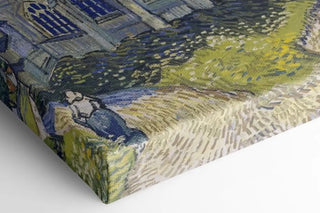
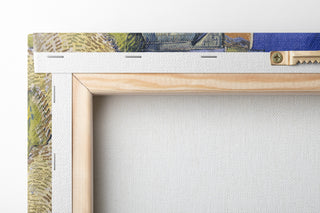
View from behind
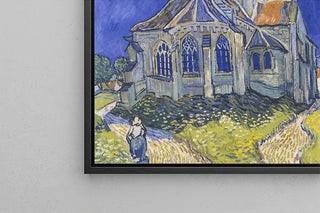
Frame (optional)
Paysage with Poplars - Homer Dodge Martin – Captivating Introduction
In the vast panorama of American art history, "Paysage with Poplars" by Homer Dodge Martin stands out for its harmony and delicacy. This artwork, created at the end of the 19th century, evokes a serene and timeless nature, where majestic trees stand as sentinels above a peaceful landscape. The artist manages to capture the very essence of light and atmosphere, immersing the viewer in a visual experience where time seems suspended. Through this art print, one can feel the soul of nature, and is invited to lose oneself in the subtle nuances of each brushstroke.
Style and uniqueness of the work
Martin's style is imbued with romantic sensitivity, tinged with a realistic approach that is uniquely his own. In "Paysage with Poplars," the choice of colors and composition demonstrate remarkable technical mastery. The deep greens of the foliage contrast with the bright blue skies, creating an atmosphere that is both soothing and dynamic. The poplars, emblematic of this piece, are rendered with such meticulous detail that they seem almost tangible, as if they could come to life at any moment. Light plays a central role in this artwork, filtering through the branches and casting delicate shadows on the ground. This interaction between light and shadow enhances the depth of the landscape and invites meditative contemplation, where every detail becomes an invitation to explore the beauty of the natural world.
The artist and his influence
Homer Dodge Martin, born in 1836, is often regarded as a pioneer of American landscape art. His artistic journey is marked by an unceasing quest for beauty and harmony in nature. Influenced by European masters, Martin developed a style that is uniquely his own, combining realistic precision with poetic sensitivity. His works, although often associated with a certain classicism, carry within them a modernity that still resonates today. Martin contributed to establishing a new vision of the American landscape, where nature is celebrated not only for its grandeur but also for its ability to evoke deep emotions. His impact on his contemporaries and
Painting Landscape with Poplars - Homer Dodge Martin | Art print Source: Tableau Paysage avec des peupliers - Homer Dodge Martin | Reproduction

-10% FROM €95 IN PURCHASES
-15% FROM €195 IN PURCHASES
Regular price
- Unit price
- per
Tax included.
Free shipping
€4.90 / Free shipping on orders over €39
Satisfied or Money Back
Free returns within 30 days
10-year warranty
Our prints are guaranteed for 10 years
Any questions? We are here!
by email to contact@artemlegrand.com
THE STEPS OF YOUR ORDER

STEP 1 - ORDER PLACED
Your order has been confirmed and we are starting production
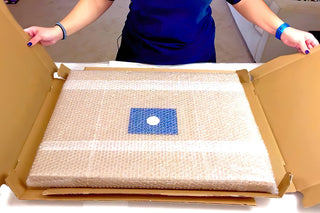
STEP 2 - SHIPPING
We ship your order. We send you an email to track the progress

STEP 3 - DELIVERY
You receive your order. You can also, according to your choice, be delivered to a relay point.
Matte finish
View from behind
Frame (optional)
Paysage with Poplars - Homer Dodge Martin – Captivating Introduction
In the vast panorama of American art history, "Paysage with Poplars" by Homer Dodge Martin stands out for its harmony and delicacy. This artwork, created at the end of the 19th century, evokes a serene and timeless nature, where majestic trees stand as sentinels above a peaceful landscape. The artist manages to capture the very essence of light and atmosphere, immersing the viewer in a visual experience where time seems suspended. Through this art print, one can feel the soul of nature, and is invited to lose oneself in the subtle nuances of each brushstroke.
Style and uniqueness of the work
Martin's style is imbued with romantic sensitivity, tinged with a realistic approach that is uniquely his own. In "Paysage with Poplars," the choice of colors and composition demonstrate remarkable technical mastery. The deep greens of the foliage contrast with the bright blue skies, creating an atmosphere that is both soothing and dynamic. The poplars, emblematic of this piece, are rendered with such meticulous detail that they seem almost tangible, as if they could come to life at any moment. Light plays a central role in this artwork, filtering through the branches and casting delicate shadows on the ground. This interaction between light and shadow enhances the depth of the landscape and invites meditative contemplation, where every detail becomes an invitation to explore the beauty of the natural world.
The artist and his influence
Homer Dodge Martin, born in 1836, is often regarded as a pioneer of American landscape art. His artistic journey is marked by an unceasing quest for beauty and harmony in nature. Influenced by European masters, Martin developed a style that is uniquely his own, combining realistic precision with poetic sensitivity. His works, although often associated with a certain classicism, carry within them a modernity that still resonates today. Martin contributed to establishing a new vision of the American landscape, where nature is celebrated not only for its grandeur but also for its ability to evoke deep emotions. His impact on his contemporaries and
12,34 €