
Painting Jean-Baptiste Santeuil 1630-1697 canon of Saint-Victor neo-Latin poet - Toussaint Dubreuil | Art print


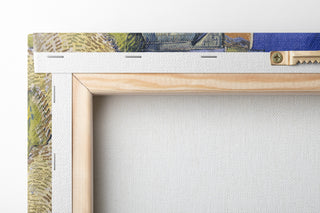
View from behind
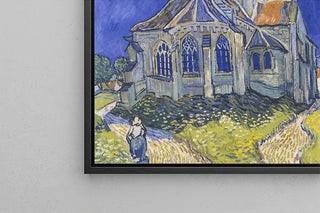
Frame (optional)
Reproduction Jean-Baptiste Santeuil 1630-1697 canon of Saint-Victor and neo-Latin poet - Toussaint Dubreuil – Captivating introduction
In the fascinating world of baroque art, Toussaint Dubreuil's work, depicting Jean-Baptiste Santeuil, stands out as a poignant testament to the era. This portrait, which not only highlights the stature of its subject, a canon and neo-Latin poet, but also the intellectual vibrancy of the 17th century, proves to be a true window into a world where poetry and spirituality blend harmoniously. The artist succeeds in capturing the very essence of Santeuil, whose writings enriched French culture, while also illuminating his role within the Saint-Victor religious community. The depth of Santeuil's gaze, along with the meticulous details of his attire, reflect exceptional craftsmanship, inviting the viewer on a journey through time.
Style and uniqueness of the work
Dubreuil's style is distinguished by refined elegance and mastery of nuances that bring his subjects to life. In this portrait, the chosen color palette, subtle and harmonious, evokes the richness of human emotions. The play of light and shadow, typical of baroque art, is skillfully used to accentuate Santeuil's facial features, thereby reinforcing his intellectual and spiritual aura. The composition, carefully balanced, draws the eye toward the poet's face, while hinting at elements of his environment, which speak of his status and his era. Every detail, from the fabric of his soutane to the ornaments surrounding him, contributes to creating an atmosphere imbued with serenity and contemplation, inviting the viewer to reflect on the duality between earthly life and spiritual quest.
The artist and his influence
Toussaint Dubreuil, a recognized painter of his time, established himself through his talent and artistic vision. As a court artist, he had the opportunity to mingle with the greatest minds of his era, which undoubtedly influenced his work. His approach to portraiture goes beyond mere physical representation; he seeks to capture the soul
Painting Jean-Baptiste Santeuil 1630-1697 canon of Saint-Victor neo-Latin poet - Toussaint Dubreuil | Art print

-10% FROM €95 IN PURCHASES
-15% FROM €195 IN PURCHASES
Regular price
- Unit price
- per
Tax included.
Free shipping
€4.90 / Free shipping on orders over €39
Satisfied or Money Back
Free returns within 30 days
10-year warranty
Our prints are guaranteed for 10 years
Any questions? We are here!
by email to contact@artemlegrand.com
THE STEPS OF YOUR ORDER

STEP 1 - ORDER PLACED
Your order has been confirmed and we are starting production
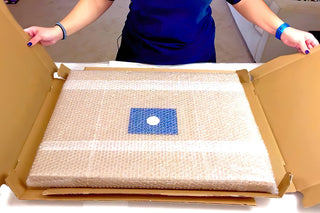
STEP 2 - SHIPPING
We ship your order. We send you an email to track the progress

STEP 3 - DELIVERY
You receive your order. You can also, according to your choice, be delivered to a relay point.
Matte finish
View from behind
Frame (optional)
Reproduction Jean-Baptiste Santeuil 1630-1697 canon of Saint-Victor and neo-Latin poet - Toussaint Dubreuil – Captivating introduction
In the fascinating world of baroque art, Toussaint Dubreuil's work, depicting Jean-Baptiste Santeuil, stands out as a poignant testament to the era. This portrait, which not only highlights the stature of its subject, a canon and neo-Latin poet, but also the intellectual vibrancy of the 17th century, proves to be a true window into a world where poetry and spirituality blend harmoniously. The artist succeeds in capturing the very essence of Santeuil, whose writings enriched French culture, while also illuminating his role within the Saint-Victor religious community. The depth of Santeuil's gaze, along with the meticulous details of his attire, reflect exceptional craftsmanship, inviting the viewer on a journey through time.
Style and uniqueness of the work
Dubreuil's style is distinguished by refined elegance and mastery of nuances that bring his subjects to life. In this portrait, the chosen color palette, subtle and harmonious, evokes the richness of human emotions. The play of light and shadow, typical of baroque art, is skillfully used to accentuate Santeuil's facial features, thereby reinforcing his intellectual and spiritual aura. The composition, carefully balanced, draws the eye toward the poet's face, while hinting at elements of his environment, which speak of his status and his era. Every detail, from the fabric of his soutane to the ornaments surrounding him, contributes to creating an atmosphere imbued with serenity and contemplation, inviting the viewer to reflect on the duality between earthly life and spiritual quest.
The artist and his influence
Toussaint Dubreuil, a recognized painter of his time, established himself through his talent and artistic vision. As a court artist, he had the opportunity to mingle with the greatest minds of his era, which undoubtedly influenced his work. His approach to portraiture goes beyond mere physical representation; he seeks to capture the soul
12,34 €