
Interior Kitchen Painting - Wilhelm Leibl | Art print Source: Tableau Intérieur de la cuisine - Wilhelm Leibl | Reproduction


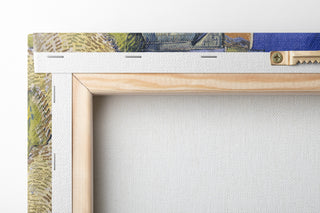
View from behind
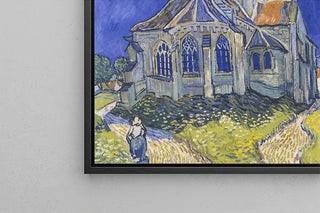
Frame (optional)
Interior Kitchen Art print - Wilhelm Leibl – Captivating Introduction
Wilhelm Leibl's "Interior Kitchen" is a true immersion into the intimacy of a domestic space, revealing not only everyday life but also the very essence of late 19th-century art. This painting, executed with exceptional meticulousness, transports the viewer into a warm and welcoming atmosphere. Leibl, a master of realism, manages to capture fleeting moments, scenes of ordinary life, while infusing an emotional depth that transcends mere decor. The soft light flooding the room, the details of everyday objects, and the expressions of the characters invite prolonged contemplation, making this work a true masterpiece of human observation.
Style and uniqueness of the work
Wilhelm Leibl's style is distinguished by his ability to combine precision and sensitivity. In "Interior Kitchen," he uses a palette of warm colors, dominated by browns and ochres, evoking an atmosphere of comfort and familiarity. The subtly rendered play of light creates a dynamic between shadows and illuminated areas, thus enhancing the three-dimensionality of objects and characters. The human figures, although placed in an ordinary setting, are imbued with life, each telling a story through their gestures and gazes. Leibl's realism is not limited to a simple reproduction of reality; he goes beyond, capturing the soul of places and people, which gives his work an undeniable singularity.
The artist and his influence
Wilhelm Leibl, born in 1844, was a major figure in the realist movement in Germany. Influenced by masters such as Courbet and the Pre-Raphaelites, he developed a style that is uniquely his own, combining a keen sense of observation with refined technique. Leibl often explored themes related to rural life and the working classes, seeking to highlight the beauty of simple moments. His influence on subsequent generations of artists is undeniable, as he paved the way for a more introspective and humanist approach to painting. Through his works, he encouraged a rediscovery of
Interior Kitchen Painting - Wilhelm Leibl | Art print Source: Tableau Intérieur de la cuisine - Wilhelm Leibl | Reproduction

-10% FROM €95 IN PURCHASES
-15% FROM €195 IN PURCHASES
Regular price
- Unit price
- per
Tax included.
Free shipping
€4.90 / Free shipping on orders over €39
Satisfied or Money Back
Free returns within 30 days
10-year warranty
Our prints are guaranteed for 10 years
Any questions? We are here!
by email to contact@artemlegrand.com
THE STEPS OF YOUR ORDER
STEP 1 - ORDER PLACED
Your order has been confirmed and we are starting production
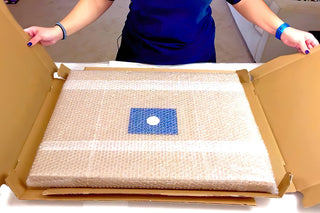
STEP 2 - SHIPPING
We ship your order. We send you an email to track the progress

STEP 3 - DELIVERY
You receive your order. You can also, according to your choice, be delivered to a relay point.
Matte finish
View from behind
Frame (optional)
Interior Kitchen Art print - Wilhelm Leibl – Captivating Introduction
Wilhelm Leibl's "Interior Kitchen" is a true immersion into the intimacy of a domestic space, revealing not only everyday life but also the very essence of late 19th-century art. This painting, executed with exceptional meticulousness, transports the viewer into a warm and welcoming atmosphere. Leibl, a master of realism, manages to capture fleeting moments, scenes of ordinary life, while infusing an emotional depth that transcends mere decor. The soft light flooding the room, the details of everyday objects, and the expressions of the characters invite prolonged contemplation, making this work a true masterpiece of human observation.
Style and uniqueness of the work
Wilhelm Leibl's style is distinguished by his ability to combine precision and sensitivity. In "Interior Kitchen," he uses a palette of warm colors, dominated by browns and ochres, evoking an atmosphere of comfort and familiarity. The subtly rendered play of light creates a dynamic between shadows and illuminated areas, thus enhancing the three-dimensionality of objects and characters. The human figures, although placed in an ordinary setting, are imbued with life, each telling a story through their gestures and gazes. Leibl's realism is not limited to a simple reproduction of reality; he goes beyond, capturing the soul of places and people, which gives his work an undeniable singularity.
The artist and his influence
Wilhelm Leibl, born in 1844, was a major figure in the realist movement in Germany. Influenced by masters such as Courbet and the Pre-Raphaelites, he developed a style that is uniquely his own, combining a keen sense of observation with refined technique. Leibl often explored themes related to rural life and the working classes, seeking to highlight the beauty of simple moments. His influence on subsequent generations of artists is undeniable, as he paved the way for a more introspective and humanist approach to painting. Through his works, he encouraged a rediscovery of
12,34 €