
Art print Ichikawa Danjūrō VII in the role of Soga no Gorō and the group Mitsugorō III in the role of Kobayashi no Asahina in a play of Soga - Utagawa Kunisada Toyokuni III


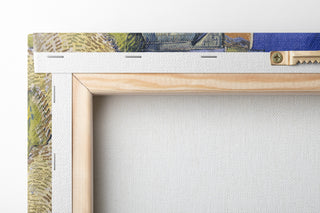
View from behind
Frame (optional)
The artwork titled "Art print Ichikawa Danjūrō VII in the role of Soga no Gorō and the Mitsugorō III group in the role of Kobayashi no Asahina in a Soga play" is a masterpiece of ukiyo-e aesthetics, a genre of Japanese art that masterfully captures the fleeting essence of urban and theatrical life in 19th-century Japan. Utagawa Kunisada, renowned for his ability to depict beauty and drama, succeeds here in immortalizing two iconic figures of kabuki theater. The piece, full of emotion and movement, invites us to immerse ourselves in a universe where theater and painting converge, revealing the richness of a vibrant and dynamic culture.
Style and uniqueness of the work
The work stands out for its bold use of colors and patterns, characteristic of Kunisada's style. The vivid hues and meticulous details of the actors' costumes demonstrate exceptional craftsmanship. The composition, focused on the two main characters, creates a captivating dynamic that draws the viewer's eye. Soga no Gorō's posture, full of bravery, contrasts with the more composed stance of Kobayashi no Asahina, adding narrative depth to the scene. Decorative elements, such as floral motifs and stylized backgrounds, enrich the piece, giving it a theatrical and poetic atmosphere. This ability to blend movement and color makes this work an emblematic example of ukiyo-e, where every detail tells a story.
The artist and his influence
Utagawa Kunisada, born in 1786, is one of the most influential artists of the Edo era. His prolific career, marked by the creation of thousands of prints, profoundly impacted the world of Japanese art. Kunisada established himself as the master of kabuki portraits, capturing not only the appearance of actors but also their essence.
Art print Ichikawa Danjūrō VII in the role of Soga no Gorō and the group Mitsugorō III in the role of Kobayashi no Asahina in a play of Soga - Utagawa Kunisada Toyokuni III

-10% FROM €95 IN PURCHASES
-15% FROM €195 IN PURCHASES
Regular price
- Unit price
- per
Tax included.
Free shipping
€4.90 / Free shipping on orders over €39
Satisfied or Money Back
Free returns within 30 days
10-year warranty
Our prints are guaranteed for 10 years
Any questions? We are here!
by email to contact@artemlegrand.com
THE STEPS OF YOUR ORDER

STEP 1 - ORDER PLACED
Your order has been confirmed and we are starting production
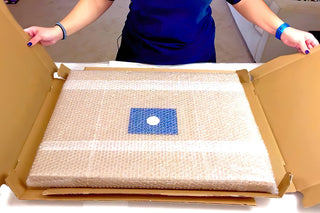
STEP 2 - SHIPPING
We ship your order. We send you an email to track the progress

STEP 3 - DELIVERY
You receive your order. You can also, according to your choice, be delivered to a relay point.
Matte finish
View from behind
Frame (optional)
The artwork titled "Art print Ichikawa Danjūrō VII in the role of Soga no Gorō and the Mitsugorō III group in the role of Kobayashi no Asahina in a Soga play" is a masterpiece of ukiyo-e aesthetics, a genre of Japanese art that masterfully captures the fleeting essence of urban and theatrical life in 19th-century Japan. Utagawa Kunisada, renowned for his ability to depict beauty and drama, succeeds here in immortalizing two iconic figures of kabuki theater. The piece, full of emotion and movement, invites us to immerse ourselves in a universe where theater and painting converge, revealing the richness of a vibrant and dynamic culture.
Style and uniqueness of the work
The work stands out for its bold use of colors and patterns, characteristic of Kunisada's style. The vivid hues and meticulous details of the actors' costumes demonstrate exceptional craftsmanship. The composition, focused on the two main characters, creates a captivating dynamic that draws the viewer's eye. Soga no Gorō's posture, full of bravery, contrasts with the more composed stance of Kobayashi no Asahina, adding narrative depth to the scene. Decorative elements, such as floral motifs and stylized backgrounds, enrich the piece, giving it a theatrical and poetic atmosphere. This ability to blend movement and color makes this work an emblematic example of ukiyo-e, where every detail tells a story.
The artist and his influence
Utagawa Kunisada, born in 1786, is one of the most influential artists of the Edo era. His prolific career, marked by the creation of thousands of prints, profoundly impacted the world of Japanese art. Kunisada established himself as the master of kabuki portraits, capturing not only the appearance of actors but also their essence.
12,34 €