
Painting Haystacks - Henry Ossawa Tanner | Art print


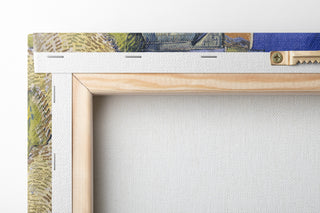
View from behind
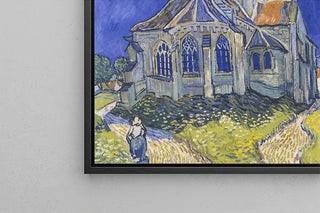
Frame (optional)
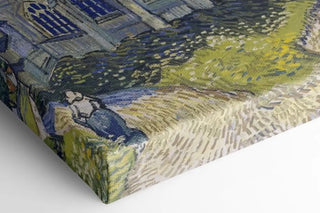
The canvas titled "Meules de foin" by Henry Ossawa Tanner transports viewers to a rural landscape filled with serenity and gentle beauty. Painted at the end of the 19th century, this artwork is much more than a simple depiction of nature; it embodies a poetic vision of the world, where light and shadow dance in harmony. Tanner, a pioneering African-American artist, manages to capture the beauty of everyday scenes while infusing his work with emotional depth. Through this art print, the artist invites us to contemplate not only the beauty of the haystacks but also the life surrounding them, revealing a universe rich in nuances and meanings.
Style and uniqueness of the work
Tanner's style is distinguished by a unique sensitivity to light and color. In "Meules de foin", he uses warm, earthy tones, creating an inviting and soothing atmosphere. The composition is carefully balanced, with the haystacks occupying the foreground, while a deep blue sky stretches above, demonstrating the artist's mastery in using contrasts. The brushstrokes, both delicate and assertive, bring the texture of the fields and the shape of the haystacks to life, making the scene almost tangible. This work is a perfect illustration of Tanner's ability to transform simple motifs into a captivating visual experience, where each element contributes to a broader visual narrative.
The artist and his influence
Henry Ossawa Tanner, born in 1859 in Pittsburgh, is often regarded as one of the first great African-American painters. His career was marked by a constant desire to explore themes of spirituality and humanity. Tanner lived and worked in Paris, where he was influenced by Impressionist masters, but he also developed a style that was uniquely his own, blending realism and Impressionism. His artistic legacy is immense, as he paved the way for many African-American artists who followed in his footsteps. Through works like "Meules de foin", he addressed subjects often overlooked by his contemporaries, while integrating elements of his own
Painting Haystacks - Henry Ossawa Tanner | Art print

-10% FROM €95 IN PURCHASES
-15% FROM €195 IN PURCHASES
Regular price
- Unit price
- per
Tax included.
Free shipping
€4.90 / Free shipping on orders over €39
Satisfied or Money Back
Free returns within 30 days
10-year warranty
Our prints are guaranteed for 10 years
Any questions? We are here!
by email to contact@artemlegrand.com
THE STEPS OF YOUR ORDER

STEP 1 - ORDER PLACED
Your order has been confirmed and we are starting production
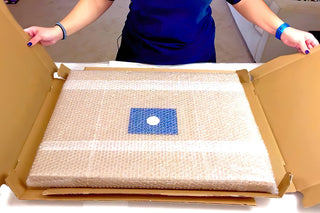
STEP 2 - SHIPPING
We ship your order. We send you an email to track the progress

STEP 3 - DELIVERY
You receive your order. You can also, according to your choice, be delivered to a relay point.
Matte finish
View from behind
Frame (optional)
The canvas titled "Meules de foin" by Henry Ossawa Tanner transports viewers to a rural landscape filled with serenity and gentle beauty. Painted at the end of the 19th century, this artwork is much more than a simple depiction of nature; it embodies a poetic vision of the world, where light and shadow dance in harmony. Tanner, a pioneering African-American artist, manages to capture the beauty of everyday scenes while infusing his work with emotional depth. Through this art print, the artist invites us to contemplate not only the beauty of the haystacks but also the life surrounding them, revealing a universe rich in nuances and meanings.
Style and uniqueness of the work
Tanner's style is distinguished by a unique sensitivity to light and color. In "Meules de foin", he uses warm, earthy tones, creating an inviting and soothing atmosphere. The composition is carefully balanced, with the haystacks occupying the foreground, while a deep blue sky stretches above, demonstrating the artist's mastery in using contrasts. The brushstrokes, both delicate and assertive, bring the texture of the fields and the shape of the haystacks to life, making the scene almost tangible. This work is a perfect illustration of Tanner's ability to transform simple motifs into a captivating visual experience, where each element contributes to a broader visual narrative.
The artist and his influence
Henry Ossawa Tanner, born in 1859 in Pittsburgh, is often regarded as one of the first great African-American painters. His career was marked by a constant desire to explore themes of spirituality and humanity. Tanner lived and worked in Paris, where he was influenced by Impressionist masters, but he also developed a style that was uniquely his own, blending realism and Impressionism. His artistic legacy is immense, as he paved the way for many African-American artists who followed in his footsteps. Through works like "Meules de foin", he addressed subjects often overlooked by his contemporaries, while integrating elements of his own
12,34 €