
Art print Girl building a house of cards - Thomas Frye | Art print


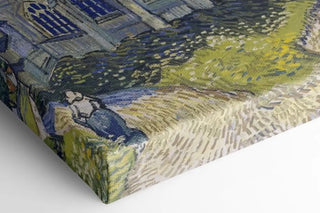
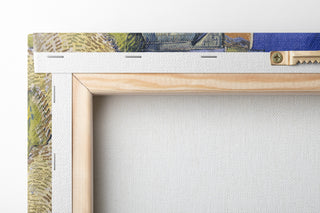
View from behind
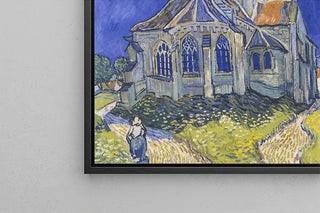
Frame (optional)
In the vast panorama of 18th-century art, one work stands out for its delicacy and childlike charm: "Girl building a house of cards" by Thomas Frye. This painting, which captures the essence of carefree childhood, immerses us in a universe of dreaming and creativity. The scene depicts a young girl absorbed in her game, acting as the architect of her own imaginary world. The artwork evokes not only the fragility of cards but also that of childhood dreams, while reminding us of the importance of play in self-development. Through this art print, we are invited to explore the subtleties of childhood and the beauty of simple moments.
Style and uniqueness of the work
Thomas Frye's style is characterized by remarkable finesse and meticulous attention to detail. In "Girl building a house of cards," each element is carefully rendered, from the delicate features of the child's face to the soft nuances of the colors that envelop the scene. Frye, influenced by Rococo and the English style of his time, manages to create an atmosphere that is both intimate and dreamy. Light plays a crucial role in this work, subtly illuminating the girl's face and highlighting the cards that are stacked carefully. This painting is not just a simple representation; it tells a story, that of a childhood full of imagination and innocence. The composition, both simple and evocative, allows the viewer to feel the intensity of the moment, as if witnessing a scene frozen in time.
The artist and his influence
Thomas Frye, born in Dublin in 1710, was an artist whose work was marked by a quest for beauty and simplicity. Although less well-known than some of his contemporaries, Frye managed to establish himself thanks to a unique style that combines sensitivity and technique. His journey led him to London, where he developed his art and was influenced by the artistic currents of his time. Frye was also a pioneer in the field of engraving, which allowed him to disseminate his works to a broader audience. His approach to painting
Art print Girl building a house of cards - Thomas Frye | Art print

-10% FROM €95 IN PURCHASES
-15% FROM €195 IN PURCHASES
Regular price
- Unit price
- per
Tax included.
Free shipping
€4.90 / Free shipping on orders over €39
Satisfied or Money Back
Free returns within 30 days
10-year warranty
Our prints are guaranteed for 10 years
Any questions? We are here!
by email to contact@artemlegrand.com
THE STEPS OF YOUR ORDER

STEP 1 - ORDER PLACED
Your order has been confirmed and we are starting production
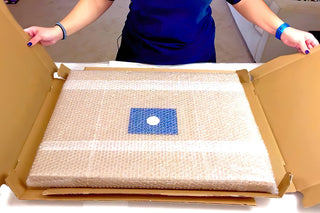
STEP 2 - SHIPPING
We ship your order. We send you an email to track the progress

STEP 3 - DELIVERY
You receive your order. You can also, according to your choice, be delivered to a relay point.
Matte finish
View from behind
Frame (optional)
In the vast panorama of 18th-century art, one work stands out for its delicacy and childlike charm: "Girl building a house of cards" by Thomas Frye. This painting, which captures the essence of carefree childhood, immerses us in a universe of dreaming and creativity. The scene depicts a young girl absorbed in her game, acting as the architect of her own imaginary world. The artwork evokes not only the fragility of cards but also that of childhood dreams, while reminding us of the importance of play in self-development. Through this art print, we are invited to explore the subtleties of childhood and the beauty of simple moments.
Style and uniqueness of the work
Thomas Frye's style is characterized by remarkable finesse and meticulous attention to detail. In "Girl building a house of cards," each element is carefully rendered, from the delicate features of the child's face to the soft nuances of the colors that envelop the scene. Frye, influenced by Rococo and the English style of his time, manages to create an atmosphere that is both intimate and dreamy. Light plays a crucial role in this work, subtly illuminating the girl's face and highlighting the cards that are stacked carefully. This painting is not just a simple representation; it tells a story, that of a childhood full of imagination and innocence. The composition, both simple and evocative, allows the viewer to feel the intensity of the moment, as if witnessing a scene frozen in time.
The artist and his influence
Thomas Frye, born in Dublin in 1710, was an artist whose work was marked by a quest for beauty and simplicity. Although less well-known than some of his contemporaries, Frye managed to establish himself thanks to a unique style that combines sensitivity and technique. His journey led him to London, where he developed his art and was influenced by the artistic currents of his time. Frye was also a pioneer in the field of engraving, which allowed him to disseminate his works to a broader audience. His approach to painting
12,34 €