
Painting Gallery with his son Jantje and his slave Bietja - Jan Brandes


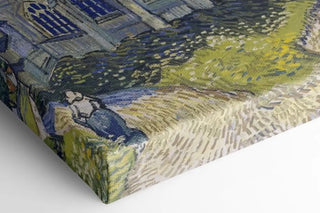
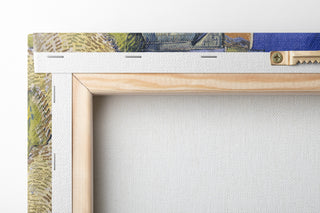
View from behind
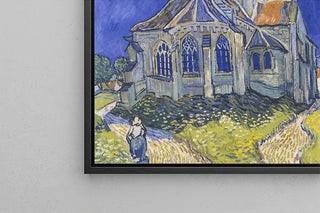
Frame (optional)
In the fascinating world of art, certain works stand out for their ability to tell profound and moving stories. The art print Galerie with his son Jantje and his slave Bietja - Jan Brandes is a perfect example. This piece, which immerses us in the daily life of the 18th century, evokes universal themes such as family, servitude, and human relationships. Through this painting, Brandes invites us to observe a frozen moment in time, where every detail contributes to the narration of a life shared between the intimate and the extraordinary. The depicted scene, imbued with a melancholic sweetness, prompts us to reflect on the social dynamics of the era and on the place of individuals within their environment.
Style and uniqueness of the work
Jan Brandes's work is characterized by meticulous attention to detail and a delicate color palette that gives a unique atmosphere to his compositions. In this art print, light plays a crucial role, illuminating the faces of the characters while creating subtle shadows that add depth to the scene. The expressions of the protagonists, especially that of Jantje, are filled with emotion, conveying a palpable complicity between the son and his slave. The composition, carefully balanced, guides the viewer’s gaze toward human interactions, while incorporating decorative elements that enrich the visual narrative. Brandes thus succeeds in capturing a moment of tenderness and complicity, while hinting at the underlying tensions of a stratified society.
The artist and his influence
Jan Brandes, born in 1743 and active during the neoclassical period, is an artist whose work demonstrates a deep understanding of human relationships and social contexts. Trained under the influence of the great masters of his time, he developed a style that is uniquely his own, oscillating between realism and idealization. His work, although sometimes rooted in classical conventions, is marked by a modern sensitivity that brings him closer to contemporary concerns. Brandes was also a keen observer of his era, and his works reflect the tensions and contradictions of a
Painting Gallery with his son Jantje and his slave Bietja - Jan Brandes

-10% FROM €95 IN PURCHASES
-15% FROM €195 IN PURCHASES
Regular price
- Unit price
- per
Tax included.
Free shipping
€4.90 / Free shipping on orders over €39
Satisfied or Money Back
Free returns within 30 days
10-year warranty
Our prints are guaranteed for 10 years
Any questions? We are here!
by email to contact@artemlegrand.com
THE STEPS OF YOUR ORDER

STEP 1 - ORDER PLACED
Your order has been confirmed and we are starting production
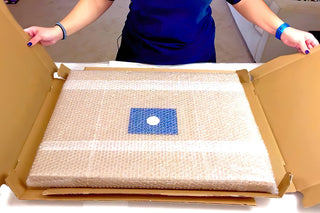
STEP 2 - SHIPPING
We ship your order. We send you an email to track the progress

STEP 3 - DELIVERY
You receive your order. You can also, according to your choice, be delivered to a relay point.
Matte finish
View from behind
Frame (optional)
In the fascinating world of art, certain works stand out for their ability to tell profound and moving stories. The art print Galerie with his son Jantje and his slave Bietja - Jan Brandes is a perfect example. This piece, which immerses us in the daily life of the 18th century, evokes universal themes such as family, servitude, and human relationships. Through this painting, Brandes invites us to observe a frozen moment in time, where every detail contributes to the narration of a life shared between the intimate and the extraordinary. The depicted scene, imbued with a melancholic sweetness, prompts us to reflect on the social dynamics of the era and on the place of individuals within their environment.
Style and uniqueness of the work
Jan Brandes's work is characterized by meticulous attention to detail and a delicate color palette that gives a unique atmosphere to his compositions. In this art print, light plays a crucial role, illuminating the faces of the characters while creating subtle shadows that add depth to the scene. The expressions of the protagonists, especially that of Jantje, are filled with emotion, conveying a palpable complicity between the son and his slave. The composition, carefully balanced, guides the viewer’s gaze toward human interactions, while incorporating decorative elements that enrich the visual narrative. Brandes thus succeeds in capturing a moment of tenderness and complicity, while hinting at the underlying tensions of a stratified society.
The artist and his influence
Jan Brandes, born in 1743 and active during the neoclassical period, is an artist whose work demonstrates a deep understanding of human relationships and social contexts. Trained under the influence of the great masters of his time, he developed a style that is uniquely his own, oscillating between realism and idealization. His work, although sometimes rooted in classical conventions, is marked by a modern sensitivity that brings him closer to contemporary concerns. Brandes was also a keen observer of his era, and his works reflect the tensions and contradictions of a
12,34 €