
Painting Bridge in the Rain after Hiroshige - Vincent van Gogh | Art print


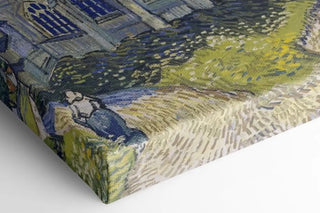
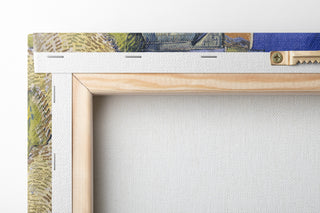
View from behind
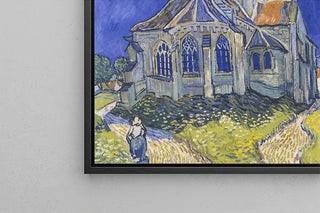
Frame (optional)
In the fascinating universe of art, some works transcend the simple frame to become witnesses of eras and feelings. "Pont sous la pluie après Hiroshige" by Vincent van Gogh is one of those creations that invites sensory and emotional exploration. Inspired by Japanese aesthetics, Van Gogh manages to capture the essence of a fleeting moment, where rain, vibrant colors, and light blend harmoniously. This piece, both delicate and powerful, evokes an atmosphere of contemplation, transporting the viewer on a journey through time and space. The magic of this artwork lies in how it successfully merges two artistic cultures while preserving the uniqueness of Van Gogh's vision.
Style and uniqueness of the work
Van Gogh's style is immediately recognizable, characterized by bold brushstrokes and a palette of vivid colors. In "Pont sous la pluie après Hiroshige," the artist uses vibrant shades of blue and green, highlighted by luminous touches of yellow and orange, to evoke the humidity of the air and the diffuse light of a rainy day. The composition is dynamic, with sinuous lines guiding the eye and creating a sense of movement, as if the rain were truly falling on the bridge. The juxtaposition of natural and architectural elements demonstrates Van Gogh's skill in marrying landscape and urbanism, while paying homage to the Japanese aesthetics that inspired him so much. This artwork is a true ode to the ephemeral beauty of nature, capturing a moment of visual poetry that resonates deeply with those who contemplate it.
The artist and his influence
Vincent van Gogh, an emblematic figure of post-impressionist art, knew how to explore and redefine the limits of painting throughout his career. His fascination with Japanese art, which emerged at the end of the 19th century, played a decisive role in his stylistic evolution. By integrating motifs and techniques inspired by Japanese aesthetics, Van Gogh not only enriched his
Painting Bridge in the Rain after Hiroshige - Vincent van Gogh | Art print

-10% FROM €95 IN PURCHASES
-15% FROM €195 IN PURCHASES
Regular price
- Unit price
- per
Tax included.
Free shipping
€4.90 / Free shipping on orders over €39
Satisfied or Money Back
Free returns within 30 days
10-year warranty
Our prints are guaranteed for 10 years
Any questions? We are here!
by email to contact@artemlegrand.com
THE STEPS OF YOUR ORDER

STEP 1 - ORDER PLACED
Your order has been confirmed and we are starting production
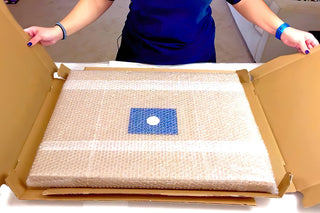
STEP 2 - SHIPPING
We ship your order. We send you an email to track the progress

STEP 3 - DELIVERY
You receive your order. You can also, according to your choice, be delivered to a relay point.
Matte finish
View from behind
Frame (optional)
In the fascinating universe of art, some works transcend the simple frame to become witnesses of eras and feelings. "Pont sous la pluie après Hiroshige" by Vincent van Gogh is one of those creations that invites sensory and emotional exploration. Inspired by Japanese aesthetics, Van Gogh manages to capture the essence of a fleeting moment, where rain, vibrant colors, and light blend harmoniously. This piece, both delicate and powerful, evokes an atmosphere of contemplation, transporting the viewer on a journey through time and space. The magic of this artwork lies in how it successfully merges two artistic cultures while preserving the uniqueness of Van Gogh's vision.
Style and uniqueness of the work
Van Gogh's style is immediately recognizable, characterized by bold brushstrokes and a palette of vivid colors. In "Pont sous la pluie après Hiroshige," the artist uses vibrant shades of blue and green, highlighted by luminous touches of yellow and orange, to evoke the humidity of the air and the diffuse light of a rainy day. The composition is dynamic, with sinuous lines guiding the eye and creating a sense of movement, as if the rain were truly falling on the bridge. The juxtaposition of natural and architectural elements demonstrates Van Gogh's skill in marrying landscape and urbanism, while paying homage to the Japanese aesthetics that inspired him so much. This artwork is a true ode to the ephemeral beauty of nature, capturing a moment of visual poetry that resonates deeply with those who contemplate it.
The artist and his influence
Vincent van Gogh, an emblematic figure of post-impressionist art, knew how to explore and redefine the limits of painting throughout his career. His fascination with Japanese art, which emerged at the end of the 19th century, played a decisive role in his stylistic evolution. By integrating motifs and techniques inspired by Japanese aesthetics, Van Gogh not only enriched his
12,34 €