
Painting A Woman on the Balcony - Leonardo Alenza y Nieto | Art print


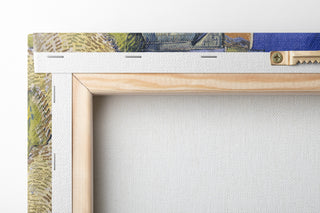
View from behind
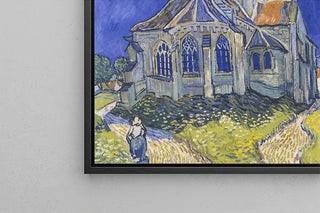
Frame (optional)
The art print "Une femme au balcon" by Leonardo Alenza y Nieto offers a window into a world of tenderness and contemplation. Painted in the 19th century, this canvas evokes an intimate atmosphere where the viewer is invited to share a suspended moment in time. The depicted woman, still and pensive, appears absorbed in her thoughts, offering an invitation to introspection. The soft light flooding the scene, along with the delicacy of the female figure's features, creates a visual harmony that immediately captures attention. This work, both simple and complex, questions our perception of femininity and private space, while also bearing witness to the undeniable talent of its creator.
Style and uniqueness of the art print
Leonardo Alenza y Nieto's style is distinguished by a romantic approach that merges realism and idealization. In "Une femme au balcon," the choice of pastel colors and play of light accentuate the scene's melancholy. The composition, though classical, stands out for its ability to convey deep emotions. The woman, at the center of the art print, is surrounded by an environment that seems almost dreamlike, where every detail, from the drape of her dress to the floral motifs in the background, is carefully thought out to enhance the atmosphere of reverie. Alenza y Nieto succeeds in capturing not only the physical beauty of the subject but also a spiritual essence that resonates with anyone who pauses for a moment before its canvas. This art print is a celebration of feminine beauty in all its forms, demonstrating a rare artistic sensitivity.
The artist and his influence
Leonardo Alenza y Nieto, an emblematic figure of the Spanish romantic movement, knew how to leave his mark on his era with a work rich in emotion and reflection. Born in Madrid, he was influenced by the artistic currents of his time, while developing a personal style that is uniquely his own. Alenza managed to combine classical heritage with a modernist vision, which allowed him to stand out within a rapidly changing artistic landscape. His ability to translate complex feelings through his portraits and scenes of everyday life made him a respected artist and
Painting A Woman on the Balcony - Leonardo Alenza y Nieto | Art print

-10% FROM €95 IN PURCHASES
-15% FROM €195 IN PURCHASES
Regular price
- Unit price
- per
Tax included.
Free shipping
€4.90 / Free shipping on orders over €39
Satisfied or Money Back
Free returns within 30 days
10-year warranty
Our prints are guaranteed for 10 years
Any questions? We are here!
by email to contact@artemlegrand.com
THE STEPS OF YOUR ORDER

STEP 1 - ORDER PLACED
Your order has been confirmed and we are starting production
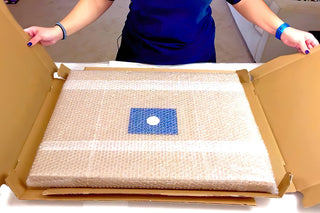
STEP 2 - SHIPPING
We ship your order. We send you an email to track the progress

STEP 3 - DELIVERY
You receive your order. You can also, according to your choice, be delivered to a relay point.
Matte finish
View from behind
Frame (optional)
The art print "Une femme au balcon" by Leonardo Alenza y Nieto offers a window into a world of tenderness and contemplation. Painted in the 19th century, this canvas evokes an intimate atmosphere where the viewer is invited to share a suspended moment in time. The depicted woman, still and pensive, appears absorbed in her thoughts, offering an invitation to introspection. The soft light flooding the scene, along with the delicacy of the female figure's features, creates a visual harmony that immediately captures attention. This work, both simple and complex, questions our perception of femininity and private space, while also bearing witness to the undeniable talent of its creator.
Style and uniqueness of the art print
Leonardo Alenza y Nieto's style is distinguished by a romantic approach that merges realism and idealization. In "Une femme au balcon," the choice of pastel colors and play of light accentuate the scene's melancholy. The composition, though classical, stands out for its ability to convey deep emotions. The woman, at the center of the art print, is surrounded by an environment that seems almost dreamlike, where every detail, from the drape of her dress to the floral motifs in the background, is carefully thought out to enhance the atmosphere of reverie. Alenza y Nieto succeeds in capturing not only the physical beauty of the subject but also a spiritual essence that resonates with anyone who pauses for a moment before its canvas. This art print is a celebration of feminine beauty in all its forms, demonstrating a rare artistic sensitivity.
The artist and his influence
Leonardo Alenza y Nieto, an emblematic figure of the Spanish romantic movement, knew how to leave his mark on his era with a work rich in emotion and reflection. Born in Madrid, he was influenced by the artistic currents of his time, while developing a personal style that is uniquely his own. Alenza managed to combine classical heritage with a modernist vision, which allowed him to stand out within a rapidly changing artistic landscape. His ability to translate complex feelings through his portraits and scenes of everyday life made him a respected artist and
12,34 €