
Art print A Turkish woman - Jean-Baptiste Vanmour


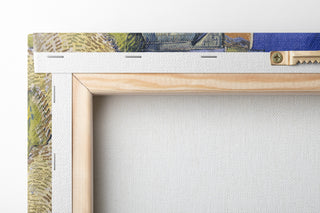
View from behind
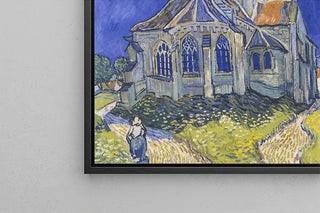
Frame (optional)
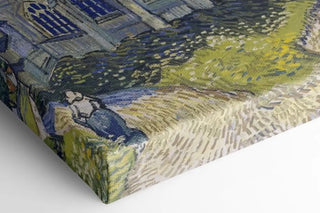
In the rich and captivating universe of 18th-century art, "A Turkish Woman" by Jean-Baptiste Vanmour stands out for its elegance and narrative depth. This artwork, which captures the essence of a period marked by cultural exchanges between the East and the West, invites viewers to immerse themselves in a world where beauty and mystique intertwine. The painting depicts a Turkish woman, whose enigmatic gaze and graceful posture evoke a personal and collective story, reflecting a society in full transformation. Through this art print, the artist offers us a window into a distant past, while encouraging reflection on the intercultural dynamics that have shaped history.
Style and uniqueness of the work
The piece is characterized by a style that blends realism and idealization, typical of 18th-century genre painting. Vanmour excels in capturing the intricate details of traditional costumes, revealing an in-depth knowledge of textiles and ornaments. The subtly chosen color palette plays a crucial role in creating an atmosphere that is both intimate and exotic. Shades of blue, red, and gold harmonize beautifully, providing a luminosity that transcends the simple portrait. The composition is carefully orchestrated, highlighting the woman at the center of the canvas while incorporating decorative elements that enrich the visual narrative. This approach gives the artwork a narrative dimension, where every detail tells a story, inviting viewers to question the identity and role of women in Ottoman society.
The artist and his influence
Jean-Baptiste Vanmour, a French painter based in Istanbul, played a key role in spreading oriental art across Europe. His work reflects not only his exceptional talent but also his commitment to representing Turkish culture with respect and authenticity. As a keen observer of customs and traditions of his time, Vanmour was able to capture scenes of daily life, while integrating symbolic elements that testify to the richness of Ottoman culture. His influence extends to
Art print A Turkish woman - Jean-Baptiste Vanmour

-10% FROM €95 IN PURCHASES
-15% FROM €195 IN PURCHASES
Regular price
- Unit price
- per
Tax included.
Free shipping
€4.90 / Free shipping on orders over €39
Satisfied or Money Back
Free returns within 30 days
10-year warranty
Our prints are guaranteed for 10 years
Any questions? We are here!
by email to contact@artemlegrand.com
THE STEPS OF YOUR ORDER

STEP 1 - ORDER PLACED
Your order has been confirmed and we are starting production
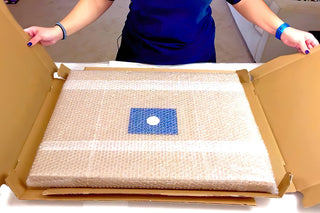
STEP 2 - SHIPPING
We ship your order. We send you an email to track the progress

STEP 3 - DELIVERY
You receive your order. You can also, according to your choice, be delivered to a relay point.
Matte finish
View from behind
Frame (optional)
In the rich and captivating universe of 18th-century art, "A Turkish Woman" by Jean-Baptiste Vanmour stands out for its elegance and narrative depth. This artwork, which captures the essence of a period marked by cultural exchanges between the East and the West, invites viewers to immerse themselves in a world where beauty and mystique intertwine. The painting depicts a Turkish woman, whose enigmatic gaze and graceful posture evoke a personal and collective story, reflecting a society in full transformation. Through this art print, the artist offers us a window into a distant past, while encouraging reflection on the intercultural dynamics that have shaped history.
Style and uniqueness of the work
The piece is characterized by a style that blends realism and idealization, typical of 18th-century genre painting. Vanmour excels in capturing the intricate details of traditional costumes, revealing an in-depth knowledge of textiles and ornaments. The subtly chosen color palette plays a crucial role in creating an atmosphere that is both intimate and exotic. Shades of blue, red, and gold harmonize beautifully, providing a luminosity that transcends the simple portrait. The composition is carefully orchestrated, highlighting the woman at the center of the canvas while incorporating decorative elements that enrich the visual narrative. This approach gives the artwork a narrative dimension, where every detail tells a story, inviting viewers to question the identity and role of women in Ottoman society.
The artist and his influence
Jean-Baptiste Vanmour, a French painter based in Istanbul, played a key role in spreading oriental art across Europe. His work reflects not only his exceptional talent but also his commitment to representing Turkish culture with respect and authenticity. As a keen observer of customs and traditions of his time, Vanmour was able to capture scenes of daily life, while integrating symbolic elements that testify to the richness of Ottoman culture. His influence extends to
12,34 €