
Painting A man named Michel Baron - Claude Lefebvre | Art print


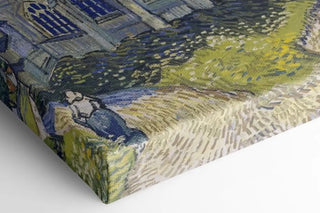
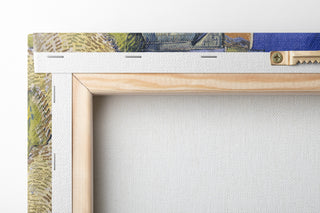
View from behind
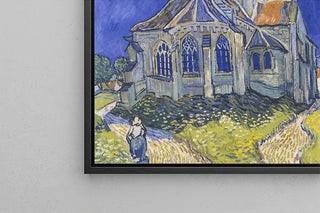
Frame (optional)
Art print Un homme nommé Michel Baron - Claude Lefebvre – Captivating Introduction
In the fascinating universe of 17th-century French art, "Un homme nommé Michel Baron" by Claude Lefebvre stands out for its depth and refinement. This work, which captures not only the appearance of a man but also the very essence of his character, immerses us in an era where portraiture was not merely a means of representation but a true reflection of personality and social status. Lefebvre, with his skillful play of light and shadow, manages to create an intimate atmosphere that invites the viewer to contemplate the subject beyond his mere appearance.
Style and uniqueness of the work
Claude Lefebvre's style is characterized by a realistic approach, combined with a baroque sensibility that is uniquely his own. In "Un homme nommé Michel Baron," every detail is carefully considered to convey a sense of life and dynamism. The facial features, finely chiseled, demonstrate remarkable technical mastery, while the choice of colors, both rich and nuanced, evokes a vibrant palette that captures light in an almost magical way. Lefebvre does not merely reproduce a face; he succeeds in infusing his subject with an aura of dignity and gravity, thus creating an emotional connection with the viewer. This work embodies the quintessence of the classical portrait, where every element, from the drapery of the clothing to the posture of the model, contributes to a captivating visual narrative.
The artist and his influence
Claude Lefebvre, an emblematic figure of French portraiture, established himself in an artistic environment dominated by masters such as Philippe de Champaigne and Charles Le Brun. His ability to combine realism and psychological sensitivity marked his era, influencing many artists who followed him. Lefebvre, as a court artist, also benefited from the rise of royal patronage, which allowed him to develop his style and explore new techniques. His work "Un homme nommé Michel Baron" is the result of a time when portraiture was a means of glorifying nobility and capturing the spirit of an era. By immortalizing a man, Lefebvre does not limit himself to a mere exercise in style, but
Painting A man named Michel Baron - Claude Lefebvre | Art print

-10% FROM €95 IN PURCHASES
-15% FROM €195 IN PURCHASES
Regular price
- Unit price
- per
Free shipping
€4.90 / Free shipping on orders over €39
Satisfied or Money Back
Free returns within 30 days
10-year warranty
Our prints are guaranteed for 10 years
Any questions? We are here!
by email to contact@artemlegrand.com
THE STEPS OF YOUR ORDER
STEP 1 - ORDER PLACED
Your order has been confirmed and we are starting production
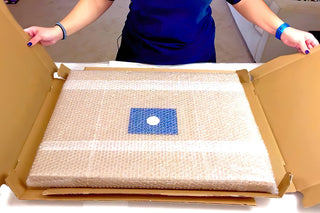
STEP 2 - SHIPPING
We ship your order. We send you an email to track the progress

STEP 3 - DELIVERY
You receive your order. You can also, according to your choice, be delivered to a relay point.
Matte finish
View from behind
Frame (optional)
Art print Un homme nommé Michel Baron - Claude Lefebvre – Captivating Introduction
In the fascinating universe of 17th-century French art, "Un homme nommé Michel Baron" by Claude Lefebvre stands out for its depth and refinement. This work, which captures not only the appearance of a man but also the very essence of his character, immerses us in an era where portraiture was not merely a means of representation but a true reflection of personality and social status. Lefebvre, with his skillful play of light and shadow, manages to create an intimate atmosphere that invites the viewer to contemplate the subject beyond his mere appearance.
Style and uniqueness of the work
Claude Lefebvre's style is characterized by a realistic approach, combined with a baroque sensibility that is uniquely his own. In "Un homme nommé Michel Baron," every detail is carefully considered to convey a sense of life and dynamism. The facial features, finely chiseled, demonstrate remarkable technical mastery, while the choice of colors, both rich and nuanced, evokes a vibrant palette that captures light in an almost magical way. Lefebvre does not merely reproduce a face; he succeeds in infusing his subject with an aura of dignity and gravity, thus creating an emotional connection with the viewer. This work embodies the quintessence of the classical portrait, where every element, from the drapery of the clothing to the posture of the model, contributes to a captivating visual narrative.
The artist and his influence
Claude Lefebvre, an emblematic figure of French portraiture, established himself in an artistic environment dominated by masters such as Philippe de Champaigne and Charles Le Brun. His ability to combine realism and psychological sensitivity marked his era, influencing many artists who followed him. Lefebvre, as a court artist, also benefited from the rise of royal patronage, which allowed him to develop his style and explore new techniques. His work "Un homme nommé Michel Baron" is the result of a time when portraiture was a means of glorifying nobility and capturing the spirit of an era. By immortalizing a man, Lefebvre does not limit himself to a mere exercise in style, but