
Painting La Balançoire - Étienne Dinet | Art print


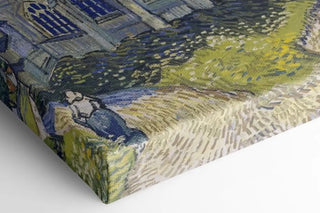
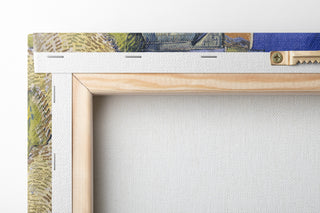
View from behind
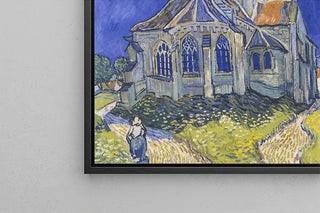
Frame (optional)
La Balançoire - Étienne Dinet – Captivating introduction
In a burst of vibrant colors and delicate sensations, "La Balançoire" by Étienne Dinet presents itself as an iconic artwork that captures the essence of happiness and carefree joy. This canvas, evoking childhood memories and the lightness of summer, immerses the viewer in a universe where time seems to stand still. The scene depicts a young woman gracefully swinging, surrounded by a lush garden, where every detail is carefully designed to evoke an atmosphere of dreamlike serenity. Light plays a crucial role in this composition, illuminating the radiant face of the protagonist and creating soft shadows that add depth to the piece. Through this art print, we are invited to explore not only Dinet's technique but also the profound emotion that his art evokes.
Style and uniqueness of the work
Étienne Dinet's style, marked by impressionism, stands out for its bold use of colors and its ability to capture natural light. In "La Balançoire," the artist plays with vibrant shades, creating a striking contrast between the bright hues of the flowers and the soothing green of the foliage. The composition is harmonious, with each element carefully arranged to guide the viewer's eye toward the focal point of the canvas: the young woman on the swing. Dinet does not merely depict a scene; he brings it to life with brushstrokes that infuse a nearly palpable dynamism. The movements of the protagonist's dress, as well as the leaves stirred by the wind, testify to a fleeting moment, captured with poetic precision. This unique approach allows the artwork to transcend a simple landscape and become a true celebration of life.
The artist and his influence
Étienne Dinet, born in 1861, is an artist whose journey is intimately linked to the discovery of the Orient. His stay in Algeria profoundly influenced his work, enabling him to incorporate cultural and aesthetic elements that enrich his compositions. Dinet made a name for himself by painting scenes of daily life, portraits, and landscapes that reveal
Painting La Balançoire - Étienne Dinet | Art print

-10% FROM €95 IN PURCHASES
-15% FROM €195 IN PURCHASES
Regular price
- Unit price
- by
Free shipping
€4.90 / Free shipping on orders over €39
Satisfied or Money Back
Free returns within 30 days
10-year warranty
Our prints are guaranteed for 10 years
Any questions? We are here!
by email to contact@artemlegrand.com
THE STEPS OF YOUR ORDER
STEP 1 - ORDER PLACED
Your order has been confirmed and we are starting production
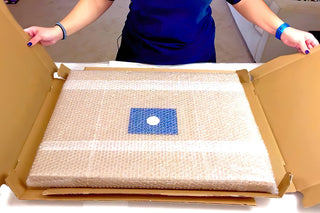
STEP 2 - SHIPPING
We ship your order. We send you an email to track the progress

STEP 3 - DELIVERY
You receive your order. You can also, according to your choice, be delivered to a relay point.
Matte finish
View from behind
Frame (optional)
La Balançoire - Étienne Dinet – Captivating introduction
In a burst of vibrant colors and delicate sensations, "La Balançoire" by Étienne Dinet presents itself as an iconic artwork that captures the essence of happiness and carefree joy. This canvas, evoking childhood memories and the lightness of summer, immerses the viewer in a universe where time seems to stand still. The scene depicts a young woman gracefully swinging, surrounded by a lush garden, where every detail is carefully designed to evoke an atmosphere of dreamlike serenity. Light plays a crucial role in this composition, illuminating the radiant face of the protagonist and creating soft shadows that add depth to the piece. Through this art print, we are invited to explore not only Dinet's technique but also the profound emotion that his art evokes.
Style and uniqueness of the work
Étienne Dinet's style, marked by impressionism, stands out for its bold use of colors and its ability to capture natural light. In "La Balançoire," the artist plays with vibrant shades, creating a striking contrast between the bright hues of the flowers and the soothing green of the foliage. The composition is harmonious, with each element carefully arranged to guide the viewer's eye toward the focal point of the canvas: the young woman on the swing. Dinet does not merely depict a scene; he brings it to life with brushstrokes that infuse a nearly palpable dynamism. The movements of the protagonist's dress, as well as the leaves stirred by the wind, testify to a fleeting moment, captured with poetic precision. This unique approach allows the artwork to transcend a simple landscape and become a true celebration of life.
The artist and his influence
Étienne Dinet, born in 1861, is an artist whose journey is intimately linked to the discovery of the Orient. His stay in Algeria profoundly influenced his work, enabling him to incorporate cultural and aesthetic elements that enrich his compositions. Dinet made a name for himself by painting scenes of daily life, portraits, and landscapes that reveal